29
Jan
Serpents as Symbols: Timeless Meanings Revealed
Serpents as Symbols of Wisdom, Danger, and Renewal
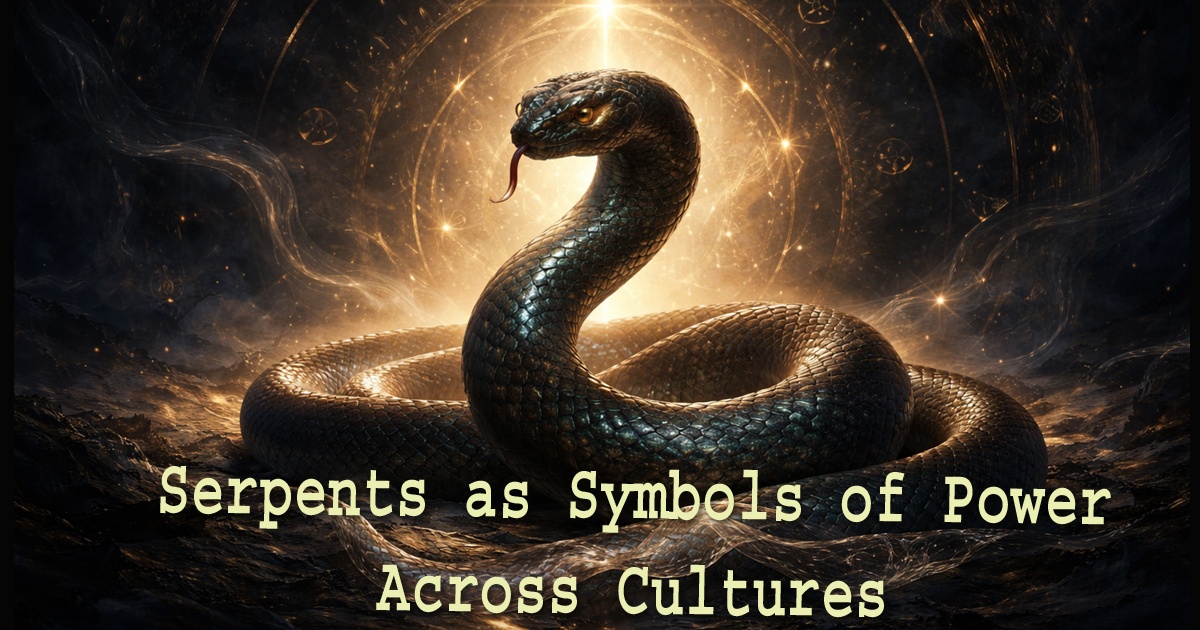
Serpents as symbols have represented wisdom, danger, and renewal across cultures for millennia.
Few creatures have commanded such persistent symbolic attention across human cultures as the serpent. From ancient temple carvings to modern psychological interpretation, serpents as symbols have retained a peculiar grip on the human imagination. They appear in creation myths, religious texts, alchemical manuscripts, and folk traditions with a consistency that suggests something deeper than coincidence. Yet the meanings assigned to them vary dramatically, often holding contradictory interpretations within the same cultural framework.
This dual nature the capacity to represent both threatening and sacred forces distinguishes serpents as symbols from most other animal archetypes. Understanding why requires looking at the physical characteristics of snakes themselves, the contexts in which they appear in human experience, and the ways different societies have interpreted their presence.
Read Symbolic Meaning and the Hidden Structure of Belief
The Physical Foundation of Symbolic Meaning
The cultural meanings of serpents draw heavily from observable traits. Snakes shed their skin in a dramatic, complete process that leaves behind a perfect replica of their former covering. This biological necessity became, in human interpretation, a powerful image of transformation and rebirth. The serpent emerges apparently renewed, its colors brighter, its scales intact. For societies without scientific knowledge of molting cycles, this process carried obvious metaphorical weight.
Their method of movement also contributed to their symbolic status. Snakes travel without visible means of propulsion, appearing to flow across surfaces through some hidden force. In many traditions, this earned them associations with unseen energies, spirit realms, or forces beyond ordinary comprehension. The fact that many species spend time both above ground and below added to their liminal quality creatures at home in multiple worlds.
Venom, of course, provided the most obvious source of danger symbolism. A bite from certain species could kill quickly, and the mechanism remained mysterious for most of human history. This combination of beauty, grace, and sudden lethality made serpents as symbols natural candidates for representing hidden threats, betrayal, or the price of forbidden knowledge.
Serpents in Mythology and Ancient Belief
Snake symbolism in mythology appears across virtually every major cultural tradition, though the specifics vary considerably. In ancient Egyptian belief systems, the cobra represented royal authority and divine protection. The uraeus the stylized cobra on pharaonic crowns symbolized sovereignty and the power to destroy enemies. Yet Egyptian tradition also included Apophis, the serpent of chaos who threatened cosmic order nightly. Even within one culture, serpents as symbols could occupy opposing roles.
Greek mythology presents similar complexity in its treatment of serpents as symbols. The rod of Asclepius, entwined by a single serpent, became associated with healing and medicine a connection that persists in medical symbolism today. Yet the same tradition gave us Medusa, whose serpent hair turned viewers to stone, and the Hydra, whose multiple heads represented a threat that grew worse when confronted directly. The serpent as symbol of wisdom appears in the story of Python at Delphi, the oracle’s guardian, while danger manifests in the creature Hercules must overcome.
In Hindu and Buddhist traditions, serpent beings called nagas occupy positions of power and knowledge. They guard treasures, both material and spiritual. They appear as protectors of the Buddha and as sources of esoteric teaching. The kundalini serpent in yogic philosophy represents dormant spiritual energy coiled at the base of the spine, which when awakened rises through energy centers in a process described as transformative but also potentially dangerous if approached carelessly.
Norse mythology placed the great serpent Jörmungandr at the edge of the world ocean, so vast it circled the earth and grasped its own tail. This ouroboros image the serpent consuming itself became one of the most enduring symbolic serpents in Western esoteric tradition, representing cycles, eternity, and the unity of beginning and ending.
The caduceus symbol, though commonly used by medical organizations today, was historically associated with commerce and negotiation rather than healing a confusion that arose primarily in the United States military medical corps during the early 20th century.
Biblical Serpents and Western Interpretation

Serpents as symbols of healing and paradox, suggested by the Nehushtan form rising from darkness.
The Genesis account of the serpent in Eden has profoundly shaped Western understanding of serpent symbolism, often overshadowing other interpretations. In this narrative, the serpent functions as tempter and deceiver, offering knowledge that leads to exile and suffering. This association between serpents and forbidden wisdom, dangerous knowledge, or spiritual corruption became deeply embedded in Christian cultural contexts.
Yet even within Biblical tradition, serpents as symbols show variation. When the Israelites were afflicted by venomous snakes in the desert, Moses was instructed to create a bronze serpent and mount it on a pole; those who looked upon it were healed. This brazen serpent represented both the source of affliction and its cure a symbolic pattern that recurs across cultures. The Gospel of John later references this story, adding layers of theological interpretation.
The caduceus two serpents intertwined around a winged staff came from Greek tradition but entered medical and hermetic symbolism throughout the Western world. Though often confused with the rod of Asclepius, the caduceus carried associations with Hermes, messenger of the gods and guide of souls, adding dimensions of communication, transition, and mediation to serpent renewal symbolism.
Serpent Transformation Symbolism in Esoteric Practice
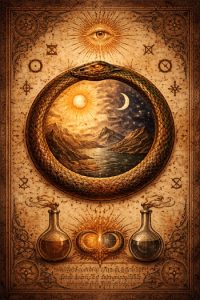
Serpents as symbols of continuity and transformation, shown through an alchemical Ouroboros in manuscript form.
Alchemical texts from medieval and Renaissance periods frequently employed serpent imagery. The ouroboros appeared on countless manuscripts as a symbol of the alchemical process itself the transformation of base materials into something refined through cycles of dissolution and reconstitution. The serpent’s ability to renew itself through shedding skin paralleled the alchemist’s goal of spiritual and material transformation.
In these contexts, the serpent as symbol of wisdom took on specific meanings related to hidden knowledge and initiatory experience. Alchemical writers described certain stages of the work using serpent metaphors the fixation of mercury, the union of opposites, the achievement of the philosophical goal. These were encoded references understood by practitioners but opaque to outsiders, part of a deliberate symbolic language.
Hermetic philosophy, which influenced much Western esoteric thought, treated serpent symbolism as representing the dual nature of wisdom itself. Knowledge could illuminate or destroy depending on the readiness of the seeker and the manner of approach. This perspective preserved both the danger and wisdom aspects without fully resolving the tension between them.
The alchemical tradition also recognized stages of work where serpent imagery signaled particular thresholds. The “green dragon” or “mercurial serpent” represented volatile, unrefined forces that required careful handling. Texts warned against premature attempts to advance the work, using serpent metaphors to describe energies that could overwhelm or poison the unprepared practitioner.
In ancient Minoan culture on Crete, priestesses were depicted holding serpents during religious ceremonies, suggesting snakes played a role in goddess worship practices dating to approximately 1600 BCE.
Cross-Cultural Patterns and Variations
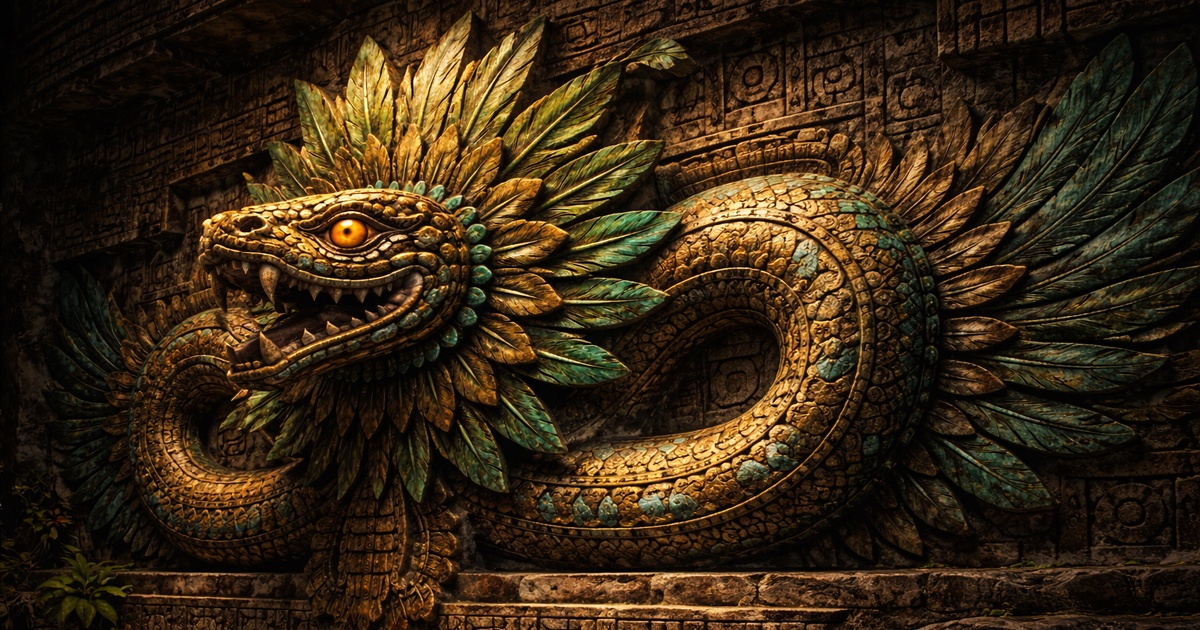
Serpents as symbols of knowledge, power, and continuity, expressed through a stylized Quetzalcoatl temple carving.
Australian Aboriginal traditions include the Rainbow Serpent, a creator being associated with water, fertility, and the shaping of landscape. Mesoamerican cultures revered Quetzalcoatl, the feathered serpent deity linked with wind, learning, and the priesthood. In various African traditions, pythons and other large snakes were treated as sacred, sometimes as ancestors or intermediaries with spiritual forces.
These diverse examples share certain common threads while differing in specifics. Serpents in mythology consistently appear at boundaries between earth and water, between human and divine realms, between life and death. They frequently guard something valuable: treasure, knowledge, sacred spaces, or sources of power. Their appearance often signals transformation, whether welcomed or feared.
Serpents as symbols operate in these traditions not through a single fixed meaning but through a cluster of associated qualities that cultures emphasize differently according to their own contexts and needs. The physical serpent provides the raw material; human interpretation shapes it into culturally specific symbolic forms.
Contemporary Psychological Interpretations
Modern depth psychology, particularly in Jungian frameworks, has examined serpent symbolism as it appears in dreams, mythology, and individual psychological material. From this perspective, serpents as symbols may represent unconscious content, instinctual forces, or transformative processes operating below conscious awareness. The threatening aspect corresponds to material the conscious mind finds difficult to integrate; the wisdom aspect suggests knowledge that becomes available through such integration.
These interpretations don’t claim serpents possess inherent mystical properties but rather examine why serpents as symbols recur with such frequency and intensity. The serpent’s biological characteristics its movements, its renewal process, its potential danger make it a natural candidate for representing psychological experiences of transformation, hidden threat, or emerging awareness.
Such frameworks attempt to understand serpent symbolism neither as supernatural truth nor as meaningless superstition, but as a consistent symbolic language humans have developed to articulate certain types of experience. The symbol persists because it effectively captures something about transformation, knowledge, and danger that remains relevant across cultural boundaries.
The Greek physician Galen, writing in the 2nd century CE, noted that snake venom was used medicinally in controlled doses an early recognition that the same substance could harm or heal depending on application.
The Enduring Symbolic Presence
Serpents as symbols continue to appear in contemporary contexts, often carrying forward ancient associations. Medical organizations maintain the rod of Asclepius. Popular culture references the ouroboros. New religious movements and modern esoteric practices incorporate serpent imagery drawn from various traditions. The symbol’s persistence suggests it addresses something fundamental in human experience.
What remains striking is the symbol’s capacity to hold contradictions without collapsing into a single meaning. Serpent danger symbolism coexists with serpent renewal symbolism within the same cultural space, even within the same narrative. The creature can represent both the problem and its solution, both the source of exile and the path to restoration.
This multiplicity may be the symbol’s greatest strength. Rather than reducing to a single interpretation, serpents as symbols provide a flexible framework for exploring experiences of transformation, knowledge acquisition, hidden threat, and renewal experiences that themselves resist simple categorization. The symbol persists not despite its contradictions but perhaps because of them, offering a language for the complex and often paradoxical nature of significant change.
Human cultures have consistently found in the serpent’s form and behavior a mirror for their own deepest concerns about wisdom, danger, and the possibility of renewal. Whether this reflects something inherent in the symbol or simply demonstrates human consistency in symbolic projection remains an open question. What seems clear is that serpents as symbols have retained their power across millennia, continuing to serve as vehicles for expressing what words alone struggle to convey.
Read Symbols Change Meaning Over Time: Powerful Truth
Editor’s Reflection
The tension between what serpents mean and what they are has never fully resolved. Physical creatures became carriers of human fears, hopes, and questions about change sometimes all at once, often within the same story. Serpents as symbols adapted to whatever psychological or spiritual territory a culture needed them to occupy, which may explain why they’ve outlasted more fixed interpretations.
What draws you to serpent imagery when you encounter it the threat, the promise of transformation, or something else entirely? Do you think serpents as symbols still speak to contemporary experience in meaningful ways, or have we simply inherited old associations without examining whether they still fit?

Known as The Man Who Notices, Mike Lamp is a theatrical hypnotist and psychic performer with more than twenty years of live stage experience. His work emphasizes observation, psychological influence, and measured presentation rather than spectacle or provocation. Performances are tailored for adult audiences, private events, and professional settings where control, clarity, and atmosphere matter.




Leave a Reply
You must be logged in to post a comment.