29
Jan
Master Crystal Ball Scrying Methods for Divination Practice
Crystal Ball Scrying Methods: Traditional Divination Practices

Traditional crystal ball scrying methods setup with sphere and candlelight for focused divination practice
Scrying, the practice of gazing into reflective or translucent surfaces to perceive images or information, has appeared across cultures for centuries. Among the most recognized tools for this practice is the crystal ball, though practitioners have historically used mirrors, water, and polished stones with equal dedication. The methods surrounding these tools involve specific preparation steps, viewing techniques, and interpretive frameworks that have been passed down through metaphysical traditions.
Understanding crystal ball scrying methods requires looking past theatrical stereotypes and examining what practitioners actually do when they sit down with these instruments. The practice centers on sustained visual focus, controlled breathing, and a receptive mental state that some describe as similar to light meditation or hypnotic trance.
Read Powerful Palmistry Methods for Reading Hand Features
The Traditional Crystal Sphere
Crystal balls used for scrying are typically made from clear quartz, though practitioners also work with spheres of obsidian, beryl, or glass. The size varies considerably, from small handheld globes to larger display pieces that rest on stands. Clear quartz remains popular due to its optical properties and the way light moves through the material, creating subtle shifts in appearance during extended viewing.
The sphere’s surface and internal structure provide visual anchors during the scrying session. Natural inclusions, tiny fractures, or cloudiness within the crystal become focal points. Practitioners report that these imperfections actually enhance the experience rather than diminish it, offering shapes and patterns that can shift under prolonged observation.
When selecting a sphere, traditional guidance emphasizes personal response over objective quality, though many crystal ball scrying methods texts note that beginners often overthink this initial choice. A flawless crystal does not necessarily make a better scrying tool if the practitioner feels no connection to it. Many who work with these objects describe an intuitive attraction to specific pieces, though this may simply reflect aesthetic preference combined with expectation.
John Dee, advisor to Queen Elizabeth I, reportedly used a polished obsidian mirror for scrying sessions that informed his counsel on matters of state during the 1580s.
Preparation and Cleansing Protocols

Sage smoke purifies a clear quartz sphere as part of traditional Crystal Ball Scrying Methods, set within a quiet, grounded ritual environment.
Before using any scrying instrument, practitioners typically follow cleansing procedures intended to remove previous energetic influences. These rituals vary by tradition but often include physical cleaning followed by symbolic purification. For cleansing scrying crystals, methods include rinsing with spring water, exposing the object to moonlight overnight, or passing it through incense smoke.
The rationale given for these practices centers on creating psychological separation between everyday use and focused divination work. Crystal ball scrying methods specifically benefit from this separation, as the tool becomes associated with focused intention rather than casual handling. Whether these actions produce metaphysical effects or serve primarily as ritual anchors for mental preparation remains a matter of individual interpretation. From a practical standpoint, the cleaning process creates a transition period that helps practitioners shift their attention from ordinary concerns to the focused state required for scrying.
Storage practices also reflect this careful treatment. Many practitioners keep their scrying tools wrapped in dark cloth when not in use, both to protect the surface from scratches and to maintain what they describe as the tool’s energetic integrity. This approach mirrors how valuable optical instruments are traditionally stored and may serve similar protective functions beyond symbolic meaning.
Read Essential Tarot Reading Explained Clearly
Scrying Methods Beyond the Crystal Ball
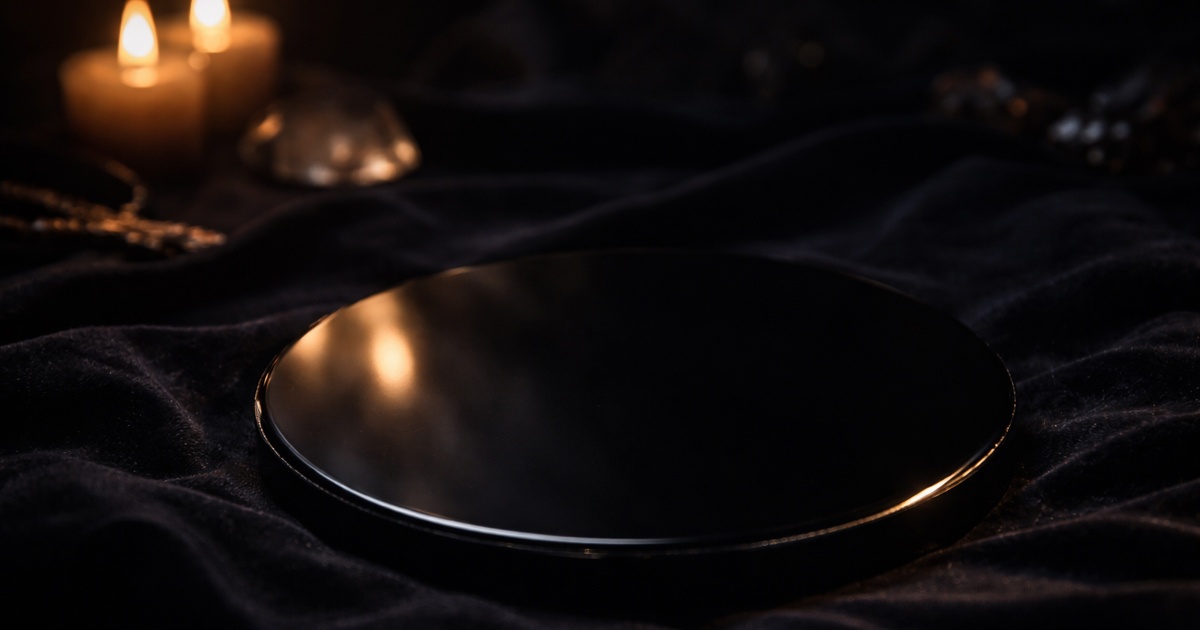
Obsidian scrying mirror prepared for focused divination, reflecting traditional Crystal Ball Scrying Methods in a controlled, low-light setting.
While crystal ball scrying methods receive the most attention in popular culture, practitioners work with numerous other reflective surfaces using related techniques. The scrying mirror, particularly the black mirror divination tool made from obsidian or painted glass, offers a different visual experience than the transparent crystal. The dark, reflective surface provides less optical complexity but creates a void-like space that some find easier to work with.
An obsidian scrying sphere combines elements of both traditions, offering the rounded form of the crystal ball with the dark, absorptive quality of the mirror. Natural obsidian contains subtle variations in color and translucency that become apparent during close observation.
The water scrying technique represents perhaps the oldest form of the practice. A bowl of water, sometimes darkened with ink or set against a black surface, creates a simple reflective plane. Practitioners report that the slight movement of water adds an element absent in solid objects, though this motion can also prove distracting for beginners. Historical accounts describe water scrying in sacred springs, lakes, and carefully prepared vessels.
How to prepare a scrying mirror involves similar principles to crystal preparation but with additional considerations. The reflective surface must be completely clean and free from streaks or fingerprints that would disrupt the visual field. Black mirrors are often backed with multiple coats of black paint applied to the reverse side of glass, then sealed. Some practitioners prefer naturally occurring reflective stones polished smooth, finding them more resonant than manufactured alternatives.
The largest known clear quartz crystal ball resides in the Smithsonian Institution and weighs 106.75 pounds, carved from a single piece of Burmese quartz in the 19th century.
The Actual Practice
Crystal ball scrying methods typically begin with environmental preparation, and these same principles apply to other scrying tools as well. Practitioners work in dimmed lighting, often with a single candle positioned to create subtle illumination without causing harsh reflections or glare. The scrying tool is placed at a comfortable viewing distance, usually at eye level or slightly below.
The initial phase involves softening the gaze rather than staring intensely. This technique, sometimes called “looking through” rather than “looking at” the object, allows the eyes to relax and reduces the impulse to focus sharply on every detail. Practitioners describe allowing their vision to blur slightly, similar to the defocused state that occurs naturally during deep thought or daydreaming.
Breathing patterns often accompany this visual approach. Slow, measured breaths help maintain a calm state and prevent the restlessness that emerges during long periods of stillness. Some practitioners count breaths or use other rhythmic anchors, while others allow breathing to settle into its own natural pattern once initial nervous energy dissipates.
Sessions typically last between fifteen minutes and an hour, though beginners often start with shorter periods. Extended gazing can produce eye fatigue, and knowing when to end a session comes with experience. Traditional scrying practices and crystal ball scrying methods both emphasize consistency over duration, suggesting that regular brief sessions prove more productive than sporadic lengthy ones.
What Practitioners Report Seeing
The images perceived during scrying vary widely in clarity and form. Some practitioners describe distinct pictures emerging within the crystal or on the reflective surface, while others report more abstract impressions of light, shadow, or color. These experiences exist on a spectrum from vivid visual phenomena to subtle intuitive senses that resist precise description.
Common initial experiences in crystal ball scrying methods include clouding or misting effects within a clear crystal, areas that appear to darken or lighten, or the sensation that the object’s depth has somehow changed. Whether these represent actual optical phenomena, products of sustained visual focus, or something else remains debated even among regular practitioners.
More developed impressions might include symbolic images, recognizable faces or scenes, or moving pictures that unfold like brief films. Practitioners interpret these images through personal symbolic systems, cultural frameworks, or intuitive associations. The same image might carry different meanings for different viewers depending on their background and current circumstances.
Skeptical explanations for these experiences point to pareidolia, the tendency to perceive meaningful patterns in random or ambiguous stimuli. Extended focus on a visually complex or subtly shifting surface could trigger this pattern-recognition tendency, producing images that feel significant but originate in the viewer’s perceptual processing rather than external sources.
Learning Frameworks for Beginners

A quiet writing space used to record impressions and symbols drawn from Crystal Ball Scrying Methods during focused reflective sessions.
Scrying tools for beginners often include smaller, less expensive spheres or simple black mirrors that reduce the initial investment while allowing experimentation. Starting with the water scrying technique offers an even more accessible entry point, requiring only a bowl and water.
Crystal ball scrying methods and traditional scrying practices both suggest keeping records of sessions, noting environmental conditions, mental state, images perceived, and any subsequent events that seem related. This documentation helps beginners identify patterns in their own experience and develop more refined interpretive skills over time.
Early sessions often produce little that seems meaningful. Practitioners emphasize patience during this initial phase, comparing the learning process to developing any perceptual skill. Just as wine tasters train their palates to detect subtle flavors or musicians develop increasingly refined pitch recognition, scrying ability reportedly develops through consistent practice rather than spontaneous revelation.
Working with specific questions or intentions provides focus for some practitioners, while others prefer open-ended sessions without predetermined goals. Both approaches appear in traditional guidance, suggesting that individual differences in cognitive style influence which method proves more productive for particular people.
Victorian-era scrying manuals recommended working only during specific lunar phases, with the waning moon considered most favorable for receiving impressions through reflective surfaces.
Preparation Rituals and Mental State
Scrying ritual preparation extends beyond physical cleaning of tools to include preparing one’s own mental state. Many practitioners of crystal ball scrying methods establish specific pre-session routines that signal to themselves that they are entering a focused working period. These might include meditation, specific breathing exercises, or simply sitting quietly for several minutes before beginning.
The psychological state during scrying resembles light trance more than either full waking consciousness or sleep. Practitioners describe a relaxed yet attentive quality, where ordinary thoughts recede without disappearing entirely and perceptual focus narrows to the scrying tool and emerging impressions. This state shares characteristics with hypnotic trance, guided visualization, and certain meditative states.
Divination methods using spheres specifically leverage the sphere’s visual properties to facilitate this state shift. The three-dimensional form creates subtle optical effects as the viewer’s perspective shifts slightly, and the material’s interaction with light provides gentle visual stimulation that occupies the analytical mind while allowing deeper perceptual layers to surface.
Read Ethics and Boundaries in Your Psychic Practice
Contemporary Practice and Historical Continuity
Modern practitioners often blend traditional crystal ball scrying methods with contemporary psychological frameworks, creating hybrid approaches that honor historical practice while incorporating current understanding. Some approach scrying as a meditation practice that accesses subconscious material rather than external information. Others maintain more traditional interpretations while acknowledging uncertainty about mechanisms.
The tools used in crystal ball scrying methods have remained remarkably consistent over time. Crystal spheres, black mirrors, and water vessels used today differ little from those described in historical texts spanning centuries. This continuity suggests that the practices address something fundamental in human perceptual and cognitive capacity rather than reflecting purely cultural constructs.
Whether scrying produces genuine extrasensory perception, facilitates access to unconscious knowledge, or creates meaningful psychological experiences through focused attention remains an open question. Practitioners generally care less about theoretical mechanisms than practical results, evaluating techniques based on usefulness rather than provability.
The enduring presence of these practices across diverse cultures and time periods indicates their significance to those who use them, regardless of how one explains the underlying processes. For some, crystal ball scrying methods provide a structured approach to intuition development. For others, they offer a contemplative practice that creates mental clarity. Still others maintain traditional metaphysical interpretations involving perceiving distant events or future possibilities.
Understanding these practices requires setting aside both uncritical belief and dismissive skepticism, approaching them instead as human activities worthy of serious attention regardless of one’s conclusions about their ultimate nature.
Editor’s Reflection
The practices described here exist in a curious space between inner psychology and outer perception. Whether crystal ball scrying methods produce genuine insight or simply organize internal knowledge through focused ritual may matter less than the consistency with which people across time and culture have turned to reflective surfaces when seeking clarity. The tools themselves change little, but the frameworks used to interpret them shift with the assumptions of each era.
What draws someone to sit quietly with a sphere or mirror in the first place? Is the appeal rooted in a genuine perceptual capacity we’ve yet to understand, or does the practice offer something else a structured pause, a method for accessing intuition that bypasses ordinary analytical thought? And for those who’ve tried these techniques, what actually happened during those sessions when something did seem to emerge from the surface?

Known as The Man Who Notices, Mike Lamp is a theatrical hypnotist and psychic performer with more than twenty years of live stage experience. His work emphasizes observation, psychological influence, and measured presentation rather than spectacle or provocation. Performances are tailored for adult audiences, private events, and professional settings where control, clarity, and atmosphere matter.



Leave a Reply
You must be logged in to post a comment.