30
Jan
Ormond McGill Hypnosis: Proven Techniques & Legacy
Ormond McGill Hypnosis: Techniques and Legacy of the Dean of Stage Hypnotists

Ormond McGill hypnosis, known as the Dean of American Hypnotists, developed influential hypnosis techniques throughout his eight-decade career.
Ormond McGill hypnosis represents a unique intersection of theatrical performance and genuine psychological technique. McGill, who earned the title Dean of American Hypnotists through decades of stage work and teaching, developed methods that influenced both entertainment hypnosis and clinical practice. His career spanned most of the twentieth century, and his approach to the craft combined showmanship with a serious understanding of suggestion and trance states.
Born in 1913, McGill began performing magic and hypnosis demonstrations in his youth. Unlike many stage hypnotists who treated their work purely as spectacle, McGill maintained a disciplined study of hypnotic phenomena throughout his life. He wrote extensively, taught workshops, and corresponded with clinicians who worked in therapeutic settings. This dual commitment to entertainment and to the technical aspects of hypnosis shaped the particular character of Ormond McGill hypnosis as a distinct body of work.
Read Dr. Michael Dean: Stability in Hypnosis History
The Foundations of McGill’s Approach
McGill’s approach to hypnosis drew from classical induction techniques but adapted them for rapid use in stage settings. McGill understood that theatrical hypnosis required speed and certainty. Audiences expected immediate results, which meant the hypnotist needed methods that worked reliably under pressure and in front of crowds. McGill refined his techniques through thousands of performances, learning which approaches produced the most consistent responses.
His induction methods typically involved fixation of attention, verbal suggestions delivered with rhythmic pacing, and physical cues such as hand passes or touches to the forehead. McGill favored direct methods over permissive ones. He would tell subjects what would happen rather than suggest it might happen. This authoritative style fit the theatrical context and aligned with the expectations subjects brought to the stage.
He also recognized the importance of pre-talk and framing. Before bringing volunteers onstage, he would explain hypnosis to the audience in terms that reduced fear and increased cooperation. He presented hypnosis as a natural state, something everyone experienced in daily life when absorbed in a film or lost in thought. This demystification served two purposes: it made subjects more willing to participate, and it established McGill’s credibility as someone who understood the phenomenon beyond mere showmanship.
Stage Hypnosis Techniques and Performance Structure
His stage hypnosis routines followed a careful structure designed to build audience engagement while maintaining control over subjects. He typically began with suggestibility tests simple exercises that helped identify the most responsive volunteers. These tests also served as informal inductions, gradually shifting subjects into a more focused and receptive state before the formal induction began.
Once subjects were selected, McGill would perform a group induction, often using a combination of fixation and verbal rhythm. He might have volunteers stare at a point on the ceiling while he counted down, suggesting increasing relaxation and heaviness in their bodies. His voice would become more measured and repetitive, establishing a hypnotic cadence. Physical touch a hand on the shoulder or forehead reinforced the verbal suggestions.
The demonstrations that followed ranged from simple motor suggestions to more elaborate scenarios. Subjects might be told their arm was becoming stiff and rigid, or that they were experiencing heat or cold. McGill would progress to more theatrical suggestions: becoming a famous singer, forgetting their name, or believing they were in a different time or place. These demonstrations showcased the hypnotic state while entertaining the audience.
Stage hypnosis techniques Ormond McGill employed emphasized clarity and confidence. He never appeared uncertain or tentative. If a subject did not respond as expected, McGill would smoothly redirect attention to those who were responding, maintaining the momentum of the performance. This skill managing both the hypnotic process and the audience’s perception distinguished accomplished stage hypnotists from amateurs.
McGill also developed methods for safely concluding stage demonstrations. He would systematically remove suggestions, ensure subjects were fully alert, and sometimes provide post-hypnotic suggestions that the experience would be pleasant and free of negative aftereffects. This careful attention to the welfare of volunteers reflected his broader understanding that theatrical hypnosis, while entertainment, involved genuine psychological processes.
McGill performed his first professional hypnosis demonstration at age 15 in Palo Alto, California, launching a career that would span eight decades.
Contributions to Hypnotherapy and Clinical Practice
Although McGill built his reputation in theatrical settings, Ormond McGill hypnotherapy techniques gained recognition among clinical practitioners. McGill corresponded with therapists, taught at hypnosis conventions, and wrote about applications beyond the stage. He understood that the rapid induction methods developed for performance could be adapted for therapeutic work, particularly in situations requiring quick establishment of rapport and trance.
Some therapists incorporated his induction methods into their practices, valuing the directness and efficiency these techniques offered. McGill’s approach demonstrated that hypnosis could be achieved quickly and reliably when the practitioner communicated with authority and clarity. This stood in contrast to some therapeutic schools that favored slower, more permissive approaches.
McGill also contributed to the literature on self-hypnosis and personal development through hypnotic techniques. He believed that hypnosis could be used for self-improvement, habit modification, and mental rehearsal. His books included instructions for individuals seeking to use hypnotic states outside of clinical or theatrical contexts. These writings reflected McGill’s view that hypnosis was a natural human capacity, not something exclusively controlled by hypnotists or therapists.
The relationship between theatrical hypnosis Ormond McGill practiced and clinical hypnotherapy remained complex throughout his career. Some in the medical and psychological communities dismissed stage hypnosis as mere trickery or argued it misrepresented hypnosis to the public. McGill defended his work by emphasizing that stage demonstrations revealed genuine hypnotic phenomena, even if presented in an entertaining context. He maintained that theatrical hypnosis could actually help demystify the process and make people more comfortable with therapeutic applications.
Read Pat Collins Hypnotist: Iconic Hip Legacy
Written Works and Teaching Legacy
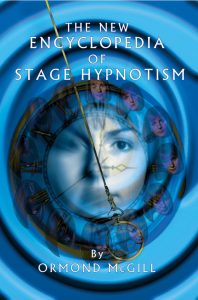
The New Encyclopedia of Stage Hypnotism Click Photo to Buy at Amazon
Ormond McGill books constitute an important part of his legacy. His most influential work, “The Encyclopedia of Genuine Stage Hypnotism,” became a standard reference for performers and students of hypnosis. Published in 1947 and revised multiple times, the book detailed induction techniques, demonstration routines, and the psychology of suggestion. McGill wrote in a direct, instructional style, assuming readers wanted practical information rather than theory.
Other Ormond McGill books explored broader aspects of hypnosis and related subjects. “Hypnotism and Mysticism of India” examined traditional practices from Asian cultures. “The New Encyclopedia of Stage Hypnotism” expanded on his earlier work with updated techniques and contemporary insights. “Grieve No More, Beloved” addressed grief and healing through hypnotic and meditative approaches. Throughout his bibliography, McGill maintained a balance between practical instruction and philosophical reflection.
McGill taught workshops and seminars for decades, training new generations of hypnotists. Students described his teaching style as generous and direct. He demonstrated techniques personally, answered questions thoroughly, and emphasized ethical practice. McGill believed that hypnotists bore responsibility for the well-being of their subjects, whether on stage or in therapeutic settings. This ethical framework became part of what students learned when they studied classic hypnosis techniques through McGill’s instruction.
His influence extended through both direct teaching and the written word. Practitioners who never met McGill nonetheless learned from his books and adapted his methods. The phrase “Dean of American Hypnotists” reflected not just longevity but genuine contribution to the field. McGill earned respect across the spectrum of hypnosis practice, from entertainers to clinicians.
During World War II, McGill conducted hypnosis training sessions for military medical personnel, adapting his stage techniques for pain management and trauma treatment applications.
Contemporary Relevance and Historical Context
Ormond McGill hypnosis emerged from a specific historical moment when stage hypnosis enjoyed widespread popularity and relatively little professional regulation. The mid-twentieth century saw hypnosis demonstrations in theaters, nightclubs, and civic centers across North America and beyond. McGill navigated this landscape with professionalism during an era when many stage hypnotists worked with fewer ethical constraints.
His work provides historical insight into how hypnotic techniques evolved and adapted to different contexts. Modern practitioners studying classic hypnosis techniques can trace certain approaches directly to McGill’s innovations and refinements. His emphasis on rapid induction, confident delivery, and systematic structure influenced how subsequent generations thought about hypnotic process.
The debate surrounding stage hypnosis continues, and McGill’s career illuminates the tensions inherent in that debate. Critics argue that theatrical presentations trivialize hypnosis or create misconceptions. Supporters counter that stage demonstrations reveal authentic phenomena and help normalize hypnosis for general audiences. McGill’s careful attention to both entertainment value and psychological legitimacy placed him in the middle of this ongoing conversation.
Contemporary hypnosis training programs sometimes reference Ormond McGill hypnosis as foundational material, particularly when teaching rapid induction or working with groups. The techniques McGill documented remain functional and effective when applied appropriately. Whether these methods are used in stage settings, clinical practice, or personal development contexts, they demonstrate principles of suggestion, rapport, and focused attention that transcend their original theatrical purpose.
McGill died in 2005 at the age of 92, having spent eight decades working with hypnosis in various forms. His legacy exists in the written record he left, the practitioners he trained, and the techniques that continue to be studied and applied. Ormond McGill hypnosis represents a particular approach to the craft theatrical yet serious, accessible yet disciplined that contributed meaningfully to how hypnosis is understood and practiced.
McGill maintained correspondence with Milton Erickson and other clinical hypnotherapists throughout his career, bridging the divide between theatrical and therapeutic hypnosis communities.
Editor’s Reflection
McGill’s work reminds us that hypnosis exists in multiple registers at once performance and psychology, spectacle and science, entertainment and exploration. His long career bridged these divides without fully resolving them, which may be the most honest position available. Ormond McGill hypnosis techniques emerged from the stage but traveled into classrooms, therapy offices, and personal practice. The methods worked because they addressed something real in human attention and suggestibility, even when wrapped in showmanship.
What separates legitimate hypnotic work from manipulation or simple theatrics? Can techniques developed for entertainment retain their integrity when moved into therapeutic or self-directed contexts? Ormond McGill hypnosis raises these questions without answering them definitively, which leaves room for practitioners and students to navigate the terrain themselves. The conversation continues, as it probably should.

Known as The Man Who Notices, Mike Lamp is a theatrical hypnotist and psychic performer with more than twenty years of live stage experience. His work emphasizes observation, psychological influence, and measured presentation rather than spectacle or provocation. Performances are tailored for adult audiences, private events, and professional settings where control, clarity, and atmosphere matter.


Leave a Reply
You must be logged in to post a comment.