16
Jan
Symbolic Meaning and the Hidden Structure of Belief
Symbolic Meaning: Why Humans Cannot Live Without Symbols
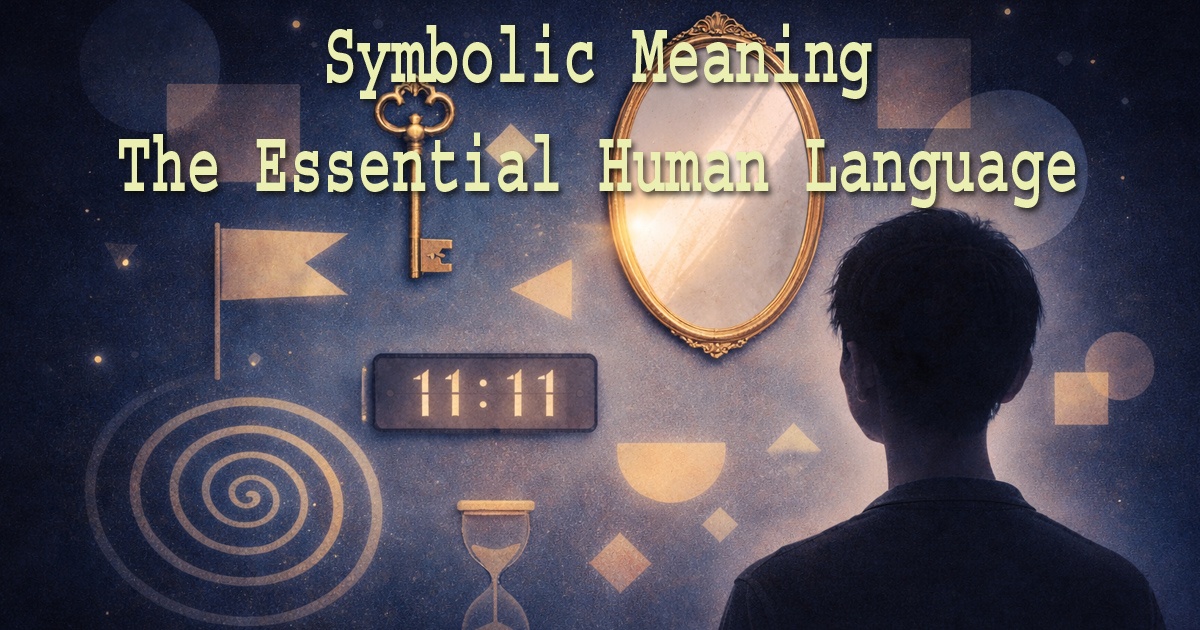
Symbolic Meaning expressed through timeless symbols and patterns
The Human Need for Symbolic Meaning
Human beings have always reached beyond the literal. Long before written language, people carved marks into stone, arranged objects with care, and repeated gestures that carried shared weight. These actions were not practical in a narrow sense. They answered a deeper need to connect experience to understanding. Symbolic Meaning grew out of this instinct, serving as a bridge between what is seen and what is felt but cannot be easily named.
A symbol does more than stand in for something else, even when it appears simple or ordinary. It gathers memory, belief, and expectation into a single form. A simple image can hold fear, hope, authority, or comfort, depending on how it has been used and remembered. This process is not learned from books alone. It is absorbed through family, culture, and repetition. Over time, Symbolic Meaning becomes so familiar that it feels natural, even necessary.
A mirror is never just glass. Across cultures it has been treated as a holder of truth, vanity, danger, or the soul itself. The object does nothing, yet people respond to it with caution or reverence because of what it has come to represent.
Without symbols, thought collapses into the immediate moment. There is no way to carry ideas forward or pass them on intact. Symbols allow people to recognize patterns in chaos and assign order where none is obvious. They give shape to abstract ideas such as fate, justice, or identity. In doing so, they make inner experience shareable, which may be their most enduring function.
Read about Protection Rituals Uncovered in our Exclusive Article
How Symbolic Meaning Shapes Belief Systems
Belief systems do not begin with doctrine. They begin with images, stories, and repeated signs that feel charged with importance. Before rules are written, a shared understanding forms around certain symbols that appear again and again. Symbolic Meaning gives these early forms their weight, allowing a belief system to take shape without needing explanation at every step.
A national flag is a simple piece of fabric, but it can inspire loyalty, grief, or anger. Belief gathers around it through repeated use in ceremonies, conflict, and public life, long before anyone explains what it is supposed to mean.
As beliefs grow more complex, symbols act as anchors. They hold ideas steady across generations, even as interpretations shift. A single object or image can unite large groups of people who may disagree on details but recognize the same core references. Through this process, Symbolic Meaning becomes a quiet organizing force, shaping values, rituals, and moral boundaries without constant reinforcement.
As belief systems mature, they rely on symbols to remain intact. When symbols lose clarity or are stripped of context, belief weakens. New symbols then emerge to take their place, reflecting changes in culture or experience. This cycle shows how belief is less about fixed truth and more about continuity, carried forward through shared symbolic language.
Prehistoric cave markings are among the earliest known examples of symbolic communication, predating written language by tens of thousands of years.
Symbolic Meaning in Objects, Images, and Signs
Objects rarely remain just objects for long. When handled repeatedly or placed within ritual, they begin to gather associations that go beyond their physical use. A stone, a tool, or a worn piece of jewelry can come to represent protection, memory, or authority. Symbolic Meaning emerges through use, not declaration, shaped by how an item is treated and remembered.
Images work in a similar way but move more quickly. A simple shape or figure can communicate an idea without words, crossing language and cultural barriers. Signs and markings reduce complex ideas into forms that can be recognized at a glance. In this compression, Symbolic Meaning becomes efficient, allowing thought and emotion to travel together in a single visual moment.
A wedding ring has little practical purpose. Its value comes from agreement and repetition. Over time it signals commitment, absence, or loss with a single glance, even when no words are exchanged.
Signs differ from objects in that they often point outward rather than inward. They direct attention, warn, or invite interpretation. Yet they rely on the same process of shared understanding. When a sign is repeated and respected, it gains authority. Its Symbolic Meaning becomes stable enough to guide behavior, even when no one remembers exactly when or why it first appeared.
Repetition, Patterns, and Assigned Symbolic Meaning
Repetition is one of the quickest ways meaning takes hold. When an image, number, or event appears more than once, attention sharpens. The mind begins to mark it as important, even before any explanation is offered. Symbolic Meaning often forms at this point, not because the pattern is proven to matter, but because it is noticed and remembered.
Seeing the same number repeatedly on a clock often draws attention, even from people who dismiss superstition. The repetition alone invites interpretation, turning coincidence into something that feels personal or intentional.
Patterns create a sense of order in experiences that might otherwise feel random. Repeated shapes, cycles, or sequences suggest structure, whether or not one truly exists. Over time, these patterns are given stories, rules, or warnings. Symbolic Meaning is then assigned, reinforced through habit and expectation rather than deliberate reasoning.
This process does not require belief in the supernatural. It relies on human perception and memory. Once a pattern is recognized, it is difficult to unsee. Each repetition strengthens its hold, making the meaning feel personal or even inevitable. In this way, patterns become symbols not by design, but through sustained attention and use.
Many ancient legal and religious systems relied on symbols rather than written texts to convey authority and moral order.
Cultural vs. Personal Symbolic Meaning
Cultural symbols are shared agreements. They gain strength through collective use and long familiarity. Flags, colors, gestures, and figures carry meaning because many people recognize them in the same way. Symbolic Meaning at this level is taught, reinforced, and protected by tradition, often without being questioned.
Personal symbols form more quietly. They emerge from private experience rather than shared instruction. An object or image may hold deep importance for one person while remaining ordinary to others. In these cases, Symbolic Meaning is shaped by memory and emotion, not consensus, and can be difficult to explain even when it feels powerful.
A worn photograph kept in a wallet may hold no cultural value at all, yet for one person it can represent grief, loyalty, or unfinished business. Its meaning exists entirely outside public agreement.
The tension between these two forms is constant. Cultural symbols provide stability, while personal symbols allow for individual interpretation. At times they overlap, and at other moments they conflict. Understanding this difference helps explain why symbols can unite groups or divide them, depending on how their meaning is carried and understood.
Why Symbolic Meaning Persists in Modern Life
Modern life often presents itself as practical and rational, yet symbols remain everywhere. Logos, uniforms, rituals, and even everyday habits continue to carry weight beyond their function. People may claim to reject superstition or tradition, but they still respond to images and signs that signal status, safety, or belonging.
A corporate logo can trigger trust or suspicion instantly. Years of exposure train people to react before conscious thought, proving that symbolic response remains active even in spaces that claim to be purely practical. Even small interactions, choosing a familiar icon or avoiding a certain image, show how deeply these responses are tied to personal comfort and unease.
Technology has not replaced symbolism. It has multiplied it. Screens are filled with icons, shorthand images, and repeated visual cues that guide behavior without instruction. These signs work because they tap into the same human instincts that once shaped ritual objects and sacred marks. Meaning is still assigned through repetition and familiarity, even when the setting feels entirely new.
The persistence of symbols points to a deeper truth. Human experience is not lived in facts alone. Emotion, memory, and expectation all demand expression. Symbols provide a way to hold these elements together, giving form to ideas that resist plain language, regardless of how modern the environment appears.
The study of symbolism influenced early psychology, particularly in theories addressing shared human archetypes.
Editor’s Reflection
Symbols do not ask to be believed in order to function. They ask only to be noticed. Whether drawn from shared tradition or private experience, they continue to shape how people interpret the world around them. This article has traced that process from its human origins to its modern expressions, showing that meaning is not assigned once and finished, but carried, revised, and reinforced through use. Symbols endure because they remain useful. They give form to thoughts that resist direct explanation and offer continuity in a changing world.
What symbols have stayed with you, even when you no longer remember why? Are there objects, images, or repeated patterns in your life that feel charged with importance beyond logic or habit? Do you see a difference between symbols you inherited and those you discovered on your own? Your perspective adds another layer to the conversation, and thoughtful reflection often reveals meanings that theory alone cannot reach.
Known as The Man Who Notices, Mike Lamp is a theatrical hypnotist and psychic performer with more than twenty years of live stage experience. His work emphasizes observation, psychological influence, and measured presentation rather than spectacle or provocation. Performances are tailored for adult audiences, private events, and professional settings where control, clarity, and atmosphere matter.


Leave a Reply
You must be logged in to post a comment.