1
Jul
Psychics Won’t Predict Death: The Powerful Truth and Why You Should Be Grateful
Why Psychics Won’t Predict Death: The Ethical and Spiritual Truth
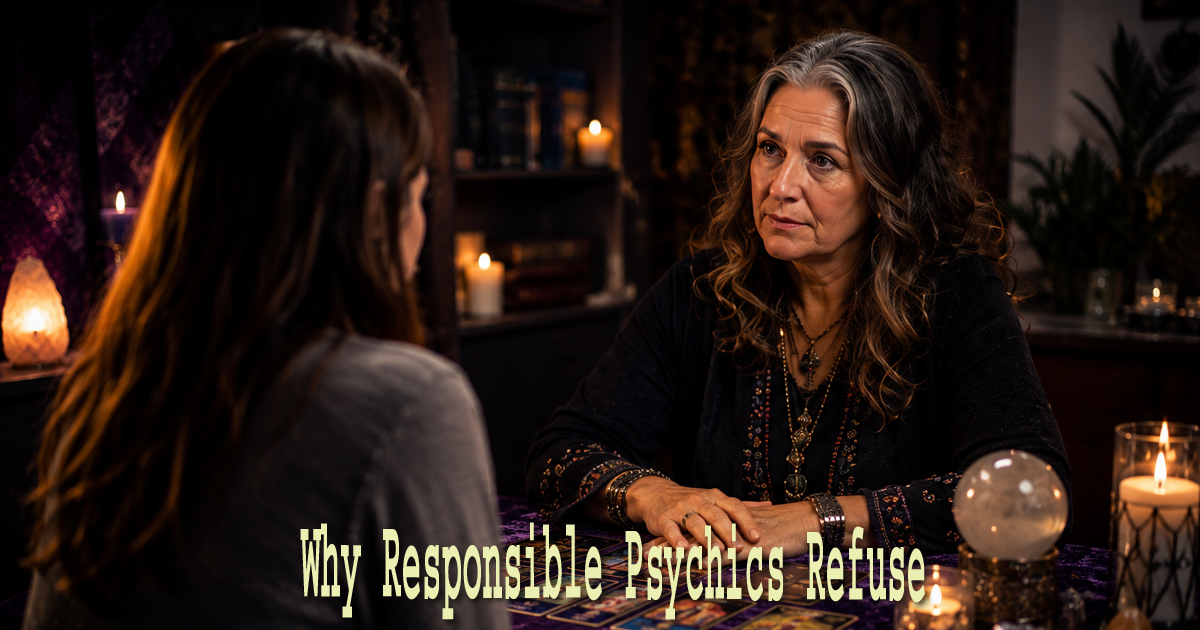
Many responsible readers believe Psychics Won’t Predict Death because ethical guidance should bring clarity and support, not fear.
There is a question that surfaces in the minds of many people who sit down for a psychic reading. They may not say it out loud. They may not even fully admit it to themselves. But somewhere beneath the surface, many clients wonder whether the reader across from them can see how much time they have left. Whether a loved one will survive an illness. Whether something dark is coming that no one has mentioned yet.
Most responsible psychic readers will not answer that question. Not because they are holding something back, and not because the question makes them uncomfortable. Understanding why psychics won’t predict death begins not with what they cannot do, but with what they have chosen not to offer.
This article is not an argument about whether psychic abilities are real. That is a separate conversation entirely. What this article examines is something more specific. Why do many practitioners, including some of the most respected voices in the psychic community, draw a firm line around predictions involving death? And why, when you understand their reasoning, you may find yourself genuinely grateful that they do.
The Question Most People Are Afraid to Ask
It Comes Up More Than You Think
Many experienced psychic readers will tell you that death is present in a surprising number of sessions, even when no one brings it up directly. A client mentions a parent with a serious illness. Someone asks about a relationship and then quietly adds that their partner has been unwell. A person books a reading shortly after a loss and arrives carrying grief they have not yet named.
The question does not always arrive in plain language. Sometimes it comes wrapped in something else entirely. People ask about the future in ways that are really asking about endings. They ask about health in ways that are really asking about survival. The subject of death, for many clients, is never far from the center of why they came.
Why Clients Hope the Subject Will Surface
For many people, the appeal of a psychic reading is tied directly to the hope that someone else can see what they cannot. When a loved one is ill, when a family member is aging, when someone close has already passed, the desire for certainty becomes very powerful. Grief and fear are both engines of that desire.
Some clients hope that a reader will confirm a loved one is at peace. Others hope to be told that a feared outcome will not happen. Some carry a private dread they have never spoken aloud and arrive at a reading hoping someone will address it without being asked. That combination of hope, fear, and the hunger for certainty is exactly why responsible practitioners think carefully before stepping into this territory.
How Psychic Practitioners Teach What They Know: The Powerful Truth Behind Every Reading
Ethics First: Why Responsible Readers Draw a Clear Line
Personal Codes That Shape Every Reading
One of the clearest answers to why psychics won’t predict death lies in the personal ethical guidelines many practitioners develop over the course of their careers. These are not always written down or formally adopted. They emerge from experience, from watching how clients respond to difficult information, and from a growing understanding of the responsibility that comes with the work.
For many readers, death predictions sit firmly outside the boundaries of what they are willing to offer. Some describe it as a matter of humility. They may sense something significant without being able to confirm what it means or when it might occur. Others describe it as a matter of harm. Even a well-intentioned prediction about death can cause a client to carry fear, change behavior, or make decisions based on information that may be incomplete, misread, or simply wrong.
Many serious practitioners also make a distinction between what they sense and what they choose to share. Sensing something and sharing it are two different acts, and many responsible readers believe the second one carries an obligation to consider consequences before speaking.
What Training Programs and Organizations Actually Teach
Across the psychic and intuitive arts community, many training programs and professional organizations address this topic directly. The guidance is often consistent. Practitioners are encouraged to avoid making specific predictions about death, serious illness, or major health outcomes.
Organizations that offer certification or professional standards for psychic readers frequently include ethical guidelines that restrict or discourage death-related predictions. The reasoning offered in these programs tends to center on client wellbeing, the limits of reliable perception, and the professional responsibility that comes with presenting oneself as an intuitive guide.
This is not fringe thinking within the community. Many practitioners who have worked in this field for decades describe avoiding death predictions not as a reluctant concession but as a core professional value.
The Emotional Weight a Death Prediction Carries
Fear That Does Not Leave the Room
A prediction about death is not something a client processes and moves past. For many people, it becomes a presence that follows them. It enters the room when they are with the person the prediction involved. It surfaces in the middle of the night. It colors ordinary moments with a layer of dread that was not there before.
Many responsible readers have witnessed this firsthand. A client who receives a frightening prediction about a loved one’s lifespan does not simply file that information away. They carry it. It affects how they interact with that person, how they make plans, how they experience ordinary days. The emotional weight of a death prediction is not proportional to whether the prediction turns out to be accurate. The weight arrives the moment the words are spoken.
When a Prediction Becomes a Self-Fulfilling Pattern
There is another layer to this concern that many practitioners take seriously. Fear is not a passive state. It shapes behavior. When a client leaves a reading carrying a prediction about death, that fear can begin to influence decisions in ways that create real consequences.
A person told that a family member will not survive the year may begin to withdraw from that relationship, preparing for a loss that has not happened. They may make financial decisions, avoid difficult conversations, or stop pursuing medical options because they have already accepted an outcome they were told is coming. Some practitioners describe this as one of the most serious potential harms a careless prediction can cause. The prediction itself becomes a force in the client’s life, not just a piece of information.
Timing Is the Weakest Link in Any Reading

The fading hourglass symbolizes why Psychics Won’t Predict Death, as many practitioners believe timing is the least certain part of any reading.
Why Even Confident Readers Hesitate on Dates and Deadlines
Among practitioners who believe strongly in their intuitive abilities, there is a widely shared view about timing. Many will tell you that sensing an event and placing it accurately on a timeline are two very different skills, and that the second one is far less reliable than the first.
This is not an admission of failure. It reflects a sophisticated understanding of how intuitive perception tends to work. Many readers describe receiving impressions that feel significant and clear without any reliable sense of when those impressions apply. A feeling that something important is approaching may be accurate. Whether that something arrives in three months or three years is a far more uncertain matter.
When death predictions are involved, that uncertainty becomes especially serious. A reader who sincerely senses something and attaches a timeline to it may be offering information that is incomplete in ways neither the reader nor the client can fully evaluate.
Feeling an Event Is Different From Dating an Event
Many experienced practitioners draw a clear distinction between two things that clients often treat as one. Perceiving that something significant may occur is one kind of experience. Knowing when that event will happen is a separate and far more difficult claim.
In a reading involving death or serious loss, the gap between those two things matters enormously. A reader who says they sense that loss is a theme in someone’s near future is making a very different statement than one who says a specific person will die within a specific timeframe. Many responsible practitioners are careful to stay on the right side of that line, and many choose not to cross it at all when death is the subject.
What If a Psychic Claims They Can Predict Death?

Rather than leaving someone with fear, Psychics Won’t Predict Death because many ethical readers believe people deserve the freedom to choose hope over anxiety.
Why Extraordinary Claims Deserve Careful Thought
Some readers do claim the ability to predict death with specificity. These claims exist, and it would not be accurate to pretend otherwise. What is worth noting is that extraordinary claims of this kind deserve careful and thoughtful consideration before a client accepts them at face value.
Many practitioners who have spent years in this field express genuine caution about colleagues who make confident death predictions. The concern is not always about intention. It is about the gap between what can be reliably perceived and what is being presented as certain knowledge. A reader who sincerely believes they can predict death with accuracy may still be operating with more confidence than the evidence supports.
Clients who encounter these claims are better served by approaching them with a degree of healthy skepticism, not because psychic perception is impossible, but because specific claims about death timelines sit at the outer edge of what even believers in this field tend to endorse.
Ethics and Boundaries in Your Psychic Practice Explained Clearly
Warning Signs of an Unethical Reading
There are patterns that many experienced observers of the psychic community describe as red flags. These are not about attacking any individual reader or dismissing the field as a whole. They are practical markers that many consumer advocates and ethical practitioners themselves identify as signs that a reading may not be operating in the client’s best interest.
- Creating fear as a tool. A reader who introduces the subject of death or serious harm in a way that leaves the client frightened and dependent is using fear rather than offering genuine guidance.
- Demanding additional payment to remove a curse or prevent a predicted death. This pattern appears repeatedly in accounts of fraudulent readings and is widely recognized as a serious warning sign.
- Insisting that only they can protect the client. Responsible readers do not position themselves as the sole defense against a predicted negative outcome.
- Pressuring repeat sessions to manage or monitor a predicted death. Genuine guidance does not require a client to return repeatedly out of fear in order to stay safe.
These patterns are worth knowing regardless of where someone stands on the question of psychic ability. They represent behaviors that many ethical practitioners in the field identify and reject themselves.
The Difference Between Comfort and a Verdict
Talking About Loss Without Issuing a Sentence
One of the important distinctions that many skilled readers make is the difference between acknowledging death as part of human experience and issuing a specific prediction about a named individual’s end of life. These are not the same thing, and the difference matters.
A reader who helps a grieving client feel connected to a loved one who has passed is doing something very different from a reader who tells a client that their spouse has six months to live. A reading that acknowledges themes of transition, ending, and loss within a client’s life is doing something very different from one that delivers a specific death verdict about a living person.
Many responsible practitioners work comfortably with the first category. They discuss grief, support clients through loss, and help people find meaning in experiences of ending and transition. What many of them will not do is cross into the second category, where a specific claim about a living person’s death is presented as known information.
How Reputable Readers Handle These Moments
When death-adjacent themes arise in a reading, many experienced practitioners describe a deliberate shift in approach. Rather than following the thread toward a specific prediction, they redirect toward what may be useful to the client. They may acknowledge that themes of change, loss, or transition are present. They may invite the client to talk about what is already weighing on them. They may focus on what the client can do rather than on what the client should fear.
This is not avoidance. Many readers describe it as the more skilled and honest response. It keeps the reading grounded in what can genuinely be offered while protecting the client from the particular harm that comes with a specific death prediction.
Compassion Over Shock Value
The Readers Who Lead With Care
There is a certain kind of reader who understands that the most dramatic thing they could say in a session is not necessarily the most useful thing. Many of the most respected voices in the psychic community describe their work not as a performance of what they can perceive but as a service to the person sitting across from them.
From that perspective, a death prediction is almost never the most useful thing a reader can offer. It is almost always the most alarming. And alarm is not the same as insight. Many practitioners who have earned genuine reputations over long careers describe a deliberate choice to lead with what serves the client rather than with what would be most dramatic to say.
What Integrity Looks Like in Practice
In the psychic community, as in most professional fields, reputation is built over time through consistent behavior. Many readers who avoid death predictions describe the choice as inseparable from who they are as practitioners. They are not holding back because they lack confidence. They are choosing care over impact.
That choice also tends to earn long-term trust. Clients who feel respected rather than frightened are more likely to return, more likely to recommend a reader to others, and more likely to describe their experience as genuinely helpful. Many practitioners find that the restraint they exercise around death predictions is one of the things clients appreciate most, even when they cannot quite explain why.
Why People Are Grateful Psychics Won’t Predict Death
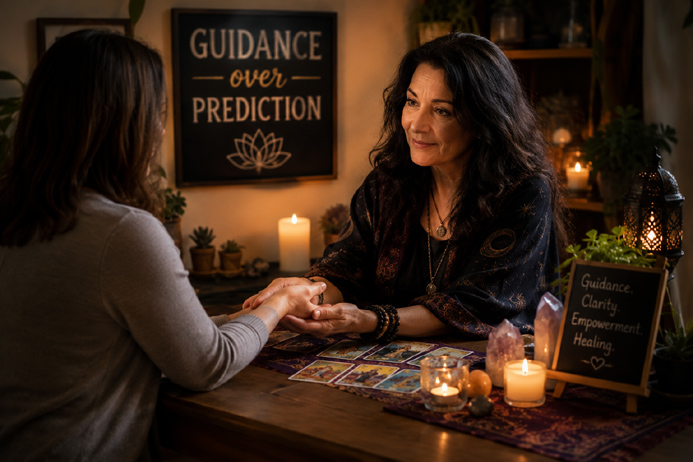
For many experienced practitioners, Psychics Won’t Predict Death because the goal of a reading is guidance, healing, and understanding rather than making frightening declarations.
Living Without a Death Sentence Over Your Head
Consider for a moment what it would mean to leave a reading carrying a specific prediction about your own death or the death of someone you love. Imagine carrying that information through ordinary days. Through a birthday dinner. Through a quiet morning with someone you treasure. Through every moment that would otherwise be simply itself.
Many people who think this through carefully arrive at the same place. They would not actually want to know. The desire for certainty is real and understandable. But certainty about death, even if it were possible, would come at a cost that most people, on reflection, would not willingly pay.
The practitioners who decline to offer that kind of prediction are, in many ways, protecting something their clients value more than they realize. The ability to be present. The ability to love without a countdown. The ability to live a day as a day rather than as a number on a diminishing timeline.
The Freedom That Comes From an Open Future
There is something worth naming directly. Uncertainty about death is not a problem that needs solving. It is one of the conditions that makes human life what it is. Many traditions, philosophical and spiritual alike, have argued that living well requires accepting that the end is unknown. That the not-knowing is not a flaw in the design. It is the design.
Many responsible psychic practitioners understand this intuitively. They work within a worldview that takes perception and intuition seriously, and within that worldview, many of them have concluded that the open future is something to protect rather than close off. A client who leaves a reading without a death prediction over their head leaves with something valuable. They leave with their future still open.
Conclusion
The reasons psychics won’t predict death are not mysterious. They are ethical, emotional, practical, and in many cases deeply compassionate. Many readers recognize that timing is the least reliable element of intuitive work. Many have watched how fear following a reading can reshape a client’s life in ways that were never intended. Many have concluded that the line between sensing something and claiming to know it with certainty is a line worth respecting.
The warning signs of an unethical reading exist precisely because not every practitioner operates from these values. Knowing what those signs look like is useful to anyone who engages with this world, whatever their level of belief.
Whether someone believes psychics possess genuine intuitive abilities, sees psychic readings as a form of personal guidance, or remains entirely skeptical, one principle is shared by many responsible practitioners. A prediction about death has consequences that extend far beyond the reading itself. Choosing not to make that prediction is often viewed not as a limitation, but as an act of compassion.

Known as The Man Who Notices, Mike Lamp is a theatrical hypnotist and psychic performer with more than twenty years of live stage experience. His work emphasizes observation, psychological influence, and measured presentation rather than spectacle or provocation. Performances are tailored for adult audiences, private events, and professional settings where control, clarity, and atmosphere matter.


Leave a Reply
You must be logged in to post a comment.