19
Jan
Dr. Michael Dean: Stability in Hypnosis History
Dr. Michael Dean: Enduring Hypnosis Legacy

Dr. Michael Dean in his signature poised promo image from the Gaslight era
Sanford I. Berman, known professionally as Dr. Michael Dean, stood as a steady figure in the landscape of American hypnosis during the latter half of the 20th century. Born in 1925, he pursued a career that intertwined stage performance with academic pursuits and civic contributions, avoiding the flashier elements often associated with the field. His work as a hypnotist emphasized controlled demonstrations of suggestion and relaxation, presented in nightclub settings without undue emphasis on spectacle. Berman’s dual identity scholar by day, performer by night reflected a balanced approach, where hypnosis served as one thread in a broader tapestry of intellectual and community engagement.
Read Pat Collins: The Hip Hypnotist in our Exclusive Article
Professional Identity
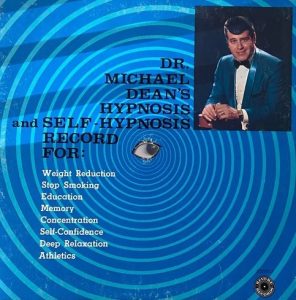
Cover art of Dr. Michael Dean’s Hypnosis Record
Berman adopted the stage name Dr. Michael Dean early in his performing career, using it for nightclub acts that drew audiences in San Diego and Las Vegas. His shows, often held weekly at venues like The Gaslight Room, involved guiding volunteers into states of focused relaxation, where they responded to suggestions in humorous or insightful ways. He maintained a professional demeanor, with a signature black pompadour and measured delivery that conveyed authority without exaggeration. These performances lasted for more than 30 years, from the 1960s into the 1980s, attracting repeat visitors who appreciated the consistency of his approach.
Unlike some contemporaries who relied on dramatic personas, Berman separated his stage work from his personal identity. He viewed hypnosis as a demonstrable process of heightened suggestibility, rooted in psychological principles rather than mystery. This separation bolstered the field’s credibility, showing that entertainment could align with restraint. His recordings, such as “Dr. Michael Dean’s Hypnosis Record” from 1964, extended this identity into home use, offering guided sessions for relaxation and habit adjustment without claims of universal efficacy. Through such efforts, Berman reinforced hypnosis as a practice grounded in experience, accessible yet professional.
Dr. Michael Dean maintained a weekly hypnosis show at the Gaslight Supper Club for over 25 years, making it one of the longest continuous hypnosis residencies in a single U.S. nightclub venue during that period.
Intellectual and Organizational Involvement
Berman’s academic background provided a solid base for his hypnotic work. He earned a Ph.D. in semantics from Northwestern University, focusing on language, meaning, and perception areas that naturally overlapped with hypnosis’s emphasis on suggestion and cognition. As a board member of the Institute of General Semantics, he contributed to discussions on how words shape thought and behavior, applying these insights to his demonstrations. Traditionally understood as a tool for altering awareness through verbal cues, hypnosis benefited from this intellectual framework in Berman’s hands.
His involvement in semantics circles highlighted a commitment to clarity and precision, qualities that enhanced public understanding of hypnosis. Berman taught at institutions like San Diego State University, where he shared knowledge on communication and psychology. This organizational role fostered long-term credibility, positioning hypnosis not as an isolated trick but as part of broader studies in human perception. Observers noted how his work encouraged a thoughtful approach, where experiential aspects of trance were linked to verifiable concepts in language and mind.
Business and Financial Success
Beyond the stage, Berman built a substantial career in real estate investment, which provided financial independence throughout his life. Starting in the 1950s, he acquired properties in San Diego and elsewhere, managing them with a practical eye that mirrored his hypnotic discipline. This success allowed him to pursue hypnosis without economic pressure, treating it as a professional interest rather than a sole livelihood. His investments grew steadily, contributing to a stable existence that contrasted with the uncertainties faced by many performers.
This financial autonomy strengthened hypnosis’s image as a viable pursuit for those with diverse skills. Berman did not use his stage persona to leverage business deals; instead, his real estate ventures stood on their own merit. He also operated a boxing gym in San Diego, supporting local athletes and demonstrating a community-oriented mindset. His Association with boxer Ken Norton arose from this involvement, where he occasionally applied hypnotic techniques for focus and relaxation, though always as an adjunct to their training. Such endeavors underscored his ability to integrate hypnosis into everyday stability, free from dependency on public acclaim.
Dr. Michael Dean was an avid supporter of amateur boxing in San Diego, where he occasionally used light hypnotic suggestion to help local fighters improve concentration before matches, though he never marketed this as a professional service.
Philanthropy and Education
Berman’s philanthropic efforts formed a cornerstone of his legacy, with donations exceeding one million dollars by the early 2000s. He supported educational institutions including the University of California, San Diego; San Diego State University; and the University of Nevada, Las Vegas. These gifts funded libraries, scholarships, and programs in semantics and psychology, reflecting his commitment to knowledge dissemination. At UCSD, for instance, his contributions aided the development of resources on general semantics, aligning with his lifelong interests.
This generosity reinforced public trust in hypnosis practitioners by associating the field with civic good. Berman’s educational roles extended his influence, as he lectured on topics related to perception and suggestion, encouraging students to explore these areas responsibly. His move to Las Vegas in 1989 marked a retirement from full-time performance, but he continued supporting causes quietly. Such actions demonstrated a model of long-term contribution, where hypnosis served as a gateway to broader societal engagement rather than an end in itself.
Relationship to Hypnosis Controversy
Berman’s career intersected with broader disputes in the hypnosis community, though he remained focused on his own path. In the 1970s, he became indirectly involved in a legal case when a rival performer, Ronald Pellar (known as Dr. Dante), was convicted of soliciting harm against him amid professional competition. This incident, rooted in rivalry over stage bookings, highlighted tensions within the field but did not define Berman’s work.
He navigated such challenges with composure, maintaining his emphasis on legitimacy. The event served as context for understanding the varied paths in hypnosis history, where Berman’s stability offered a contrast to more volatile figures. His response, centered on continuing his institutional and performative duties, helped preserve the practice’s reputation amid occasional upheavals.
In addition to his stage work, Berman served as a guest lecturer on general semantics at the University of California Extension program in the 1970s, connecting hypnosis principles to communication theory for adult education audiences.
Historical Assessment
Sanford I. Berman exemplifies a strand of hypnosis history characterized by integration and endurance. In a field sometimes met with skepticism due to sensational portrayals, his career illustrated how practitioners could build trust through academic ties and community involvement. By blending stage work with scholarly pursuits, he advanced a view of hypnosis as a tool for exploring perception, grounded in observable experiences rather than unverified claims.
His legacy encourages a balanced perspective on the practice, showing that long-term credibility arises from consistent contributions beyond the spotlight. Berman’s life, from San Diego nightclubs to Las Vegas retirement, serves as a corrective example, reminding observers that hypnosis can thrive within frameworks of responsibility and public service. In this way, he remains a reference point for those studying the field’s evolution.
Editor’s Reflection
Sanford I. Berman, performing as Dr. Michael Dean, brought a measured and enduring presence to stage hypnosis across several decades. From his long-running weekly shows at the Gaslight Supper Club in San Diego to his recordings offering guided relaxation, he presented hypnosis as a straightforward demonstration of suggestion and focused attention. His academic background in semantics, combined with real estate success and substantial philanthropy to universities in California and Nevada, placed his work within a framework of intellectual and civic responsibility. Dr. Michael Dean’s career stands as an example of stability in a field often marked by more transient or controversial figures.
Readers who recall Dr. Michael Dean’s performances whether from evenings at the Gaslight, his hypnosis record, or any encounters through his lectures are invited to share their memories below. Did his style or approach leave a particular impression compared with other hypnotists of the era? Were there specific moments from his shows or any local accounts that stood out? Additional observations, perhaps from audience members, students, or those familiar with his contributions to semantics or community boxing programs, would help enrich this historical portrait. Comments and recollections are most welcome.

Known as The Man Who Notices, Mike Lamp is a theatrical hypnotist and psychic performer with more than twenty years of live stage experience. His work emphasizes observation, psychological influence, and measured presentation rather than spectacle or provocation. Performances are tailored for adult audiences, private events, and professional settings where control, clarity, and atmosphere matter.



Leave a Reply
You must be logged in to post a comment.