19
Jan
Pat Collins Hypnotist: Iconic Hip Legacy
Pat Collins: The Hip Hypnotist
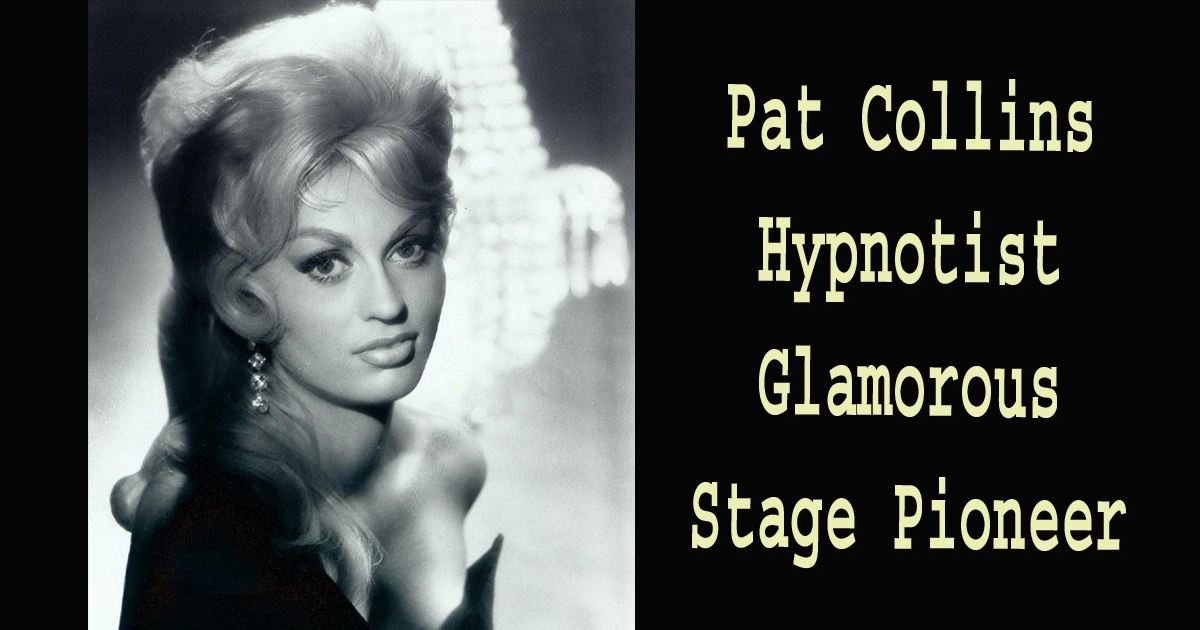
Pat Collins hypnotist in her signature glamorous promo style
In the realm of stage entertainment, few figures captured public curiosity quite like Pat Collins, the hypnotist whose career spanned several decades. Born Patricia Ann Collins, she became widely known as “The Hip Hypnotist,” a moniker that reflected her blend of glamour and showmanship in the field of hypnosis. This biographical profile focuses on Pat Collins the stage hypnotist, distinguishing her from others who share the name, such as figures in sports or politics.
Her work as a performer brought hypnosis into the spotlight of American popular culture, particularly during the mid-20th century when such acts were a novelty in nightclubs and on television. Collins’s approach emphasized entertainment value, drawing audiences into participatory experiences that highlighted the possibilities of suggestion and trance states as described in her performances.
Her career offers a window into the evolution of hypnosis as a form of public spectacle, separate from its clinical applications. Traditionally understood as a state of focused attention and heightened suggestibility, hypnosis in Collins’s hands became a vehicle for humor and audience interaction. Without making claims about its deeper mechanisms, her shows demonstrated how volunteers could respond to cues in ways that amused onlookers. This article examines her background, entry into the field, stage and media presence, and her position within the broader history of hypnosis performances.
Read History of Hypnosis Explained in our Exclusive Article
Early Life and Background
Pat Collins was born on May 7, 1935, in Detroit, Michigan. Her early years were marked by instability. She spent much of her childhood in orphanages and foster homes, a circumstance that shaped her resilience and perhaps her later interest in personal transformation through mental practices. Details of her family life remain sparse in available records, but this period of upheaval is noted in accounts of her biography. Growing up in such environments, Collins navigated challenges that honed her ability to connect with diverse audiences later in life.
As a young woman, she encountered hypnosis not as an entertainer but as a recipient. Reports indicate that Collins experienced a condition described as hysterical paralysis, which was addressed through hypnotic intervention. This personal encounter reportedly alleviated her symptoms and sparked a lasting fascination with the practice. Such experiences were not uncommon in mid-century narratives around hypnosis, where individuals often credited it with aiding in personal recoveries.
For Collins, this marked a turning point, leading her to study the subject more deeply. She trained under practitioners of the time, though specific mentors are not widely documented in historical sources. By the early 1960s, she had transitioned from private interest to public performance, adopting a style that combined poise with theatrical flair.
Entry into Hypnosis and Public Performance
Collins’s foray into professional hypnosis began in the vibrant entertainment scene of Los Angeles. She opened a nightclub on the Sunset Strip, known as the Pat Collins Celebrity Club, located at the corner of Sunset Boulevard and Doheny Drive. This venue became a hub for her acts, where she performed three nights a week. The club attracted a mix of Hollywood personalities and curious patrons, positioning hypnosis as a sophisticated form of nightlife entertainment. Collins was among the first women to gain prominence in this niche, breaking ground in a field often dominated by male performers.
Sleep With Pat Collins Album
Her stage hypnosis shows involved selecting volunteers from the audience, guiding them into relaxed states, and suggesting scenarios that led to comedic behaviors. Descriptions of her routines highlight elements like imagined adventures or role-playing, all conducted with a light touch that avoided discomfort. Pat Collins hypnosis shows were characterized by their interactive nature, encouraging participation without coercion. She presented these as demonstrations of the mind’s responsiveness, drawing on traditional techniques while infusing them with contemporary appeal. By the mid-1960s, her reputation had grown, leading to engagements beyond her club, including appearances in Las Vegas and Reno resorts. Later, she relocated to Reno, where she continued performing at Lake Tahoe venues, adapting her act to larger audiences.
In addition to live shows, Collins explored recorded media. She released two novelty albums in the 1960s, such as “Turn On! The Power of the Mind” and “Sleep With Pat Collins,” which offered listeners self-hypnosis guidance for relaxation and self-improvement. These recordings captured the era’s interest in mind-expanding practices, though they remained firmly in the realm of entertainment rather than therapy. Her work in this period solidified her as a classic stage hypnotist, Pat Collins, whose career bridged the gap between vaudeville traditions and modern cabaret.
At the peak of her nightclub career in the 1960s, Pat Collins earned up to $4,000 per week from performances at her Sunset Strip venue.
Stage and Media Presence
Pat Collins’s stage presence was a key element of her success. Often described as statuesque and blonde, she commanded attention with a blend of glamour and authority. In 1964, she made her New York debut at Basin Street East, where reviews noted her dichotomous nature part showwoman, part enigmatic figure. Her acts involved batting her lashes and subduing subjects through suggestion, creating a witch-like aura that enhanced the theatricality. Without sensationalism, these performances showcased hypnosis as a performative art, where the audience witnessed reported states of trance leading to humorous outcomes.
Her media presence extended her reach significantly. Pat Collins appeared on numerous television programs, bringing her hypnosis to living rooms across the country. Notable among these was her guest spot on “The Lucy Show” in 1966, in the episode titled “Lucy and Pat Collins.” Here, she played herself, hypnotizing characters in a comedic storyline involving insomnia. The appearance highlighted her ability to integrate hypnosis into scripted entertainment, with Lucille Ball as a willing participant. Similarly, on “The Bill Dana Show” in 1963, Collins featured in episodes where she hypnotized bellboys and other characters, adding hypnotic twists to the plot. These roles often portrayed her as the expert brought in to resolve situational comedies through suggestion.
Other television credits include “No Time for Sergeants,” where she contributed to an episode’s narrative, and “Honey West,” in which she portrayed a character named Babs Ivar, a caricature drawing on her real-life persona. She also guested on panel shows like “What’s My Line?” and talk programs such as “The Mike Douglas Show” and possibly others under various hosts. In film, Collins starred in “Divorce American Style” (1967), appearing as herself in a scene that incorporated her hypnotic skills.
Pat Collins appeared Showtime specials in the early 1980s, with footage from her hypnosis performances available on YouTube in multiple uploads, including partial and full recordings of her stage act from that era.
Throughout the 1960s and 1970s, Pat Collins hypnosis career involved frequent talk show spots, where she demonstrated her techniques on celebrities and hosts. These appearances helped demystify hypnosis for the public, presenting it as an experiential phenomenon rather than a mysterious force. Her affiliations included connections to comedians like Joey Bishop, through marriage to one of his protégés, which further embedded her in Hollywood circles.
Later Career and Legacy
As the 1980s approached, Collins continued performing, though health issues began to impact her work. She suffered a stroke in the early 1990s, leading to a period of recovery and reduced activity. Despite this, her influence persisted among performers who followed in her footsteps. Pat Collins died on May 31, 1997, in San Bernardino, California, at the age of 62, from complications following her illness. Her passing was noted in obituaries that recalled her as Hollywood’s “hippest hypnotist.”
A documentary film about her life, released posthumously, chronicled her contributions and the media coverage she received. This work, along with archival footage from her appearances, preserves her as a pioneer in hypnotic entertainment. Famous hypnotists like Pat Collins are remembered for expanding the boundaries of stage performance, making hypnosis accessible and enjoyable for general audiences.
Collins reportedly assisted baseball legend Sandy Koufax in reducing his cigarette consumption through hypnosis, from one and a half packs daily to just three cigarettes.
Place Within Broader Hypnosis and Stage Performance History
In the historical context of hypnosis, Pat Collins occupies a notable position as a trailblazer for women in the field. During an era when stage hypnosis drew from vaudeville roots and mesmeric traditions, she modernized the act with a glamorous, hip sensibility that aligned with the cultural shifts of the 1960s. Her work paralleled that of other entertainers who used hypnosis for spectacle, but Collins stood out for her celebrity endorsements and media savvy.
Traditionally, hypnosis has been viewed through lenses of science, therapy, and entertainment. Collins focused squarely on the latter, avoiding therapeutic claims and emphasizing the observational aspects of audience reactions. Her career reflects a time when public interest in altered states grew, influenced by broader metaphysical explorations, yet she maintained a grounded approach. As a reference point, Pat Collins hypnotist biography serves to illustrate how individual performers can shape perceptions of esoteric practices within mainstream culture. Her legacy endures in the annals of stage history, offering insights into the interplay between performance and the human mind’s reported capacities for suggestion.
Editor’s Reflection
Pat Collins, the self-styled “Hip Hypnotist,” carved out a distinctive niche in mid-20th-century American entertainment. From her Sunset Strip nightclub in the 1960s through frequent television guest spots on shows such as The Lucy Show and The Bill Dana Show, she brought stage hypnosis into the mainstream as a polished, glamorous act. Her career bridged older vaudeville traditions with the emerging cabaret and talk-show culture of the postwar decades, presenting hypnosis not as therapy or mystery but as light-hearted participatory spectacle. Though health challenges curtailed her later years, her media footprint and pioneering role as a female performer in the field remain noteworthy in the history of hypnotic entertainment.
Readers with memories of Collins’s nightclub era, her television appearances, or her novelty recordings are invited to share recollections or observations below. Did you ever attend one of her shows at the Celebrity Club or see her perform in Las Vegas or Reno? What stands out about her style compared with other stage hypnotists of the time? Any additional details perhaps from family stories, old press clippings, or personal encounters would help round out this portrait of a classic figure in the field. Comments are welcome and appreciated.

Known as The Man Who Notices, Mike Lamp is a theatrical hypnotist and psychic performer with more than twenty years of live stage experience. His work emphasizes observation, psychological influence, and measured presentation rather than spectacle or provocation. Performances are tailored for adult audiences, private events, and professional settings where control, clarity, and atmosphere matter.



Leave a Reply
You must be logged in to post a comment.