22
Jun
Stuck in a Hypnotic State? The Reassuring Truth About Hypnosis Safety
Stuck in a Hypnotic State? The Reassuring Truth About Hypnosis Safety
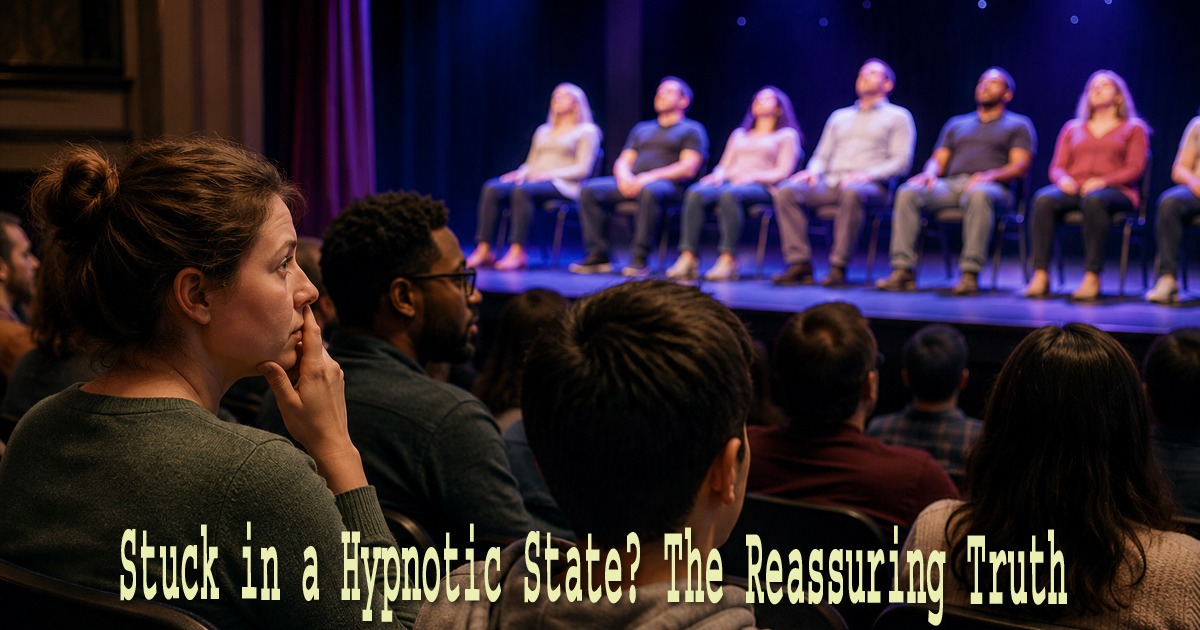
Many first-time volunteers worry about becoming stuck in a hypnotic state, even though the fear is based more on myth than reality.
The fear of getting stuck in a hypnotic state is one of the most common concerns people raise before experiencing hypnosis for the first time, whether they are considering volunteering at a stage show or booking a session with a clinical hypnotherapist. It is an understandable worry, and it deserves a direct and honest answer rather than a dismissive wave of the hand. The short answer is that getting permanently stuck in a hypnotic state is not possible. The longer answer explains exactly why that is true, and understanding it fully is what turns a vague reassurance into genuine confidence.
Hypnosis safety has a remarkably strong track record across more than a century of both clinical and stage practice. Millions of people have been hypnotized in every conceivable setting, from hospital operating rooms to Las Vegas showrooms, and the documented cases of anyone remaining permanently or dangerously stuck in a hypnotic state number exactly zero. That is not an exaggeration or a marketing claim. It is simply the historical reality of a practice that has been studied, documented, and practiced by serious professionals for generations.
Stuck in a Hypnotic State? Why You Are Always Safer Than You Think
The reassuring truth about being stuck in a hypnotic state is that the fear itself is based on a fundamental misunderstanding of what hypnosis actually is. Hypnosis is not a locked room that requires a key to exit. It is a naturally occurring state of focused attention and heightened suggestibility that the mind enters and leaves as a normal part of its everyday functioning. The same mental mechanism that allows you to become deeply absorbed in a book or a film is the one that hypnosis works with, and you have never once gotten permanently stuck in a movie.
Understanding this comparison is genuinely liberating for anyone approaching hypnosis with safety concerns. The hypnotic state is not foreign to your mind. It is not something being done to you from the outside that could malfunction and leave you trapped. It is your own mind operating in a particular mode of focus, and like every other mode your mind operates in, it shifts naturally and continuously in response to your body, your environment, and your own inner experience.
Stage Hypnosis vs Therapy Hypnosis: The Surprising Truth About Both
Where This Fear Comes From
The stuck in a hypnotic state fear has its roots almost entirely in fictional portrayals of hypnosis rather than any real documented experience. Decades of movies, television shows, and stage magic presentations have depicted hypnosis as a kind of switch that can be flipped on and left on indefinitely, leaving the subject helpless and trapped in a trance until someone with the right words or abilities comes along to switch it off again. These portrayals are dramatically compelling, which is exactly why they keep getting made, but they bear no resemblance to how hypnosis actually works.
Stage hypnosis performances have also contributed to the confusion, since they are specifically designed to make the hypnotic state look profound and total. When a volunteer appears to be deeply unresponsive to everything except the hypnotist’s voice, it creates a vivid impression of complete external control that feeds directly into the stuck narrative. In reality, that volunteer could open their eyes, stand up, and walk off stage at any moment if they genuinely wanted to. The appearance of total control is part of the performance, not a literal description of what is happening inside the volunteer’s mind.
What Actually Happens If a Session Is Interrupted
If a hypnosis session is interrupted unexpectedly, whether the hypnotist stops speaking mid induction, a fire alarm goes off, or the power cuts out during a recorded session, the subject simply returns to normal waking awareness on their own. There is no dramatic awakening required, no special countermand needed, and no danger of being left floating in an unfinished state. The mind recognizes the absence of the hypnotic guidance and naturally reorients itself to the immediate environment.
This natural reorientation might take a few seconds or a few minutes depending on how deeply relaxed the person was, and they may feel briefly groggy or disoriented in the way anyone does when woken unexpectedly from a deep rest. But that brief grogginess is the entirety of the risk involved in an interrupted session. It is temporary, harmless, and self resolving without any intervention required.
Can You Really Get Stuck in a Hypnotic State?
No. This is one of the most thoroughly examined questions in the entire history of hypnosis research, and the answer has never changed. No credible clinical or research institution has ever documented a case of a person becoming permanently or dangerously stuck in a hypnotic state as a result of legitimate hypnosis practice. The question has been studied, tested, and revisited by serious researchers for decades, and the consensus is consistent and clear.
What researchers have found instead is that the hypnotic state, even at its deepest levels, remains a responsive and dynamic condition rather than a fixed locked state. Subjects in even the deepest recorded trance states continue to respond to environmental stimuli, maintain awareness of genuine danger, and retain the ability to exit the state when their own needs require it. The mind simply does not work in the way the stuck narrative requires it to work.
What Hypnosis Actually Is and Is Not

A hypnotic state is typically a calm condition of focused attention rather than a loss of control or awareness.
Hypnosis is a state of narrowed, focused attention combined with heightened responsiveness to suggestion. It is not unconsciousness, it is not sleep, and it is not a condition of total external control. The person in hypnosis remains an active participant in their own experience throughout the entire process, even when their outward behavior suggests deep passivity. Their critical faculties are quieter than usual, their imagination is more engaged than usual, and their responsiveness to the hypnotist’s suggestions is heightened, but none of these changes remove their fundamental ability to respond to their own genuine needs and circumstances.
Hypnosis is also not a foreign state that is imposed on the mind from outside. It is a naturally occurring mode of consciousness that human beings enter spontaneously many times each day, during daydreaming, during absorbing creative work, during the moments before sleep, and during deeply engaging conversation. A skilled hypnotist guides a person into this state deliberately and uses it purposefully, but the state itself is entirely native to the human mind. Something that your mind generates naturally cannot trap you permanently inside it.
What the Research and Experts Say
Decades of clinical hypnosis research have produced no documented evidence of anyone becoming permanently stuck in a hypnotic state. The American Psychological Association, the British Society of Clinical Hypnosis, and every major professional body that has examined hypnosis safety has reached the same conclusion. Hypnosis, practiced by a trained and ethical professional, carries an extremely low risk profile compared to many other psychological interventions.
Experienced stage hypnotists with careers spanning hundreds or thousands of performances tell the same story from the practical side of the profession. In a lifetime of stage work, the closest thing to a stuck subject that any reputable practitioner reports is the occasional volunteer who is so deeply relaxed they take a little longer than usual to return to full alertness, something that resolves completely within minutes without any lasting effect whatsoever.
How the Body Naturally Exits the Hypnotic State

People naturally return to normal waking awareness, which is one reason becoming stuck in a hypnotic state is not considered possible.
The human body and mind have built in mechanisms that prevent the hypnotic state from persisting indefinitely, regardless of what the hypnotist does or does not do. These mechanisms operate automatically and do not require any conscious effort or outside intervention from the subject. Understanding them removes the last remaining logical support for the stuck in a hypnotic state fear, since they demonstrate that the exit from hypnosis is hardwired into the way the mind and body function together.
These natural exit mechanisms are not unique to hypnosis. They are the same regulatory systems that prevent you from staying in any single mental state indefinitely, whether that is deep concentration, emotional intensity, meditative absorption, or sleep itself. The mind is inherently dynamic and self regulating, and hypnosis is no exception to that fundamental principle.
Is Stage Hypnosis Real? The Surprising Truth Behind the Show
The Natural Drift Back to Waking Awareness
If a person in hypnosis is simply left alone without further guidance, their mind naturally begins to drift back toward ordinary waking consciousness within a short period of time. The narrowed focus that characterizes the hypnotic state gradually expands as the mind’s natural restlessness reasserts itself. Environmental sounds, physical sensations, and the ordinary pull of conscious thought all work together to draw attention back outward from the inward focused hypnotic state.
This drift happens at different speeds for different people and in different conditions. A highly responsive subject in a very quiet environment might take longer to drift back than a lightly hypnotized person in a room with background noise. But the direction of travel is always the same. Left to its own devices, the mind moves naturally and inevitably back toward waking awareness. It does not move deeper into trance indefinitely, and it does not stall in a fixed state that requires external rescue.
Why Sleep Is the Worst Case Scenario Not a Danger
The absolute worst thing that can happen if a hypnosis session is left completely unfinished is that the subject falls asleep and wakes up normally after a period of natural sleep. This is not a danger. It is simply a nap. The hypnotic state, if left without any guiding suggestions to maintain it, naturally transitions into ordinary sleep as the mind follows its own biological rhythms. From sleep, the person wakes up exactly as they would from any other rest, feeling refreshed and entirely themselves.
Knowing this worst case scenario reframes the entire stuck in a hypnotic state concern in a very practical way. The question is not whether you could be trapped forever in hypnosis, since that is not possible. The question is whether you might fall asleep during an unfinished session and need to be gently woken up, which is both harmless and easily managed by any responsible practitioner.
How Professional Hypnotists Ensure Safe Exit Every Time
Beyond the natural exit mechanisms built into the hypnotic state itself, professional hypnotists follow established practices designed to ensure that every subject returns to full waking awareness completely, comfortably, and with no residual effects at the close of every session or performance. These practices are not optional extras. They are considered fundamental professional responsibilities by every serious practitioner in both the stage and clinical traditions of hypnosis.
Ormond McGill, widely regarded as the Dean of American Hypnotists, was emphatic throughout his career that bringing every subject back to complete and clear waking awareness was a non negotiable ethical obligation for any hypnotist. He documented specific dehypnotization techniques and insisted that mastering them was as important as mastering the induction itself, since the close of a session is as significant as its beginning for the safety and well being of the subject.
The Waking Suggestion and Dehypnotization Process
Professional hypnotists use a formal process at the close of every session to guide the subject back to full waking awareness. This typically involves a series of suggestions that progressively reorient the subject toward their physical environment, counting sequences that signal a return to normal consciousness, and positive post session suggestions designed to ensure the person feels alert, refreshed, and completely themselves upon opening their eyes. This process is practiced and refined by every serious hypnotist as a core professional skill.
In clinical hypnotherapy, the dehypnotization process is typically gentle and gradual, giving the client time to reorient at a comfortable pace before being expected to engage in conversation or leave the session room. In stage hypnosis, the waking process is often more energetic and immediate, since the performance context requires volunteers to return to full alertness quickly and visibly in front of the audience. Both approaches achieve the same result through different means appropriate to their different contexts.
What a Responsible Hypnotist Does If Someone Goes Unusually Deep
Occasionally a highly responsive subject will enter a deeper state of trance than the hypnotist anticipated, particularly in stage settings where the combination of social dynamics, audience energy, and rapid induction techniques can produce stronger responses than expected. A trained and responsible hypnotist recognizes this immediately from the subject’s physical cues and adjusts their approach accordingly, using specific techniques designed to bring the subject back up to a lighter working level before proceeding.
If a subject takes longer than usual to return to full waking awareness at the close of a session, the practitioner simply continues the dehypnotization process with additional suggestions, a calm and reassuring tone, and patient repetition of the reorientation sequence until the subject is fully alert. This situation, while uncommon, is handled routinely by experienced practitioners and carries no danger when managed correctly. It is part of the professional competency that every serious hypnotist develops through training and practice.
Hypnotized on Stage: The Amazing Truth About How It Feels
Special Concerns Around Stage Hypnosis Safety
Stage hypnosis introduces a set of safety considerations that do not exist in the clinical context, simply because the performance environment is more unpredictable and the hypnotist is working with multiple subjects simultaneously in front of a live audience. A responsible professional stage hypnotist anticipates these variables and has clear protocols for managing them before every show begins.
The stage context also means that volunteers are returning to full awareness in a public setting surrounded by an audience that has just watched them do entertaining things, which can create a brief moment of social disorientation on top of the normal reorientation process. A skilled hypnotist manages this transition carefully, ensuring that every volunteer feels dignified, comfortable, and completely clear before they return to their seats.
Why Volunteers Are Protected Throughout a Stage Show
Professional stage hypnotists take the safety of their volunteers seriously throughout the entire performance, not just at the close of the show. This means monitoring each volunteer continuously for signs of distress or unexpectedly deep response, keeping all suggestions within safe and comfortable boundaries, and maintaining awareness of each individual’s state even while managing the broader entertainment flow of the performance. A volunteer’s well being always takes priority over the entertainment value of any particular moment in the show.
Responsible stage hypnotists also screen volunteers before the show begins, looking for any obvious signs that a person might not be a suitable candidate for stage hypnosis. While this screening is necessarily informal in a live entertainment context, it provides an important first line of protection by reducing the likelihood that someone with a contraindicated condition ends up on stage in the first place.
What to Do If You Feel Disoriented After a Show
If you feel unusually groggy, spacey, or disoriented after coming out of hypnosis at a stage show, the first thing to know is that this is temporary and self resolving. Sit quietly for a few minutes, drink some water, breathe slowly, and give your mind and body time to complete their natural reorientation process. Avoid rushing back into noisy or busy environments immediately, and let a friend or companion know how you are feeling so they can stay with you until you feel fully yourself again.
If you feel significantly disoriented or distressed after a stage show in a way that does not resolve within fifteen to twenty minutes of quiet time, speak to the hypnotist directly. Any professional performer will take this seriously and will work with you to ensure you are fully comfortable and clear before you leave the venue. This situation is rare, but a responsible hypnotist is always prepared for it and will handle it with care and competence.
The Bottom Line on Hypnosis Safety
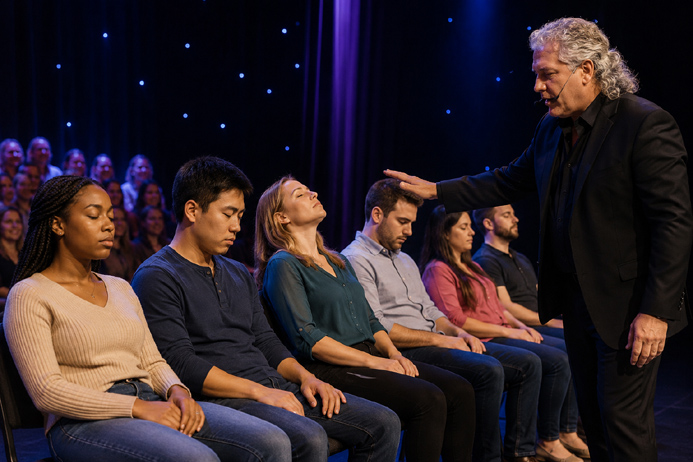
Professional hypnotists actively monitor participants and use established procedures to ensure nobody remains in a hypnotic state longer than intended.
Hypnosis, practiced by a trained and ethical professional in either a stage or clinical setting, is one of the safer interventions available in either entertainment or therapeutic contexts. The stuck in a hypnotic state fear, while entirely understandable given how hypnosis has been portrayed in popular culture, does not reflect the reality of how the hypnotic state works or how responsible practitioners manage their subjects and clients. The evidence accumulated across more than a century of practice points consistently in one direction, hypnosis is safe, the exit is always available, and the mind’s own natural mechanisms ensure that no one remains in trance indefinitely.
Approaching hypnosis with accurate information rather than fictional fears opens the door to experiencing it for what it actually is, a fascinating and genuinely useful application of the mind’s own natural capacities, whether in the entertaining context of a stage show or the deeply personal context of therapeutic work.
Who Should Exercise Extra Caution
While hypnosis is safe for the vast majority of people, there are specific groups who should exercise additional caution or consult a qualified professional before participating in any form of hypnosis. People with a history of psychosis, severe dissociative disorders, or active epilepsy should discuss hypnosis with their healthcare provider before proceeding. Individuals who are currently experiencing a significant mental health crisis should postpone hypnosis until they are in a more stable condition and working with appropriate professional support.
These cautions apply primarily to clinical hypnotherapy, where the depth and nature of the work can engage with sensitive psychological material. For stage hypnosis, a responsible hypnotist’s screening process provides a practical safeguard, but individuals in the groups above are best advised to enjoy the show from their seat rather than volunteering for the stage experience until they have confirmed with their own healthcare provider that it is appropriate for their situation.
Why Hypnosis Has Such a Strong Safety Record
Hypnosis has maintained its strong safety record across generations of practice because the hypnotic state itself is inherently self limiting and because the professional traditions of both stage and clinical hypnosis have always placed subject safety at the center of their ethical frameworks. The combination of a naturally safe psychological mechanism and a community of practitioners committed to responsible use has produced a practice with an enviable safety profile that compares favorably with many far more widely accepted interventions.
The fear of being stuck in a hypnotic state has never been supported by real world evidence because the real world experience of hypnosis simply does not work that way. Every person who has ever been hypnotized has come back out again, without exception, and the vast majority of them have done so feeling relaxed, clear, and entirely unharmed. That consistent, unbroken track record spanning more than a century of practice is the most honest and reassuring answer to the stuck in a hypnotic state question that anyone could offer.

Known as The Man Who Notices, Mike Lamp is a theatrical hypnotist and psychic performer with more than twenty years of live stage experience. His work emphasizes observation, psychological influence, and measured presentation rather than spectacle or provocation. Performances are tailored for adult audiences, private events, and professional settings where control, clarity, and atmosphere matter.


Leave a Reply
You must be logged in to post a comment.