22
Mar
Zodiac Meaning Explained: Clear Guide to Symbolism
Zodiac Meaning Explained: Ancient History You Never Knew Existed

The zodiac meaning stretches back thousands of years to the first sky-watchers who mapped the heavens
The zodiac is one of humanity’s most enduring systems of cosmic meaning, connecting ancient astronomy, metaphysical symbolism, and the deep human desire to find pattern and purpose in the stars. To explore zodiac meaning is to follow a thread running through thousands of years of human thought, ritual, and philosophical inquiry. It is a subject that rewards careful attention.
Read about Protection Rituals Uncovered in our Exclusive Article
The Ancient Origins of the Zodiac and Early Astronomical Records
The earliest traceable roots of the zodiac lie in Mesopotamia, specifically within the astronomical tradition of ancient Babylon. Babylonian sky-watchers, working as early as the second millennium BCE, began systematically recording the positions of celestial bodies against a consistent band of sky. Their clay tablets, many of which survive in museum collections today, show careful notation of planetary movements relative to fixed star groupings. These records were not idle curiosity. Babylonian scholars believed the heavens communicated the intentions of the gods, and tracking celestial patterns was a matter of civic and religious importance.
The division of the ecliptic, the apparent annual path of the sun through the sky, into twelve roughly equal sections is credited to Babylonian astronomical practice around the fifth century BCE. Each section corresponded to a constellation already familiar from Babylonian star lore. This structural decision, twelve divisions of thirty degrees each, gave the zodiac its enduring form. Understanding zodiac meaning requires starting here, with this early act of systematic sky-reading that imposed measurable order on the heavens.
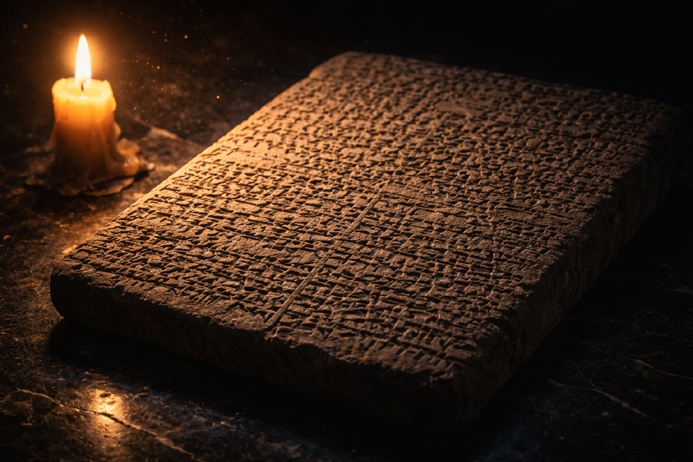
Zodiac meaning was first recorded in clay by Babylonian astronomers tracking the night sky
How Greek and Egyptian Cultures Shaped Zodiac History
When Babylonian astronomical knowledge reached the Greek world, it did not arrive as a fixed system. Greek philosophers and mathematicians absorbed it, questioned it, and reworked it through their own intellectual frameworks. Figures such as Hipparchus, who calculated the precession of the equinoxes in the second century BCE, and later Claudius Ptolemy refined the mathematical underpinnings of the zodiac, grounding it in geometric models of planetary motion. Ptolemy’s second-century CE work, the Mathematike Syntaxis, known in the West through its Arabic-derived title Almagest, became the authoritative text for astronomical and astrological knowledge across cultures for well over a thousand years.
Egyptian influence came through Alexandria, that remarkable crossroads city where Greek philosophy, Egyptian religious symbolism, and Babylonian star lore converged. Egyptian astronomical tradition contributed specific iconographic elements, including the decans, thirty-six smaller sky divisions of ten degrees each that ran alongside the ecliptic and were used independently of the zodiac before the two systems were later integrated. The merging of these traditions in the Hellenistic period gave zodiac history its richest and most symbolically layered phase. Much of what later Western astrology inherited, including the detailed mythological associations of each sign, took shape during this period of cultural synthesis.
The earliest confirmed zodiac system divided the ecliptic into twelve equal 30-degree segments, a mathematical framework first established by Babylonian astronomers around 500 BCE and later preserved in the MUL.APIN cuneiform tablet series.
The Twelve Signs of the Zodiac and Their Core Meanings
The twelve signs of the zodiac each carry a distinct symbolic character, built from a combination of element, modality, and mythological association. Aries opens the cycle, associated with initiative and the forward energy of spring in the northern hemisphere. Taurus follows, connected to material stability and the sustained effort of cultivation. Gemini represents duality and the movement of information. Cancer carries themes of nurture, memory, and protective instinct.
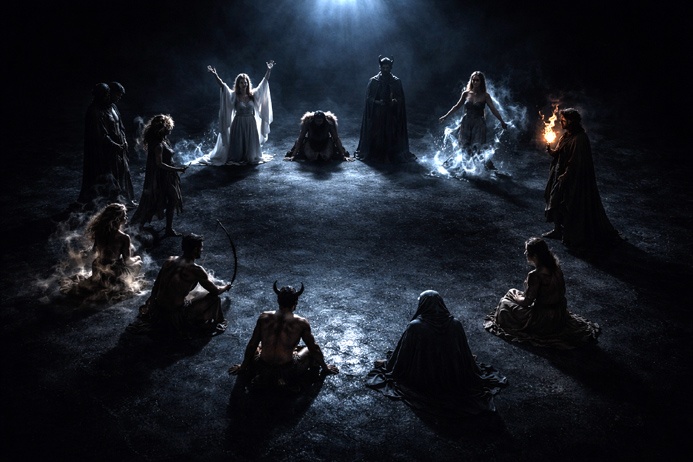
Zodiac meaning lives in the twelve archetypes each sign a distinct reflection of human nature
Leo is associated with creative expression and the individual will made visible. Virgo brings discrimination, attention to detail, and the orientation toward service. Libra marks the axis of relationship, balance, and aesthetic judgment. Scorpio carries associations with depth, transformation, and the confrontation with what is hidden. Sagittarius represents the expansive search for meaning across philosophical and geographic horizons. Capricorn is associated with structure, long-term commitment, and the slow accumulation of authority. Aquarius carries themes of collective vision and the questioning of established forms. Pisces closes the cycle, associated with dissolution, compassion, and the return to undifferentiated wholeness.
Taken together, these twelve figures form a symbolic vocabulary for the full range of human experience. They are not personality labels but living archetypes, autonomous psychic forces that appear in dream, myth, and religious symbol across cultures with remarkable consistency. Zodiac meaning, at this level, operates as a kind of archetypal grammar, one whose patterns surface not because the stars compel them but because the human psyche carries them already.
The Metaphysical Meaning of Astrology and Cosmic Symbolism
Beyond its astronomical framework, the zodiac functions as a map of consciousness. In metaphysical interpretation, the twelve signs describe not just personality types but stages of spiritual and psychological development. The sequence from Aries to Pisces can be read as a journey from undifferentiated ego-consciousness through the progressive encounter with the shadow, the anima or animus, and the Self, arriving finally at dissolution into the collective ground from which individual identity first emerged. This reading of zodiac meaning does not require literal belief in planetary influence. It asks only that the symbols be taken seriously as a language for describing inner experience.
The four elements, fire, earth, air, and water, organize the signs into groupings that carry their own metaphysical weight. Fire signs are associated with inspiration and identity. Earth signs with embodiment and practical reality. Air signs with thought, connection, and the social world. Water signs with feeling, intuition, and the unconscious dimensions of experience. These elemental divisions give the zodiac a philosophical coherence that extends well beyond its calendrical function.
The three modalities, cardinal, fixed, and mutable, add another layer of meaning. Cardinal signs initiate. Fixed signs sustain. Mutable signs adapt and dissolve. Together with the elemental structure, the modalities produce a symbolic system of considerable depth. Those who work seriously with zodiac meaning as a contemplative or interpretive tool find these layered structures a source of genuine complexity rather than simple categorization. The modalities, read psychologically, describe three fundamental orientations of the libido: its drive to initiate, its need to consolidate, and its capacity for transformation. None is superior. Each is necessary to the whole.
The word “zodiac” derives from the Ancient Greek zōidiakos kyklos, meaning “circle of little animals,” though several of the twelve signs including Libra and Aquarius, represent objects or human figures rather than animals.
Zodiac Origins in Babylon and the Birth of Astrological Archetypes
Returning to Babylonian origins with closer attention, it becomes clear that the original twelve sky divisions were not merely astronomical markers. Each section of sky was associated with a specific divine figure or mythological narrative within Babylonian religious culture. The constellation known in Greek tradition as Leo, for example, was linked in Babylonian sky lore to the lion-headed figure associated with solar power and kingship. What Greek culture later rationalized and systematized, Babylonian culture had grounded in narrative and ritual.
The word zodiac itself derives from the Greek zodiakos kyklos, meaning circle of animals, though not all twelve signs are animal figures. The Greek naming reflects the heavy presence of creature symbolism in the inherited Babylonian tradition. Many of the astrological archetypes still in use today, the ambitious sea-goat of Capricorn, the paired figures of Gemini, the scales of Libra, carry traces of their Babylonian source material. Zodiac meaning, properly understood, is inseparable from this layered history of mythological inheritance.
Celestial Symbolism Across Cultures: The Zodiac Beyond the West

Zodiac meaning was charted by hand across centuries of celestial maps and stargazing traditions
The Western zodiac is the most widely known, but the human impulse to divide the sky into meaningful segments appears across many unrelated cultures. The Chinese zodiac operates on a twelve-year cycle rather than a twelve-month one, assigning an animal archetype to each year. That such animal symbols recur across unrelated traditions points toward what Jung described as the collective unconscious, a shared psychic substrate beneath individual cultures that generates similar symbolic figures independently because they answer to the same inner necessities. The Vedic tradition of India developed its own astrological system, Jyotisha, which shares the twelve-sign framework but uses a different calculation method, the sidereal rather than tropical zodiac, producing a system with a distinct symbolic flavor.
Mesoamerican cultures, including the Maya, developed elaborate calendar systems that organized time through interlocking cycles of symbolic meaning. Though not zodiacal in the strict sense, these systems demonstrate the same cosmological ambition. The search for zodiac meaning, or its cultural equivalent, appears to be a recurring feature of complex civilizations attempting to situate human life within a larger ordered universe.
During the Hellenistic period, the zodiac was formally linked to the four classical elements: fire, earth, air, and water. With each element assigned to three signs, a tripartite structure that became foundational to Western astrological interpretation and remains in use today.
Why the Zodiac Still Holds Metaphysical Meaning Today
The persistence of the zodiac in contemporary culture is not simply a matter of habit or nostalgia. For many people, engaging with zodiac meaning offers a framework for self-reflection that feels more nuanced than simple personality typing and more grounded than purely abstract philosophy. The symbols are old enough to carry accumulated cultural weight. They are also flexible enough to be applied with varying degrees of literalism or metaphorical distance.
The zodiac wheel, with its twelve divisions mapped across a circle, visually expresses the idea of wholeness through differentiation. Each sign is distinct, yet each belongs to a continuous cycle. This structure resonates with philosophical traditions that hold the universe to be both unified and endlessly varied. Zodiac meaning, in this reading, is not finally about prediction or fixed character types. It is about the human practice of finding intelligible form in the passage of time and the vast, indifferent spread of the night sky.
Editor’s Reflection
What draws people back to the zodiac, generation after generation, is not the promise of answers but the quality of the questions it makes possible. The system has survived translation across languages, cultures, and centuries precisely because its symbols are durable without being rigid. Zodiac meaning, in the end, is less a fixed doctrine than a shared vocabulary, one that different eras have filled with their own preoccupations and found, somehow, still useful.
It is worth sitting with that for a moment. Does zodiac meaning resonate for you as a philosophical framework, a personal lens, or something harder to categorize? What does it say about human nature that so many unrelated cultures arrived at similar impulses to map the sky and find themselves reflected there? And do the symbols still carry weight for you, or have they become too familiar to see clearly?

Known as The Man Who Notices, Mike Lamp is a theatrical hypnotist and psychic performer with more than twenty years of live stage experience. His work emphasizes observation, psychological influence, and measured presentation rather than spectacle or provocation. Performances are tailored for adult audiences, private events, and professional settings where control, clarity, and atmosphere matter.



Leave a Reply
You must be logged in to post a comment.