16
Mar
Tanzanite Healing Properties: Powerful Crystal Meaning Guide
Tanzanite Healing Properties: Remarkable Energy and Insight

Tanzanite Healing Properties represented by a deep violet-blue gemstone used in meditation and spiritual reflection.
Tanzanite is a rare blue-violet gemstone found only near Mount Kilimanjaro in Tanzania, and it has become highly regarded among collectors and spiritual practitioners alike. In metaphysical circles, people often explore Tanzanite Healing Properties for the stone’s reputation as a tool for insight, calm reflection, and spiritual awareness. Many believe its deep shifting color represents the balance between intuition and clear thinking, making it a popular stone for meditation, personal growth, and energy work. Over time, it has gained a place alongside other well-known crystals used in modern metaphysical practice.
Read Black Tourmaline Healing Properties: Trusted Protective Stone Exclusive Article
Origin & Physical Characteristics
Tanzanite is found in only one place on Earth, a small mining region in northern Tanzania near the foothills of Mount Kilimanjaro. The gemstone was discovered in the late 1960s and quickly gained attention for its unusual color and limited geographic source. Because the deposits are confined to a relatively small area, Tanzanite is considered far rarer than many other gemstones. This scarcity has contributed to its reputation as a special stone among collectors, jewelers, and those interested in mineral specimens.
Visually, Tanzanite is known for its striking blue to violet tones, which can appear to shift depending on the lighting and viewing angle. This effect, called pleochroism, allows the stone to display flashes of blue, purple, and sometimes hints of burgundy within the same crystal. When cut and polished, Tanzanite often shows remarkable depth and clarity, giving it a luminous appearance that makes it stand out in jewelry and display pieces.
Most gem-quality Tanzanite undergoes controlled heat treatment to enhance its blue and violet color, a process widely accepted within the gemstone trade.
Historical & Cultural Associations
Tanzanite does not appear in ancient records the way many traditional gemstones do, largely because it was only discovered in 1967. However, the region where it was found has long been home to the Maasai people of northern Tanzania, and the stone quickly became woven into local cultural traditions after its discovery. Among the Maasai, the blue color of Tanzanite came to symbolize prosperity and new beginnings, and small pieces of the stone have often been given to mothers after the birth of a child as a gesture of good fortune.
As the gem entered the international market, it also gained symbolic meaning within modern spiritual and metaphysical traditions. Practitioners began associating the stone with intuition, transformation, and inner awareness, partly because of its rare origin and unusual color shift. Over time, Tanzanite developed a reputation as a stone linked to personal insight and spiritual growth, and it is now commonly referenced in contemporary crystal lore and meditation practices.
Symbolism & Elemental Links
In metaphysical symbolism, Tanzanite is often associated with transformation, insight, and the quiet process of personal awakening. Its shifting blue and violet tones are commonly linked with the meeting point of thought and intuition, suggesting a balance between clear reasoning and deeper inner awareness. Many traditions also connect the stone to the element of air or ether, representing communication, higher understanding, and the unseen forces that guide natural cycles of growth and change.
Lunar / Solar Associations
While Tanzanite is not traditionally tied to a specific planet or seasonal cycle, many modern crystal practitioners associate it with lunar energy because of its calming color and reflective qualities. The stone is often linked symbolically with the moon’s role in intuition, quiet reflection, and inner awareness. In meditation practices, Tanzanite is sometimes used during evening or nighttime sessions, when the softer atmosphere is believed to support contemplation and spiritual focus.
Chakra Alignment
Tanzanite is most commonly associated with the throat chakra and the third eye chakra in modern crystal practices. The throat chakra relates to communication and truthful self-expression, while the third eye is connected with intuition, perception, and inner understanding. Because of its deep blue-violet color, Tanzanite is often symbolically linked to these energy centers, where it is believed to support clearer communication, thoughtful reflection, and a stronger sense of personal insight during meditation or spiritual work.
The name “Tanzanite” was introduced by Tiffany & Co. shortly after the gem’s discovery as part of a major marketing campaign that helped establish global demand for the stone.
Metaphysical Properties
In metaphysical practice, Tanzanite Healing Properties are often associated with emotional clarity and a sense of inner calm. Practitioners frequently describe the stone as supportive during periods of reflection, when a person may be working through personal changes or seeking a clearer understanding of their thoughts and feelings. Because of its tranquil blue-violet color, Tanzanite is commonly used during meditation to encourage quiet focus and a more balanced emotional state.
Many people also connect Tanzanite Healing Properties with spiritual awareness and intuitive thinking. Within crystal traditions, the stone is sometimes used as a tool for deep contemplation, helping individuals feel more connected to their inner voice and personal direction. While these beliefs vary widely among practitioners, Tanzanite continues to hold a place in modern metaphysical practice as a symbol of insight, transformation, and thoughtful self-discovery.
Traditional Uses
Tanzanite is commonly worn as jewelry, such as pendants, rings, or bracelets, allowing the stone to remain close to the body throughout the day. In crystal traditions, keeping the stone near the throat or upper chest is thought to support communication and intuitive awareness. Some practitioners also carry a small polished stone in a pocket or pouch during moments of reflection, believing the presence of the crystal can encourage calm thinking and focused attention.
During meditation or quiet spiritual practice, many people place the stone on the forehead or hold it in their hand while breathing slowly and focusing the mind. In these settings, the stone is used as a symbolic tool to help center thoughts and encourage insight. For those who explore Tanzanite Healing Properties, the crystal is often incorporated into personal rituals that focus on clarity, self-awareness, and a deeper connection to inner guidance.
Geological studies identify Tanzanite as a blue-violet variety of the mineral zoisite, formed through unique metamorphic conditions involving vanadium during tectonic activity.
Care & Cleansing
Tanzanite should be handled with care because it ranks about 6 to 6.5 on the Mohs hardness scale, making it softer than many common gemstones and vulnerable to scratches, harsh chemicals, and sudden temperature changes. To clean the stone, most collectors recommend using mild soap, warm water, and a soft cloth, avoiding ultrasonic cleaners or steam methods. In crystal practices, some people also cleanse the stone energetically by placing it in moonlight, resting it on a bed of dry crystals such as quartz, or allowing it to sit in a quiet space between uses.
Charging the Stone
Many practitioners believe a stone can be refreshed by placing it in a calm environment where it can rest and absorb natural energy. Tanzanite is often set in soft moonlight overnight or placed near clear quartz during quiet meditation periods, practices that many crystal traditions believe help refresh the stone’s symbolic energy without exposing it to methods such as prolonged water soaking that could damage the gem. For those who work with Tanzanite Healing Properties, this charging practice is thought to help maintain the stone’s role as a supportive focus for reflection, intuition, and spiritual awareness.
Crystal Pairings
Tanzanite is often paired with stones that support clarity, intuition, and emotional balance. Clear quartz is a common companion because it is traditionally believed to amplify the qualities of other crystals, making it a popular partner in meditation practices. Amethyst is another frequent pairing, as its violet tones and long-standing reputation for calm reflection complement Tanzanite’s association with insight and spiritual awareness. Some practitioners also combine Tanzanite with lapis lazuli or sodalite when focusing on communication, thoughtful expression, and deeper intuitive work.
🔮 Raw Tanzanite Crystal Set (2 Pieces, 20–30mm)
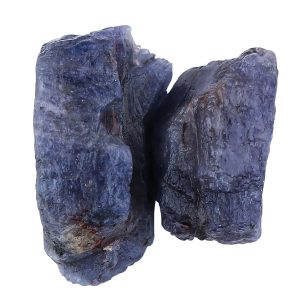
Tanzanite Healing Properties Crystal
Experience the natural beauty of raw Tanzanite, a rare blue-violet gemstone valued for its unique color and connection to reflection and insight.
Each set includes two raw Tanzanite stones, measuring approximately 20–30mm, offering a natural, unpolished look that highlights the stone’s organic structure and shifting tones. These pieces are ideal for collectors, display, or those who prefer working with crystals in their untouched form.
🌿 Imagine holding a stone that captures deep blue and violet hues, reflecting light in subtle shifts that make each piece one of a kind.
Raw Tanzanite is often chosen for meditation spaces, personal collections, or as a meaningful gift. Its natural form allows you to appreciate the stone as it was found, without cutting or polishing, preserving its original character.
In this set, you’ll receive:
- Two raw Tanzanite crystals (approx. 20–30mm each).
- Natural, unpolished gemstone with unique color variation.
- Distinct shapes and textures—no two pieces are alike.
- Compact size suitable for display, carrying, or personal use.
What makes this set stand out:
- ✔ Rare gemstone sourced from a single region in the world.
- ✔ Natural formation with authentic texture and color.
- ✔ Ideal for collectors, crystal enthusiasts, and gift-giving.
💡 A simple way to bring a rare and visually striking gemstone into your collection, whether for display or quiet reflection.
Closing Reflection
Tanzanite stands out not only for its striking color but also for the quiet sense of reflection many people associate with it. Within modern crystal traditions, Tanzanite Healing Properties are often linked with thoughtful awareness, calm communication, and personal insight. Whether appreciated for its natural beauty or used as a focus during meditation, the stone has come to represent a balance between inner understanding and the search for deeper meaning.

Known as The Man Who Notices, Mike Lamp is a theatrical hypnotist and psychic performer with more than twenty years of live stage experience. His work emphasizes observation, psychological influence, and measured presentation rather than spectacle or provocation. Performances are tailored for adult audiences, private events, and professional settings where control, clarity, and atmosphere matter.




Leave a Reply
You must be logged in to post a comment.