17
Jun
How Psychic Practitioners Teach What They Know: The Powerful Truth Behind Every Reading
The Powerful Truth Behind Every Reading

The lesson lives in the quiet.
There is a moment in every serious psychic practitioner’s career when the work shifts. The readings continue, the clients keep coming, but something else begins to take shape quietly alongside it all. The impulse to pass it on. To find words for what has mostly lived in feeling. To sit across from a student and say, here is what I know, and here is how I know it. Understanding how psychic practitioners teach requires looking at something most people never see. Not the reading itself, but everything that happens before it, around it, and long after the client has gone home.
Sonia Choquette has spent more than four decades doing exactly that. As one of the most respected intuitive teachers working today, she has made the transmission of psychic skill her life’s work. Her approach strips away the theatre and gets to the core question. Not whether psychic ability exists, but how it is recognized, developed, and eventually handed to someone else.
Sonia Choquette began teaching formal intuition development workshops in Chicago in the late 1980s, well before her first book was published in 1994.
How Psychic Practitioners Teach What They Know
The first thing most people get wrong about psychic teaching is assuming it looks like a classroom. It rarely does. The transmission of intuitive skill is closer to an apprenticeship than a course. It moves through relationship, repetition, and a great deal of productive discomfort. Sonia Choquette describes the early stage of her own teaching as less about instruction and more about permission. Giving students the experience of being believed before they believe in themselves.
Also check out Master Crystal Ball Scrying Methods for Divination Practice
The Foundation Before the Reading

Before the reading, comes stillness.
Before any student sits with a client, there is groundwork that has nothing to do with tarot cards or spirit guides. It has to do with the body. With breath. With learning to tell the difference between anxiety and intuition, between wishful thinking and a genuine signal. Choquette has always insisted that the body is the first instrument a psychic practitioner must learn to read. Not someone else’s body. Their own.
This foundation phase is where many students lose momentum. They arrive expecting to be taught how to see things. What they find instead is a teacher asking them to slow down, to notice what they already feel, and to stop overriding it. That process of unlearning the habit of self-doubt is, for most practitioners, the longest part of the education.
Trust as a Teaching Tool
Choquette uses trust not just as a concept but as an active teaching method. She creates conditions where students must act on their instincts without knowing the outcome in advance. The discomfort that follows is deliberate. It is the lesson itself. When a student names something they could not logically have known and turns out to be right, something shifts in them that no amount of explanation could have produced.
That shift is what experienced practitioners are actually trying to engineer when they teach. It cannot be forced. It can only be set up, witnessed, and then reinforced carefully so the student learns to recognize it again on their own.
The Methods Behind the Transmission
Once the foundation is in place, the teaching becomes more structured. But even here, how psychic practitioners teach varies considerably depending on the tradition, the teacher, and the student standing in front of them. Choquette draws a clear line between technique and attunement. Technique can be taught in steps. Attunement has to be caught.
Structured Practice vs. Lived Experience
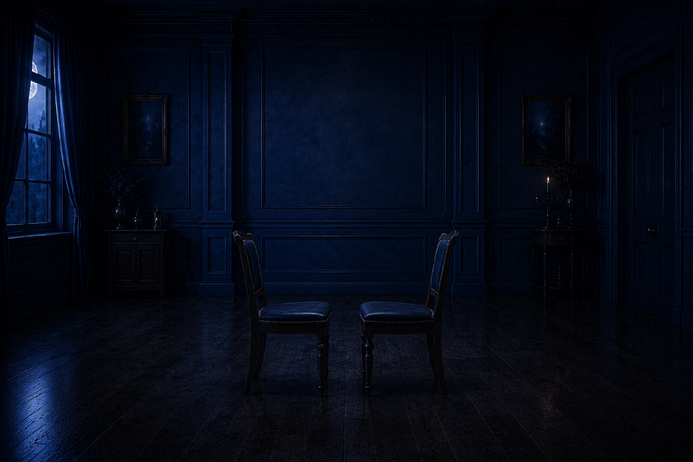
Two chairs. One unspoken curriculum.
Structured practice gives students a container. Exercises, journaling, paired readings with feedback, timed impressions, symbol work. These build the muscle memory of intuitive response and give the conscious mind something to do while deeper perception develops underneath it.
Lived experience fills in what structure cannot reach. A student who has sat with grief, navigated uncertainty, or been genuinely surprised by their own knowing brings something to their readings that no exercise can replicate. Choquette has often said that her best students are not the ones who practice the most. They are the ones who have lived the most and stayed open through it.
What Gets Passed Down and What Does Not
Every experienced practitioner carries knowledge that resists language. The precise quality of a true intuitive hit versus a projection. The way a reading changes energy in the room. When to follow a thread and when to let it go. Some of this gets passed down through direct instruction. More of it gets passed down through proximity. Through watching a skilled practitioner work and absorbing something that was never said out loud.
This is why Choquette has long emphasized the value of working alongside other practitioners, not just studying under one. Exposure to different styles, different sensitivities, and different ways of framing psychic information builds a student’s range in ways that a single teacher cannot provide alone.
How Psychic Practitioners Teach What They Know in Real Settings
The setting matters more than most teaching frameworks acknowledge. A one on one mentorship produces a different kind of learning than a group workshop. Both are valuable. Both have limits. Understanding how psychic practitioners teach in different contexts helps explain why some students thrive in one format and struggle in another.
The Spiritualist movement of the mid-1800s established some of the earliest known structured curricula for training psychic mediums, including written lesson plans and graduated assessment stages.
One on One Mentorship
Private mentorship allows a teacher to track a student’s specific patterns over time. The recurring doubt. The particular way they talk themselves out of a correct impression. The type of reading where they consistently go cold. A skilled mentor like Choquette can see these patterns forming and intervene before they calcify into habit.
The intimacy of one on one work also creates a safety that group settings cannot always provide. Students say things in private they would never risk in front of peers. They ask the questions they are most embarrassed by. They admit the experiences they are not sure anyone else would believe. That honesty accelerates development in ways that are difficult to replicate anywhere else.
Group Work and Collective Development
Group settings introduce something one on one work cannot. Witnesses. There is a particular kind of confidence that only develops when a student delivers an accurate impression in front of other people and sees their response. It lands differently than private validation. It becomes real in a new way.
Choquette has used group formats throughout her teaching career precisely because of this. The collective energy of a room full of people practicing together creates a field that amplifies individual perception. Students regularly report accessing impressions in group settings that they struggle to reach alone. The group becomes part of the teaching.
William James, the Harvard psychologist and philosopher, was an early academic figure who took psychic ability seriously as a subject of study and helped fund early research into it through the American Society for Psychical Research, founded in 1885.
The Student Becomes the Reader
There is a point in psychic development that experienced teachers recognize before the student does. The work stops being about learning and starts being about integration. The student is no longer assembling pieces. They are coming into their own. How psychic practitioners teach at this stage looks almost nothing like what came before it.
When Teaching Shifts to Trust
At this stage the teacher’s primary job is to get out of the way. To stop correcting and start witnessing. To reflect back what the student is already doing well so they can feel it clearly and repeat it consciously. Choquette describes this phase as the most delicate in the entire teaching relationship. Too much guidance here and the student stays dependent. Too little and they lose confidence before they have fully found their footing.
The teacher becomes, in this phase, less an instructor and more a mirror. The student needs to see themselves working. Needs to trust that what they are experiencing is real and that it belongs to them, not to the teacher who helped them find it.
The Moment a Practitioner Knows Their Student Is Ready

No teacher. Just the knowing.
Choquette has described this moment with great consistency across her writing and her teaching. It is not a test result or a milestone exercise. It is the first time a student stops looking at the teacher for confirmation mid-reading. The first time they trust the impression enough to follow it all the way through without checking whether it is acceptable.
That moment of self-authorizing is what the entire teaching process has been building toward. It cannot be scheduled or manufactured. It arrives when it arrives. The teacher’s job is to have prepared the ground so thoroughly that when that moment comes, the student recognizes it and does not flinch.
The lesson behind the reading is never really about the reading. It is about the long, quiet work of teaching someone to trust what they already know. That is what experienced psychic practitioners pass on. Not a method. Not a system. A way of being present to perception that, once learned, changes how a person moves through the world entirely.

Known as The Man Who Notices, Mike Lamp is a theatrical hypnotist and psychic performer with more than twenty years of live stage experience. His work emphasizes observation, psychological influence, and measured presentation rather than spectacle or provocation. Performances are tailored for adult audiences, private events, and professional settings where control, clarity, and atmosphere matter.


Leave a Reply
You must be logged in to post a comment.