10
Jun
Memorable Event Experiences: Why Guests Remember Moments Not Programs
Why Guests Remember Experiences More Than Performances
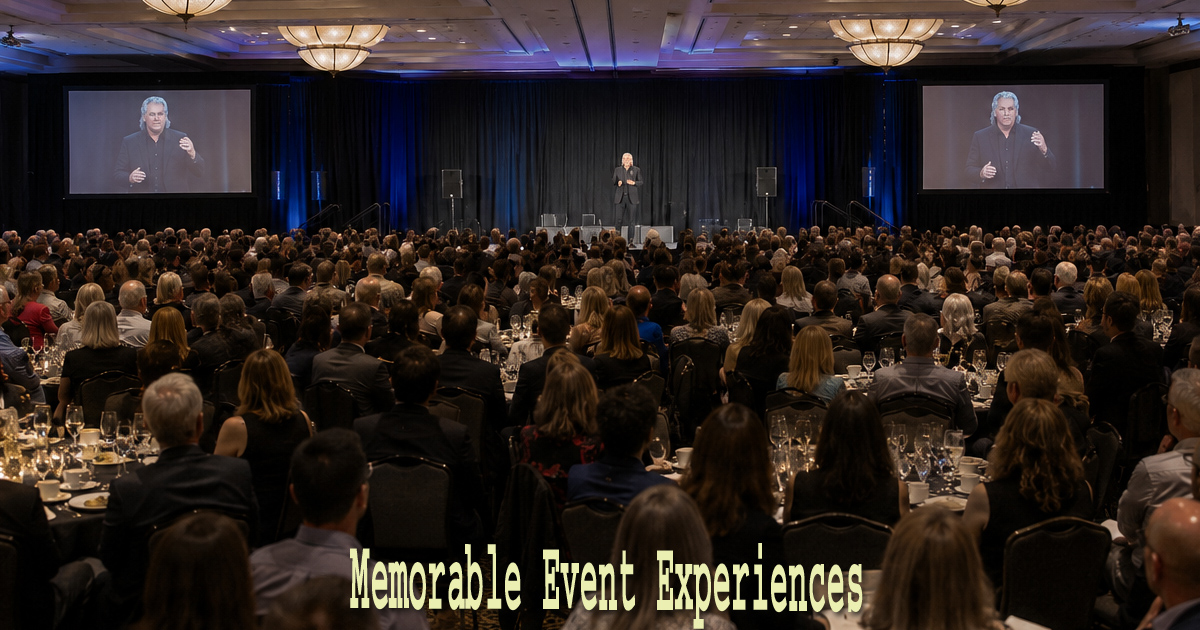
Some rooms remember themselves.
Ask someone about an event they attended five years ago and they will rarely describe the schedule. They will not mention what time dinner was served or how the centerpieces were arranged. What they remember is a moment. The strongest memorable event experiences are built around those moments. A conversation that surprised them. A room full of people reacting to the same thing at the same time. Something that pulled them out of the evening’s routine and made them feel present in a way they did not expect. Creating that kind of moment is not accidental, and understanding why it happens is one of the most useful things an event planner can carry into the planning process.
What People Actually Remember
Memory does not work the way most people assume. Human beings are not particularly good at retaining sequences of events, schedules, or details. What tends to stay is emotional content. A moment of genuine laughter. A surprise that nobody saw coming. A conversation that turned in an unexpected direction. The feeling of being in a room where something real happened.
Planners spend considerable time and energy on elements of an event that guests will process and forget within days. The menu, the room temperature, the timing of the program. Those details matter for comfort, but they rarely become the thing someone describes to a colleague the following week. What gets described is the moment. Not the context surrounding it, but the moment itself. Understanding that distinction changes how you think about every dollar and every hour invested in an event.
Research conducted at the University of California found that emotionally charged events are encoded differently in long-term memory than neutral ones, a phenomenon researchers refer to as emotional memory consolidation, which helps explain why a single unexpected moment at an event can remain vivid for years while surrounding details fade within days.
The Difference Between Watching And Experiencing
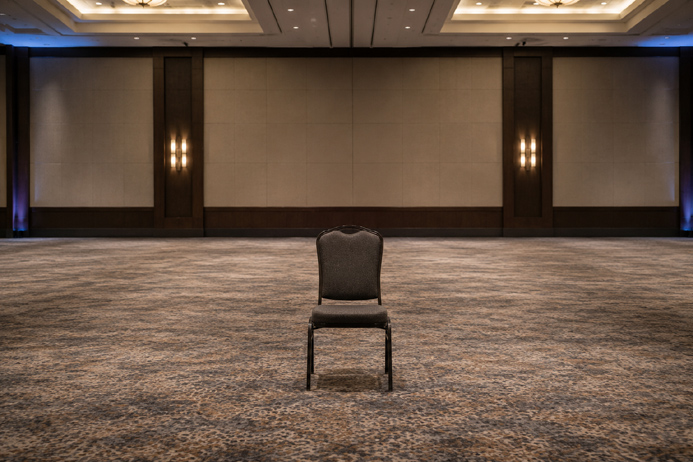
Watching and experiencing are not equal.
There is a meaningful difference between an audience that watches something and an audience that experiences something. A speaker delivers information. A band provides background atmosphere. A slideshow presents data. All of these are legitimate components of a well-run event, and all of them involve the audience in essentially the same way. The audience receives. The audience observes. The audience processes from a comfortable distance.
Something different happens when a guest becomes emotionally involved. Not as a volunteer, not as a participant in any formal sense, but simply as a person who is caught off guard in a way that produces a genuine reaction. Surprise. Curiosity. Delight. The sudden awareness that something unexpected is unfolding in front of them. That shift, from observer to participant in the emotional sense, is the difference between an event that is pleasant and an event that is remembered. It is also the shift that creates memorable event experiences worth designing for intentionally.
Why Shared Experiences Create Stronger Memories

A moment held by everyone present.
Individual moments are one thing. Shared moments are something else entirely. When an entire room reacts to the same thing at the same time, the memory of that reaction becomes collective. It belongs to everyone present. Guests who did not know each other before the evening suddenly have a common reference point, something they witnessed together that people outside the room did not see. That shared ownership of a moment is extraordinarily difficult to manufacture and remarkably easy to recognize when it happens.
The conversation afterward is the clearest signal. When guests are discussing something during dessert that happened earlier in the evening, when that same discussion continues on the drive home, when someone brings it up at the office three days later, the event has done something most events do not do. It has created a memory with enough emotional weight to survive the ordinary business of daily life. That is not a small thing. For an organization hosting an annual event, it is the difference between an event guests look forward to returning to and one they attend out of obligation.
The concept of peak-end memory, developed by psychologist Daniel Kahneman, holds that people judge an experience almost entirely by how they felt at its most intense moment and at its conclusion, rather than by averaging their feelings across the full duration of the event.
The Most Successful Events Create Conversation
I have watched this pattern repeat itself across hundreds of events over more than two decades. The guests who were most engaged during the program are the ones talking during dessert. Not about the program itself in any analytical way, but about what they felt during it. What surprised them. What they did not expect. What they are still trying to make sense of.
That conversation continues in the parking lot. It comes up again on the drive home. Someone mentions it to a spouse or a colleague who was not there, and the person describing it finds themselves struggling to explain why it was as compelling as it was. That is the quality of a memorable event experience. It resists easy description. It was something you had to be there for. And the fact that you were there for it, along with everyone else in that room, is part of what makes it worth remembering.
Audience Engagement Is Not The Same As Audience Participation
This distinction matters more than most planners realize, and it tends to come up when an event planner is concerned that their particular audience may not respond well to being called on stage or put in an unfamiliar situation. That concern is legitimate. Not every audience wants that, and not every event calls for it.
But engagement and participation are not the same thing. A guest can remain completely seated, never raise a hand, never come forward, and still be fully engaged in what is happening in the room. Engagement is internal. It is the experience of being drawn in, of paying close attention, of feeling something genuine in response to what is unfolding. A guest who sits quietly and leaves the room genuinely affected by what they witnessed was just as engaged as anyone who came forward.
The goal of memorable event experiences is not to put people on the spot. It is to create conditions where the audience, as a whole, feels something worth remembering. That can happen at any level of formal participation.
Creating Memorable Event Experiences
The planning decisions that support memorable event experiences are not fundamentally different from the planning decisions that support any well-run event. They begin with understanding the audience. Who is in those chairs, what they came expecting, and what kind of moment would land with genuine impact for that specific group of people. A moment that works beautifully for one audience can fall flat for another, not because the entertainment was poor but because the match between the program and the room was not thought through carefully enough.
Venue matters. The physical layout of a room, the sight lines, the relationship between the performance space and the audience, all of these shape how moments land. Timing matters. Entertainment placed at the right point in an evening, when the audience is present and settled rather than distracted or fatigued, performs differently than the same program placed at the wrong moment. Selecting entertainment that is built around audience engagement rather than passive observation gives the evening its best opportunity to produce the kind of shared moment that becomes a lasting memory.
Corporate event planning as a distinct professional field with dedicated trade associations and formal credentialing programs did not emerge in the United States until the 1970s, before which most organizational events were coordinated by administrative staff without specialized training in audience experience or program design.
A Story I Have Seen Repeated Many Times
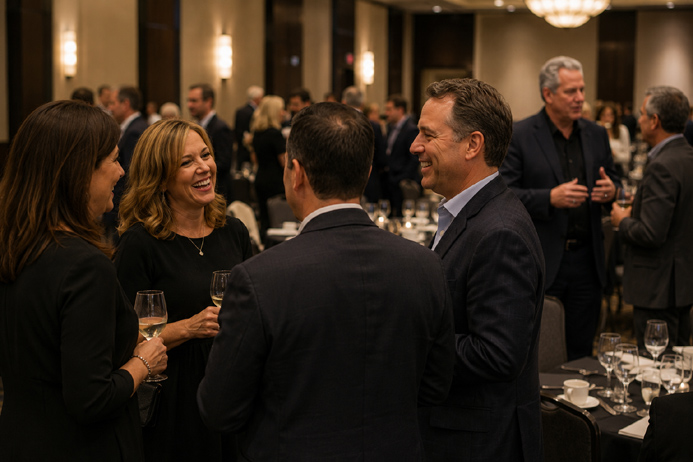
Nobody remembers the centerpieces. Ever.
Years into this work, something became clear that I did not fully appreciate at the beginning. The guests who approach me after a performance almost never lead with a comment about the program itself. They lead with a moment. A specific instant from the evening that they are still holding onto twenty minutes later. They describe it with a kind of mild disbelief, the way people describe something they witnessed but cannot entirely account for.
What stays with me from those conversations is not the praise. It is the consistency. Across corporate dinners, association banquets, college events, and private engagements in every kind of venue, the pattern is the same. Nobody remembers the menu. Nobody remembers the centerpieces or the color of the linens or which speaker presented third. They remember the moment the room changed. They remember what it felt like to be in that room when it happened. And they remember it together, which is the whole point. Memorable event experiences are not built from schedules or budgets. They are built from moments that belong to everyone who was present when they occurred.
Conclusion
The strongest events are not necessarily the most expensive or the most elaborately produced. They are the ones where something happened that guests did not expect, something that pulled the room together and gave everyone present a shared experience worth carrying home. That kind of moment does not happen by accident. It is the result of planners who understood their audience, made thoughtful decisions about the entertainment, and created conditions where a genuine experience was possible. The guests will not remember the details. They will remember how the evening made them feel, and they will keep talking about it long after everything else has faded.

Known as The Man Who Notices, Mike Lamp is a theatrical hypnotist and psychic performer with more than twenty years of live stage experience. His work emphasizes observation, psychological influence, and measured presentation rather than spectacle or provocation. Performances are tailored for adult audiences, private events, and professional settings where control, clarity, and atmosphere matter.