9
Jun
Book Entertainment for an Event Early: What Smart Planners Always Know
How Far In Advance Should You Book Entertainment For An Event?

Book entertainment for an event early. The calendar fills before you look.
Most event planners understand the importance of booking a venue early, but entertainment is often left until later in the planning process. It is an easy thing to defer. The venue feels urgent. The catering feels urgent. Entertainment feels like something that can wait until the bigger decisions are settled. In my experience, that reasoning is exactly what creates problems later. Waiting too long can reduce your options, make it harder to find a performer who genuinely fits the audience, and put unnecessary pressure on a part of the event that deserves careful attention.
Why Popular Dates Disappear First
The calendar fills up faster than most planners expect, and it fills up in predictable patterns. Holiday parties from late November through December are among the most competitive periods of the year for live entertainment. New Year’s events are typically locked in months ahead of the date. Association conferences and annual meetings often fall within the same narrow windows year after year, which means performers who work that circuit are fielding inquiries from multiple organizations at the same time.
College activities boards tend to book their entertainment calendars well in advance of each semester, sometimes beginning the process six months or more before the first event. If your event falls anywhere near a popular date on the entertainment calendar, the assumption should be that the performers you want are already receiving inquiries. The earlier you make contact, the better your position.
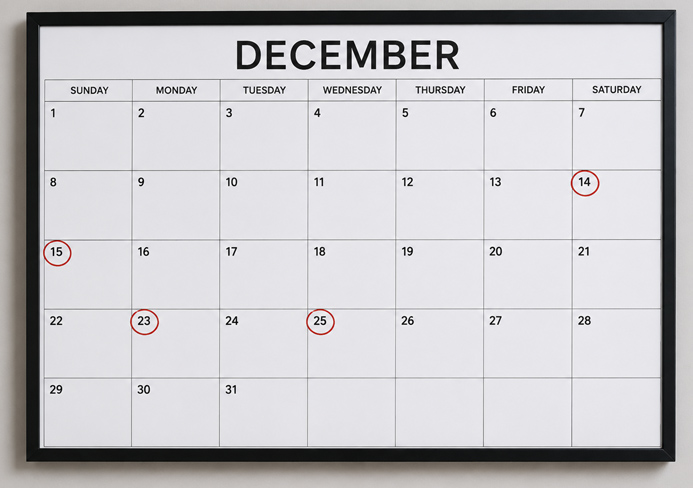
Popular dates close faster than expected.
The Difference Between Booking Three Months Out And Three Weeks Out
I received a call once from a planner who needed an entertainer for a corporate holiday dinner. The event was eighteen days away. She had assumed that booking entertainment would be straightforward and had focused her energy on the venue, catering, and program logistics first. By the time she turned her attention to entertainment, the performers she had in mind were already committed to other events that evening.
We were able to work it out, but the conversation was different than it would have been three months earlier. There was less time to review materials, discuss the audience, and think through the details that make a performance fit well in a specific room. The booking happened, but the process was compressed in ways that created pressure for everyone involved. Three months out, that same conversation is relaxed and thorough. Three weeks out, it is a series of quick decisions made under time constraints that nobody wanted.
The standard practice of holding deposits to secure performance dates became common in the American entertainment industry during the 1930s, largely in response to performers and venues routinely accepting multiple bookings for the same date and cancelling the least lucrative commitment at the last moment.
How Much Time Different Events Typically Require
Corporate Holiday Parties
For corporate holiday events, the window for securing quality entertainment typically closes earlier than most planners anticipate. For events falling in November and December, beginning the entertainment search no later than August gives planners a realistic selection of experienced performers. September is workable but narrower. By October, the best options are often gone.
Association Conferences
Association conferences benefit from the longest lead times. Many associations plan their annual meetings twelve to eighteen months in advance, and entertainment should be part of that early conversation. A keynote-style entertainment program or a closing night performance can require significant coordination with venue staff, audio and visual teams, and event schedules. Starting the entertainment search at the same time as the venue search is a reasonable standard for events of this scale.
College Events
College activities programs vary considerably depending on the size and structure of the institution, but most experienced campus entertainers are accustomed to booking cycles that begin well before the semester starts. For fall semester events, summer outreach is common. For spring events, the fall semester is not too early to begin. Campus events that fall near homecoming or spring weekend often require the earliest attention of all.
The National Association for Campus Activities, founded in 1960, was among the first organizations in the United States to formalize a structured booking marketplace specifically designed to help college activities directors plan and contract entertainment months in advance of the academic calendar.
Private Banquets
Private banquets and club events tend to have more flexibility than large institutional events, but that flexibility can create a false sense of security. A private event with a specific date, a specific room, and a specific audience still benefits from an early start. Sixty to ninety days out is a reasonable minimum for most private banquet entertainment. For larger or more formal engagements, three to six months is more appropriate.
What Happens After The Entertainment Is Booked
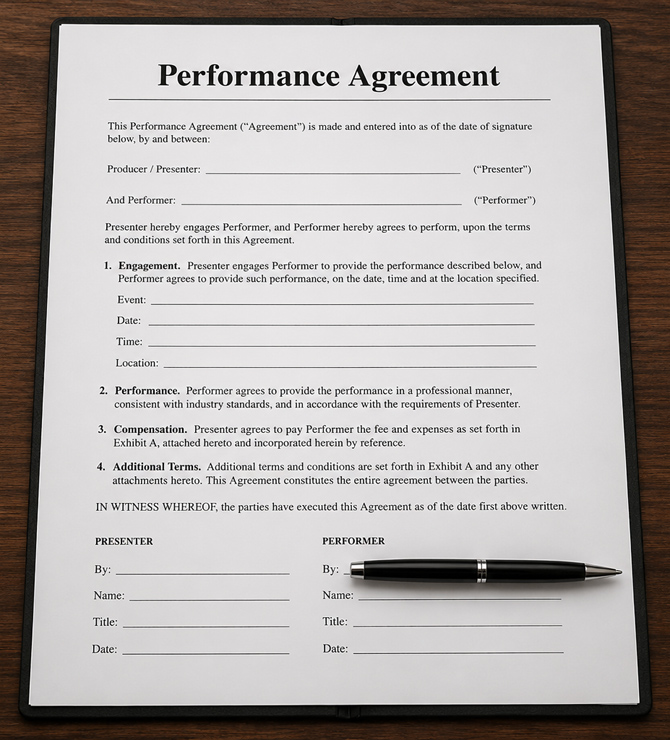
Signing is only the beginning.
One thing many planners do not fully account for is the amount of coordination that continues after the contract is signed. Booking the entertainer is the beginning of the process, not the end of it.
Contracts need to be reviewed, signed, and returned. Deposits are typically due within a specific window. Promotional materials, including performer bios, photos, and program descriptions, often need to be submitted to conference publications or event programs well ahead of the date. Technical requirements covering sound, staging, lighting, and room setup need to be communicated to the venue and confirmed. Scheduling details, including load-in times, sound checks, and show placement within the overall program, need to be worked out between the planner, the venue coordinator, and the performer.
None of these steps are complicated on their own, but they all take time and they all work better when there is adequate runway. A booking made three months out gives everyone involved the space to handle these details without urgency. A booking made three weeks out compresses all of it into a period when the rest of the event planning is also reaching its most demanding stage.
Last-Minute Bookings Are Not Always A Disaster

Last minute sometimes still works.
I want to be honest about this, because the picture is not entirely bleak. Last-minute bookings do sometimes come together well. I have had calls with very short lead times that turned into strong events, and I have worked with planners under real time pressure who handled every detail professionally despite the compressed timeline.
One call stands out. A planner reached me on a Wednesday for a Saturday corporate dinner. Her original entertainer had cancelled that morning due to a family emergency. She was calm, organized, and had already spoken with the venue. By Thursday afternoon we had confirmed the details, and the Saturday mentalist performance went exactly as it should have. The outcome was good, but it required everything to go right from the first phone call. There was no margin for any additional complication. Most last-minute situations do not have that kind of margin, and relying on things going right is not a planning strategy.
Rider documents, the technical and hospitality requirement sheets that performers send to venues after a contract is signed, became a standard part of the professional entertainment contracting process during the 1970s as touring production demands grew more complex and venue staff needed written specifications well ahead of show dates.
Questions To Ask Before Booking
Before reaching out to any entertainer, having clear answers to a few basic questions will make the booking process move faster and produce better results.
How large is the audience, and what is the general demographic? What does the venue look like, and is there a dedicated performance space or stage? What is the confirmed event date, and are there any scheduling constraints around the entertainment portion of the program? What is the primary objective of the entertainment, and is the goal to energize the room, create a memorable closing experience, or something else? What is the working budget range for entertainment? Knowing these answers before the first conversation with a performer means that conversation can focus on fit rather than logistics, and fit is ultimately what determines whether the booking is the right one.
The Advantage Of Planning Early
The clearest advantage of booking entertainment early is not simply that more options are available, though that is true. The deeper advantage is that early planning allows for an unhurried conversation about whether a particular performer is genuinely right for a specific audience. That conversation is harder to have honestly when the event is three weeks away and the options are limited.
Planners who start early have the ability to review materials carefully, ask detailed questions, compare approaches, and make a decision based on what is best for their audience rather than what is available on short notice. That kind of decision-making produces better events. It also produces a calmer planning process, which has its own value to anyone who has managed a large event in the final weeks before a deadline.
Conclusion
Good entertainment can sometimes be secured at the last minute, and occasionally those bookings work out well. But the best opportunities, the right performer for the right audience in the right room, almost always belong to planners who begin the process early and give themselves room to make a considered decision. The earlier that conversation starts, the better the outcome tends to be.

Known as The Man Who Notices, Mike Lamp is a theatrical hypnotist and psychic performer with more than twenty years of live stage experience. His work emphasizes observation, psychological influence, and measured presentation rather than spectacle or provocation. Performances are tailored for adult audiences, private events, and professional settings where control, clarity, and atmosphere matter.


