15
Jun
The Last Video Store Prediction Nobody Saw Coming
The Last Video Store Prediction Starts With Something Most People Overlook
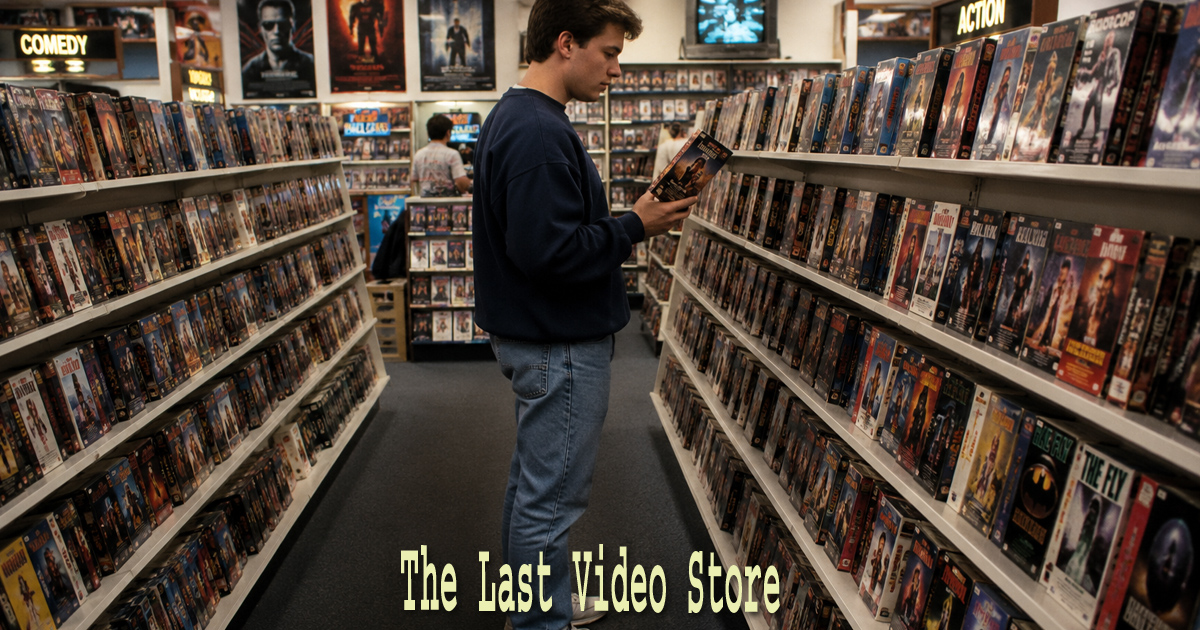
Step inside the last video store
It’s a Friday night in 1985, and the parking lot outside the video store is already full. Inside, every aisle is crowded with people working through a ritual that feels as normal as grocery shopping. Kids dash down the New Releases wall, pulling cases off the shelf and holding them up for approval, then arguing about whether the night calls for action, comedy, horror, or a cartoon. It’s the kind of argument that never gets fully resolved, just postponed until next week.
Parents stand near the counter, chatting with neighbors they mostly only see on nights like this one. The line at the register moves slowly because everyone has something to say, a recommendation to share, a late fee to argue about. The shelves are packed edge to edge, the carpet worn thin from years of foot traffic, and the faint smell of popcorn drifts over from a small machine near the door.
Nobody in that store is thinking about whether any of this will last. Why would they? It feels permanent. It feels like the way things are, and the way things will keep being.
Blockbuster opened its first store in Dallas, Texas, in 1985, the same year this article’s opening scene is set.
The Slow Disappearance of the Video Store
Then streaming arrived, and at first it barely seemed to matter. A handful of people started watching movies on their computers, then on small devices, then on televisions through boxes nobody quite understood yet. The video store kept running the way it always had, renewing memberships, restocking shelves, printing out the week’s new releases on a sheet taped to the front door.
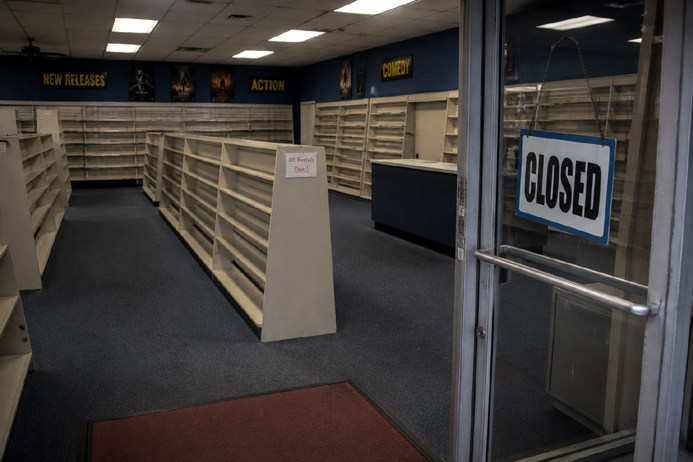
One more video store closes for good
But the shift kept building quietly in the background. One store closed on the edge of town, and nobody thought much of it. A chain location shut its doors a year later, and people shrugged, since there was another one across the city anyway. That one closed too, and before long the chain itself folded, store by store, until the familiar sign became something people only saw in old photos.
The independent stores held on a little longer. They were smaller and scrappier, run by people who knew their customers by name and could recommend a movie nobody else carried. For a while, that felt like enough to survive on. But rent still had to be paid, and fewer people were walking through the door each month. Eventually, even the most stubborn shops ran out of reasons to stay open.
The kiosks that followed didn’t last either. The little rental machines that showed up outside grocery stores and gas stations, promising a movie for a dollar a night, were supposed to be the future for a while. Within a decade, they were following the same path as the stores they replaced, taken away one parking lot at a time.
What had felt like a permanent fixture of every neighborhood slowly became something else. A memory, then a story, then a question. Did people really use to drive somewhere just to pick out a movie, and then drive it back the next day?
At its peak in the mid-2000s, Blockbuster operated roughly 9,000 stores across the United States and several other countries.
A Prediction Worth Making
I’ve seen this pattern before, more than once, and it tends to end the same way.
I have watched jukeboxes disappear. I have watched cigarette machines disappear. I have watched independent video stores disappear. My prediction is simple: the last surviving video rental store in America will one day charge admission, and people will happily pay to experience a world they missed.
It sounds like a joke until you think about what already happens at diners built to look like the 1950s, or arcades that charge admission for the privilege of playing games that used to cost a quarter.
Inside the Last Video Store in America
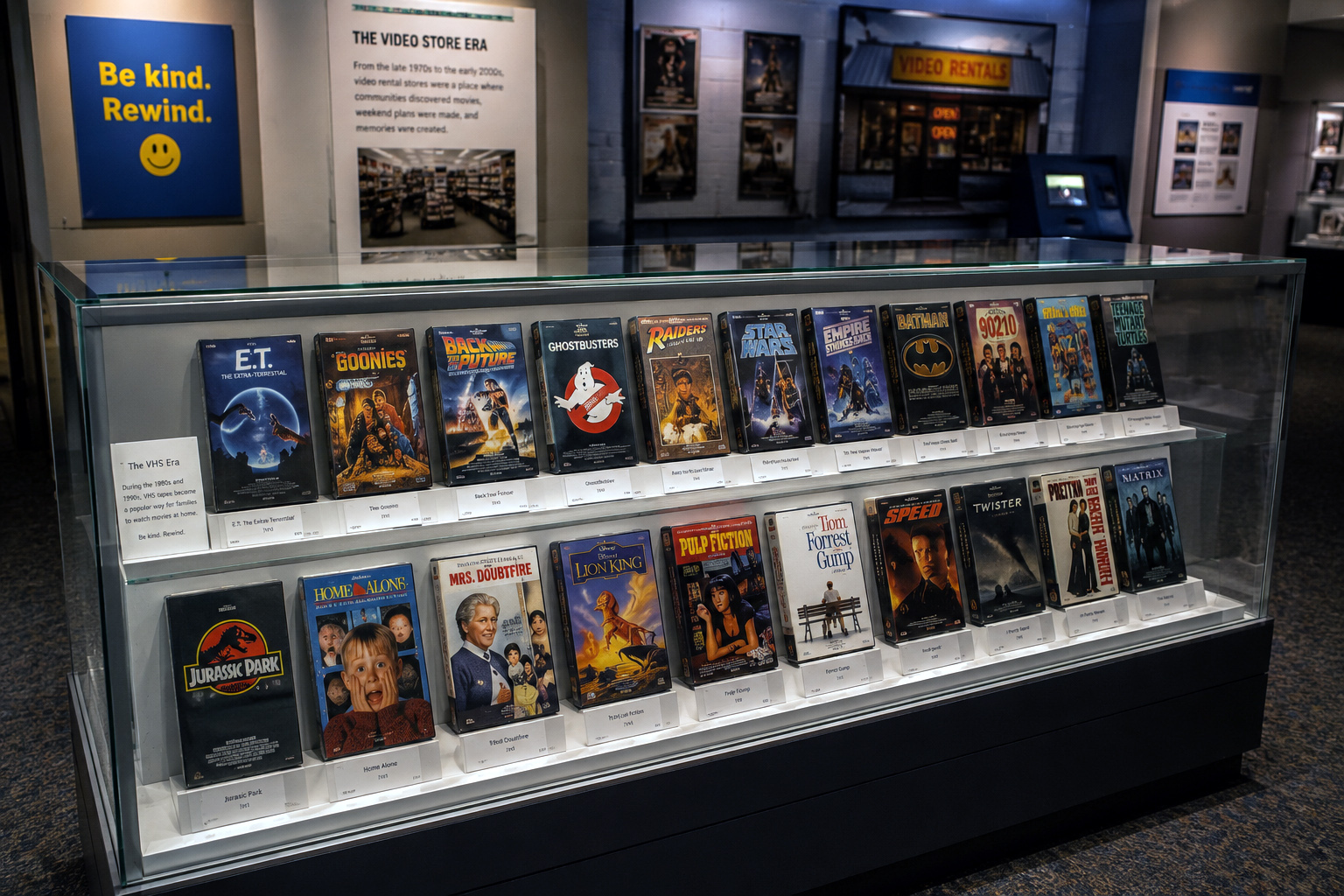
The last video store, preserved
Picture it a few decades from now. A small storefront, lights kept low and warm on purpose, the kind of lighting museums use to make old things feel important. A sign out front lists the admission price, and a small line is forming, the way there might be for a popular exhibit.
Inside, the shelves are still there, but they’re behind glass now, carefully arranged the way they once were on a Friday night. VHS tapes sit in their cases, some cracked open so visitors can see the tape itself, the little plastic reels that once had to be rewound before returning. A few working players sit on a counter, connected to small screens, so visitors can press play and watch a few seconds of static and color bars before the movie begins.
A group of teenagers walks through, phones tucked away for once, looking at everything like it belongs to another planet. One of them stops in front of a wall of cardboard cases and turns to an adult standing nearby.
“You had to drive somewhere to get a movie?” they ask, not quite in disbelief, more like they’re trying to understand a story that doesn’t fully make sense. “And then drive it back?”
The adult nods. Yes. And sometimes the movie you wanted was already rented out, so you picked something else instead, and that ended up being the one everyone remembered.
The teenager shakes their head slowly, the way people do when they’re told something true that still sounds invented. Then they move on to the next display, where someone has carefully recreated the late fee sign that used to hang over every register.
By the time the last video store becomes this kind of place, it won’t feel strange to anyone running it. It will feel like the next logical step, the same transition that happened to player pianos, soda fountains, and arcades before it. The only real difference is that most people alive at that point will still remember when it was just a store, not an exhibit.
The last operating Blockbuster store, located in Bend, Oregon, has become a well-known tourist destination and was the subject of a documentary about its survival.
The Bigger Point
Every generation looks at the technology around it and assumes, on some level, that this is just how things are now. Not in a dramatic way. Nobody walks around consciously believing their gadgets are permanent. It’s quieter than that. It’s the background assumption that lets people get on with their day, the same way nobody in that video store in 1985 was worried about whether VHS tapes would still exist forty years later.
But most of what feels permanent right now won’t be. Some of it will fade slowly, the way video stores did, hanging on in pockets long after most people assumed it was gone. Some of it will disappear faster, almost overnight, the way certain apps and platforms have already come and gone within a decade of being treated as a sure thing.
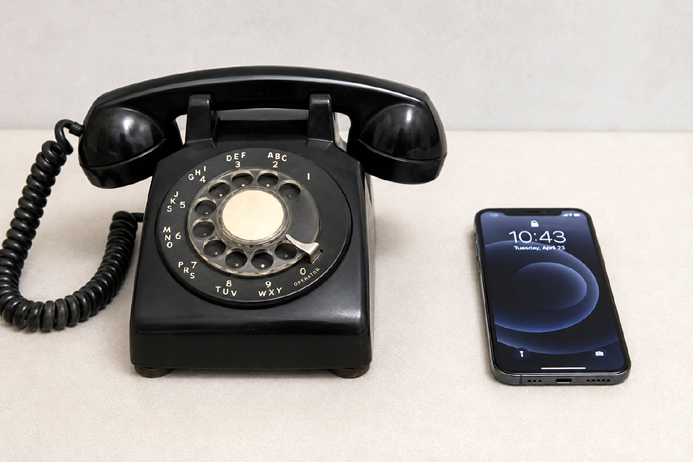
What disappears like the last video store?
The pattern is always the same. Something becomes so common that it disappears into the background, then gets replaced by something more convenient, and eventually becomes rare enough to be interesting again. That’s the path that led to a player piano sitting behind glass in a museum, and it’s the same path that, eventually, leads to the last video store charging admission.
So the real question isn’t whether this happens again. It’s what it happens to next.
Maybe it’s the idea of typing on a physical keyboard. Maybe it’s having a phone number tied to one device sitting in a house. Maybe it’s something nobody has thought to question yet, something so ordinary right now that imagining its absence feels almost impossible, which is exactly how the people in that video store in 1985 would have felt if someone had told them what was coming.
Somewhere, a version of that future museum is already being planned, just for something else. The only real question is what ends up behind the glass.

Known as The Man Who Notices, Mike Lamp is a theatrical hypnotist and psychic performer with more than twenty years of live stage experience. His work emphasizes observation, psychological influence, and measured presentation rather than spectacle or provocation. Performances are tailored for adult audiences, private events, and professional settings where control, clarity, and atmosphere matter.



Leave a Reply
You must be logged in to post a comment.