10
Jun
How to Choose an Entertainer: What the Demo Reel Will Never Tell You
The Conversation Before The Contract
Learning how to choose an entertainer often begins long before the first phone call.
Learning how to choose an entertainer involves more than comparing websites and promotional materials. Every performer has a website. Most have photos, testimonials, demo reels, and promotional materials that present their work in the best possible light. Those things matter. They should. A professional entertainer who takes their work seriously invests in how they present themselves, and that presentation tells you something useful before the first conversation ever takes place.
But it does not tell you everything. The materials tell you what the performer wants you to see. The conversation tells you who you are actually dealing with. After more than two decades performing for corporate events, association meetings, colleges, and private engagements across the country, I have come to believe that the conversation before the contract is where the most important information lives. Knowing how to choose an entertainer well means knowing what to listen for in that conversation.
The Performance Is Only Part Of The Job
A performer’s job does not begin when they walk on stage and it does not end when they walk off. What happens in between, the communication, the preparation, the coordination with venue staff, the flexibility when something changes at the last minute, is as much a part of the job as the performance itself. Possibly more, because those things determine whether the performance ever has a chance to succeed.
A professional entertainer responds to inquiries promptly and clearly. They ask thoughtful questions about the audience and the event before offering a program. They communicate their technical requirements in enough detail that the venue can prepare properly. They arrive when they say they will arrive. They handle unexpected changes without creating additional problems for the planner who is already managing a hundred other details. None of that shows up in a demo reel. All of it shows up in the weeks between the signed contract and the show date, and you can get a reliable preview of it in a single honest conversation before anything is signed.
The practice of sending printed promotional kits, including headshots, biography sheets, and press clippings, to event buyers became standard in the American entertainment industry during the 1950s, largely driven by the growth of corporate meeting business after World War II and the need for buyers to evaluate performers without traveling to see them in person.
Ask Questions Beyond The Show
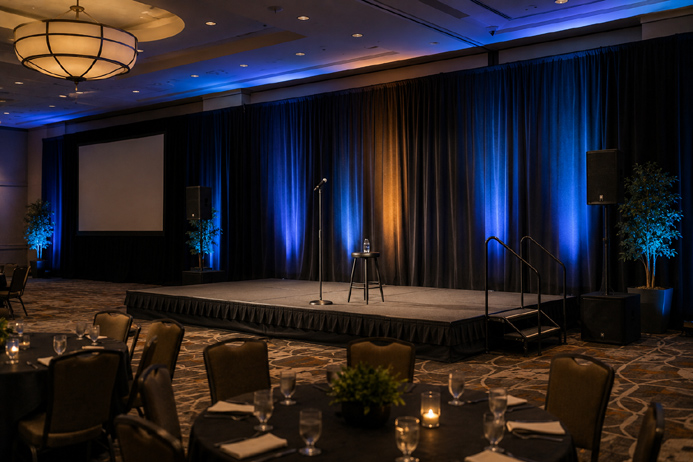
Knowing how to choose an entertainer includes understanding how they prepare before the audience arrives.
Most planners ask the right questions about the performance itself. How long is the show. What are the technical requirements. Do you have experience with audiences like ours. Those are necessary questions and they deserve direct answers.
But the questions that tell you the most are the ones that go slightly beyond the show. Ask how they handle an unexpected schedule change the day of the event. Ask what happens if the room setup is different from what was discussed. Ask how they have adapted a program when the audience turned out to be different from what the planner described. The answers to those questions reveal something the promotional materials cannot. They reveal how the performer thinks when things do not go according to plan, which is the situation every event planner eventually finds themselves in.
Listen To How They Talk About Their Audiences
This is the section of the conversation most planners do not know to pay attention to, and it is one of the most reliable signals available. Listen carefully to how an entertainer talks about the people they perform for.
A performer who is genuinely curious about audiences tends to ask specific questions. They want to know who is in the room, what the organization does, what the culture of the group is like, whether this is a formal occasion or a relaxed one. They treat the audience as the most important variable in the equation, because for a performer who has spent years in front of different rooms, that is exactly what the audience is.
A performer who sees the audience primarily as a vehicle for their own material talks differently. The conversation stays on the performance. The questions, if there are any, tend to be logistical rather than curious. There is nothing necessarily wrong with that performer as a technician. But a planner who knows how to choose an entertainer well will notice the difference between someone who is interested in doing their show and someone who is interested in serving that specific room of people. Those are not the same thing, and your audience will feel the distinction even if they cannot name it.
Talent buyers at major American corporations began requiring written contracts for entertainment engagements as standard practice in the early 1960s, a shift driven in part by a series of high-profile cancellations by name performers who accepted more lucrative bookings after signing agreements with smaller organizations.
How To Choose An Entertainer Through Conversation

One of the best ways to learn how to choose an entertainer is through a simple conversation.
You do not need a formal interview process. You do not need a prepared list of twenty questions or a scoring rubric. What you need is a real conversation, and the things worth noticing in that conversation are straightforward.
Does the entertainer listen when you describe your event, or do they wait for you to finish so they can talk about themselves. Do they answer your questions directly, or do every answer circle back to their own credentials. Do they seem genuinely interested in understanding what you are trying to create for your guests, or do they seem primarily interested in confirming the date and the fee. A performer who listens well in a booking conversation almost always listens well in a room full of people. The quality shows up early if you are paying attention.
Confidence And Ego Are Not The Same Thing
Over the years I have heard an observation from veteran agent Dave Jackson that has stayed with me. He said there are three kinds of entertainers in this business. Those who save their press, those who read their press, and those who believe their press. I have thought about that distinction many times since I first heard it, and I think it points to something worth understanding when you are trying to choose an entertainer for your event.
Confidence is necessary in this work. A performer who walks on stage uncertain of themselves communicates that uncertainty to the room within the first sixty seconds, and the room responds accordingly. You want someone who is comfortable in front of an audience, who has done this enough times to handle whatever the evening produces without visible anxiety.
But confidence and ego are not the same thing, and the difference between them is usually audible in a conversation. A confident performer talks about what they can do for your audience. A performer who has started to believe their press tends to talk about what they have done, who they have worked for, and what makes them exceptional. The work should demonstrate those things. The performer should be focused on your event. That balance, between genuine self-assurance and genuine interest in the audience, is one of the clearest indicators of someone who will serve your event well rather than simply perform at it.
What A Good Conversation Feels Like
There is a quality to a booking conversation that is going well that is worth describing, because planners who have experienced it tend to recognize it immediately in retrospect even if they did not name it at the time.
It feels like a consultation rather than a sales call. The entertainer is asking questions you find useful to answer because the answers are helping you both think through whether this is the right fit. There is no pressure toward a decision. There is a shared interest in getting the match right. By the end of the conversation you have a clearer picture of your own event than you did at the beginning, because a good performer asks questions that sharpen your thinking about what you actually want your guests to experience.
When a conversation does not go well it tends to feel one-directional. Information flows toward you rather than between you. The performer is presenting rather than conversing. You leave the call knowing more about their credits than you did before, but not necessarily more confident about whether they are the right choice for your specific audience in your specific room. That feeling is worth trusting.
The earliest formal training programs for corporate event planners in the United States began including entertainer evaluation criteria as a curriculum component in the 1980s, reflecting growing recognition that selecting the wrong performer for a corporate audience carried measurable reputational risk for the planner responsible.
The Right Choice Is The Right Fit
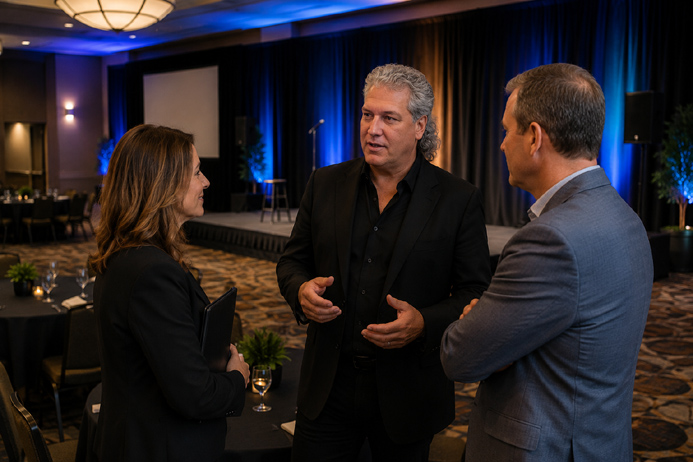
How to choose an entertainer is often less about the performance and more about finding the right fit for your audience.
The best entertainer in the world may not be the right entertainer for your audience. Fit is not a secondary consideration. It is the primary one. A performer with an extraordinary track record at college events may bring exactly the wrong energy to a formal association banquet. A sophisticated mentalism program that leaves executive audiences genuinely unsettled in the best way may land poorly with a large casual crowd looking for high-energy comedy hypnosis show.
Knowing how to choose an entertainer is ultimately knowing how to evaluate fit, and fit cannot be assessed from a website. It requires a conversation in which both parties are honest about what the event needs and what the performer actually does. A performer who tells you honestly that they may not be the right choice for a particular type of event is demonstrating exactly the kind of professional judgment you want in someone you are trusting with a room full of your guests.
Conclusion
For planners wondering how to choose an entertainer, the answer is often found in the conversation before the contract. The goal is not to find the most famous performer, the least expensive one, or the one with the longest list of corporate credits. The goal is to find someone who understands your audience, communicates clearly before the event, and arrives prepared to create the experience you want your guests to have. Those qualities are visible before the contract is signed. The conversation before the contract is where you find them. It is also, in my experience, where the best bookings begin.

Known as The Man Who Notices, Mike Lamp is a theatrical hypnotist and psychic performer with more than twenty years of live stage experience. His work emphasizes observation, psychological influence, and measured presentation rather than spectacle or provocation. Performances are tailored for adult audiences, private events, and professional settings where control, clarity, and atmosphere matter.