19
Jan
David Hoy Psychic: The Legendary Super Psychic Revealed
David Hoy: A Profile of the Super Psychic

David Hoy psychic in a classic head-and-shoulders promo shot from his heyday
David Hoy, often referred to as the David Hoy psychic or David Hoy Super Psychic, stands as a notable figure in mid-20th-century American media and paranormal circles. Active primarily during the 1960s and 1970s, he gained recognition through his syndicated columns, radio broadcasts, and public demonstrations of what he described as extrasensory perception (ESP). Hoy’s career bridged traditional entertainment and the growing public interest in psychic phenomena, positioning him as a media personality rather than a strictly occult practitioner.
His work appeared in newspapers across the country, where he offered predictions and insights into future events. While some viewed his abilities as genuine, others saw them as extensions of his earlier background in mentalism and stage performance. This article examines his life and activities based on documented accounts, focusing on his verifiable contributions to print and broadcast media.
Read The Amazing Criswell: Hollywood’s Most Fearless Psychic in our Exclusive Article
Early Life and Religious Roots
Born David Edwin Hoy on July 21, 1930, in Evansville, Indiana, Hoy grew up in a household shaped by religious influences. His father, the Reverend Clarence Hoy, served as a Baptist lay preacher, and young David followed a similar path. He pursued theological studies at Bob Jones University in South Carolina, where he trained for the ministry. During this period, Hoy incorporated simple magic tricks into his sermons to illustrate biblical concepts, a practice common among some evangelists of the era. This early use of illusion laid groundwork for his later professional pursuits.
After ordination, Hoy spent a year as a missionary in South America, an experience that broadened his worldview but also marked a turning point. Upon returning to the United States, he worked briefly as a radio broadcaster in Evansville, honing skills in public speaking and audience engagement. These formative years, from the 1950s onward, reflected a blend of spiritual commitment and performative talent. Hoy’s transition from religious work to entertainment was gradual, influenced by his growing interest in mental effects and audience interaction. By the late 1950s, he had adopted the stage name “Dr. Faust,” a persona that evoked mystery without overt supernatural claims.
David Hoy briefly authored a column on gospel magic in The Linking Ring magazine during his early ministry phase before transitioning to mentalism.
Shift to Mentalism and Public Persona
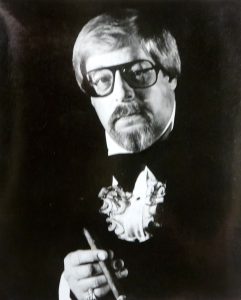
Promo shot of David Hoy psychic.
Hoy’s evolution into a full-time performer occurred during a time when interest in psychic phenomena was rising in American culture. The 1960s psychic landscape, populated by figures exploring ESP under scientific scrutiny, provided a receptive environment for his talents. Initially known as a mentalist a performer who simulates mind-reading through psychological techniques Hoy rebranded himself as a psychic consultant. This shift aligned with broader trends in media, where radio and television programs featured discussions on parapsychology.
As the David Hoy California psychic (though he later settled in Kentucky), he established a presence in the West Coast entertainment scene before expanding nationally. His methods drew from traditional mentalism, including effects like the “Tossed Out Deck,” a card routine he is credited with developing, where spectators’ thoughts appear to be divined en masse. Hoy presented these demonstrations in college lectures and public shows, emphasizing experiential aspects over definitive proof. Audiences reported a sense of wonder, though Hoy himself maintained a measured demeanor, avoiding absolute assertions about the nature of his abilities.
Syndicated Columns and Media Presence
One of Hoy’s most prominent contributions was his role as a David Hoy psychic columnist. Beginning in the mid-1960s, he authored a weekly syndicated horoscope and prediction feature distributed to approximately 350 newspapers nationwide. These columns, often titled along the lines of “Tomorrow’s News Today,” offered forecasts on events ranging from celebrity happenings to national news. The syndication model allowed Hoy to reach a broad readership, making him a familiar name in suburban and regional papers during an era when newspaper culture dominated daily information.
In addition to print, Hoy engaged with broadcast media. He appeared on radio stations such as KDKA in Pittsburgh and various programs in Boston, where he shared predictions live on air. Toward the end of his career, he produced taped segments for cable television, expanding his reach into emerging formats. These activities positioned him within the psychic self-branding era of the 1960s–1970s, a time when figures like Hoy capitalized on public curiosity without the intense scrutiny of later digital media. His work is documented in archives of mid-20th-century American paranormal media, highlighting his adaptation to syndicated column culture.
His invention of the Tossed-Out Deck routine in the early 1960s remains a staple in modern mentalism performances worldwide.
Notable Predictions and Public Impact
Hoy’s reputation as the David Hoy Super Psychic largely stemmed from his David Hoy predictions, which he documented in columns and broadcasts. Accounts describe an accuracy rate of around 85 percent, though this figure comes from promotional materials and should be viewed in historical context. He reportedly made hundreds of forecasts annually, focusing publicity on those that aligned with subsequent events a common approach in predictive work.
Among the more cited examples: In 1967, sixty days before the Silver Bridge collapsed into the Ohio River near Point Pleasant, West Virginia, Hoy described a similar disaster during a taped radio program. Two years prior to the 1968 marriage of Jacqueline Kennedy and Aristotle Onassis, he forecasted the union on Boston media outlets. In the weeks leading to Senator Robert Kennedy’s 1968 assassination, Hoy spoke at Tusculum College in Tennessee, noting that Kennedy would win the California primary but face tragedy. Earlier, in January 1969, he anticipated that personal difficulties would prevent Senator Ted Kennedy from seeking the presidency in 1972.
Other predictions included the success of singer Bobby Goldsboro’s 1968 hit “Honey,” announced before the song’s release. On a personal note, while at university in 1952, Hoy reportedly announced his father’s impending death on the exact day it occurred. These instances, drawn from interviews and biographies, illustrate Hoy’s method of blending broad statements with specific details. He traditionally understood prediction as an interpretive process, not an infallible science, and advised others to approach such practices with caution.
Publications, Recordings, and Lesser-Known Works
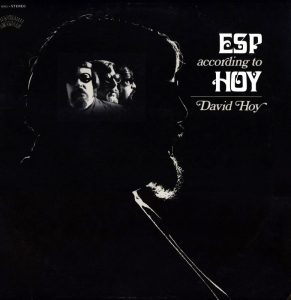
Front Cover of ESP According to Hoy Lp
Hoy contributed to literature on ESP through several books, translated into seven languages and read by international audiences. Titles such as “Psychic and Other ESP Party Games” offered practical guides for home experiments, presenting them as social activities rather than profound revelations. His autobiography elements appear in collaborative works, notably “Super Psychic: The Incredible Dr. Hoy” by John Godwin, published in 1974. This book compiles anecdotes from Hoy’s career, separating documented performances from anecdotal claims.
In audio media, Hoy released David Hoy rare records, including vinyl LPs like ”
” and “ESPecially Yours.” These recordings, now collectibles, aimed to instruct listeners on developing perceptual skills through exercises in concentration and intuition. Produced in the late 1970s, they reflect Hoy’s college lecture style, where he shared techniques from his mentalist background. While not widely distributed, these items represent a niche in paranormal history, appealing to enthusiasts of experiential practices.
No records indicate a political run, though Hoy’s early ministry and media work occasionally touched on social themes. His focus remained on entertainment and education, avoiding partisan involvement.
In his later years, Hoy taped short 90-second prediction segments titled “Tomorrow’s News Today” for emerging cable television networks.
Death and Enduring Reference
David Hoy’s death occurred on April 2, 1981, at age 50 in Paducah, Kentucky, following health complications. He passed at Western Baptist Hospital, concluding a career that spanned religious service, broadcasting, and psychic consultation. Obituaries in regional papers noted his syndicated work and public persona, underscoring his impact on 1960s psychic culture.
Today, David Hoy is still referenced in discussions of paranormal history and mentalism. Magicians credit him with innovations like the Tossed Out Deck, while researchers examine his predictions as artifacts of media sensationalism. His legacy persists in niche archives, offering insight into an era when psychic figures bridged entertainment and curiosity. For those exploring mid-20th-century American media, Hoy exemplifies a thoughtful navigator of public fascination, remembered for his columns and demonstrations rather than unverified mystique.
Editor’s Reflection
David Hoy remains one of the more intriguing figures from the golden age of syndicated psychic columns in American newspapers. Active through the 1960s and into the 1970s, he blended elements of mentalism, religious background, and media-savvy prediction into a career that reached hundreds of thousands of readers weekly. His documented work ranging from the widely distributed “Tomorrow’s News Today” features to college lectures, radio appearances, and instructional recordings offers a clear window into how extrasensory perception was packaged and presented to the mainstream public during that era.
What stands out most about David Hoy’s legacy is how much it still invites discussion decades later. Were his predictions the product of keen intuition, clever showmanship? Readers who remember his columns, who have encountered his rare vinyl records, or who study the history of mentalism often have strong opinions. We welcome your thoughts: Did you ever read David Hoy’s syndicated predictions in your local paper? What do you make of the famous examples, such as the Silver Bridge or the Kennedy forecasts? Share your recollections, questions, or perspectives in the comments below.

Known as The Man Who Notices, Mike Lamp is a theatrical hypnotist and psychic performer with more than twenty years of live stage experience. His work emphasizes observation, psychological influence, and measured presentation rather than spectacle or provocation. Performances are tailored for adult audiences, private events, and professional settings where control, clarity, and atmosphere matter.

Leave a Reply
You must be logged in to post a comment.