22
Jun
Can Skeptics Be Hypnotized? A Powerful Guide to Overcoming Doubt
Can Skeptics Be Hypnotized? What the Research Actually Shows
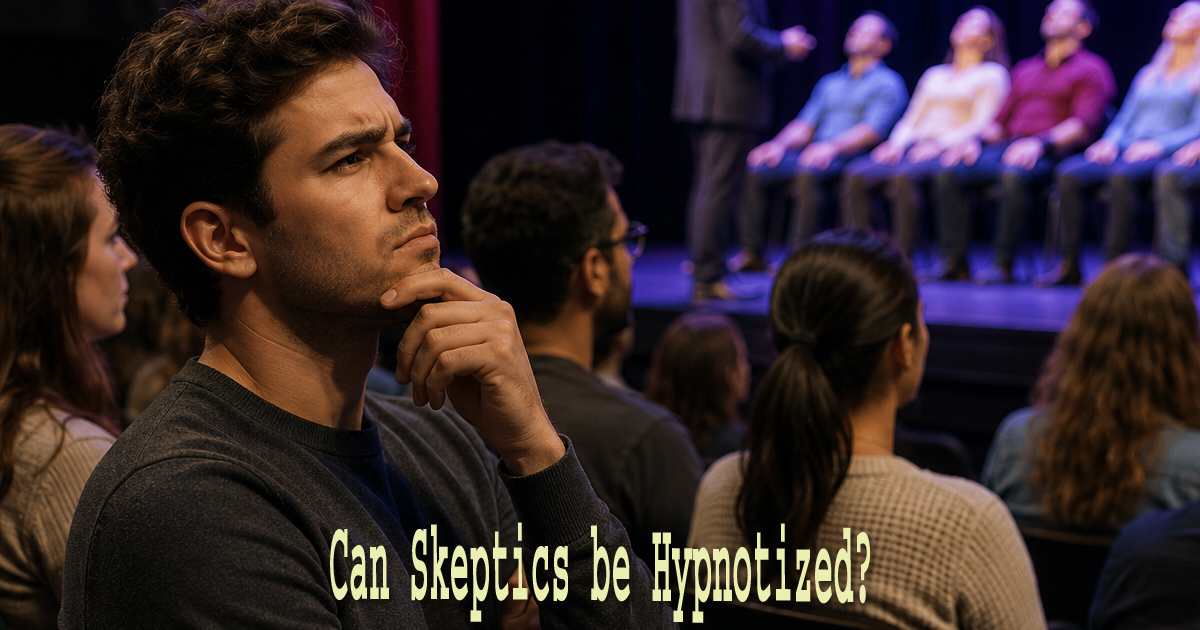
Many people who ask whether can skeptics be hypnotized begin with curiosity, questions, and healthy doubt.
If you have ever rolled your eyes at a hypnosis show or wondered whether the whole thing is just theater, you are not alone. Can skeptics be hypnotized is one of the most searched questions about hypnosis online, and it deserves a thorough and honest answer. Skepticism about hypnosis is incredibly common. Most people who sit down with a hypnotist for the first time carry at least some doubt with them. The question can skeptics be hypnotized comes up constantly, and the answer that research and real-world experience consistently deliver is yes. Doubt does not disqualify you from experiencing hypnosis. It may not even slow you down.
Can skeptics be hypnotized according to science? Research into hypnosis has grown substantially over the past several decades. Scientists at Stanford University and other major institutions have used brain imaging technology to study what actually happens inside the mind during hypnosis. What they found is that hypnosis produces measurable, real changes in brain activity. The anterior cingulate cortex, the part of the brain involved in processing and filtering information, shows distinct changes during a hypnotic state. This is not a performance. It is not pretending. It is a genuine neurological shift, and it can occur whether you believe in hypnosis beforehand or not.
The fact that brain changes are observable and measurable matters enormously when considering whether can skeptics be hypnotized has a credible yes answer. Hypnosis is no longer a fringe curiosity. It is a subject of serious scientific study, and the findings consistently support its reality as a genuine mental state that does not depend on prior belief to take effect.
Stuck in a Hypnotic State? The Reassuring Truth About Hypnosis Safety
Why Skeptics Often Make the Best Hypnosis Subjects

Research suggests that thoughtful and analytical individuals can respond exceptionally well to hypnosis when they understand the process.
Here is something most people never expect to hear. Skeptics frequently turn out to be among the most capable hypnosis subjects. The very traits that make a person skeptical, including sharp focus, analytical thinking, and a strong desire to understand things, are also the traits that support a deep hypnotic response. Can skeptics be hypnotized easily? Many of them, yes, and sometimes more readily than people who show up already convinced.
The Link Between Intelligence and Hypnotic Response
Studies on hypnotic susceptibility have consistently shown that the ability to become absorbed in ideas, to concentrate deeply, and to engage the imagination are strong predictors of hypnotic response. These are not traits that belong exclusively to believers. They are common in people who think carefully and critically about the world. A person who can get lost in a complex problem, follow a detailed argument, or become completely absorbed in a film is demonstrating exactly the kind of focused attention that hypnosis uses. Can skeptics be hypnotized at deep levels? Many can, precisely because they bring those qualities naturally into the room.
Why Wanting Proof Can Actually Help You Go Deeper
A skeptic who sits down and thinks, show me what this can do, is already in a state of focused and directed attention. That kind of sharp, curious focus is exactly what a skilled hypnotist works with. The desire to evaluate the experience keeps your attention present and engaged. That presence of mind, rather than working against hypnosis, can actually support it. Wanting to see results is a form of investment in the process, and investment helps.
Hypnotized on Stage: The Amazing Truth About How It Feels
How Doubt Affects the Hypnotic Experience
Doubt and resistance are not the same thing, and understanding that difference matters a great deal when you are asking whether can skeptics be hypnotized applies to you personally. Many people assume that because they doubt, they will automatically resist. That assumption is worth examining closely because it is where a lot of people talk themselves out of a genuinely useful experience.
The Difference Between Doubt and Resistance
Doubt is intellectual. It is the part of your mind that says, I am not sure this is real or I will believe it when I see it. Resistance is behavioral. It is the active choice to push back, to refuse suggestions, or to deliberately try to stay outside the experience. A person can hold genuine intellectual doubt about hypnosis and still follow the hypnotist’s instructions with an open and curious spirit. Can skeptics be hypnotized when doubt is present but resistance is not? Yes, and this happens regularly in both clinical and stage settings. Doubt without resistance is not an obstacle to hypnosis. It is simply a neutral starting point.
What Happens When You Stop Fighting the Process
Many skeptics report that the turning point in their first hypnosis session came when they simply decided to go along without judgment. They did not suddenly become believers. They just stopped arguing with the experience long enough to let it unfold. That one small shift, from active doubt to passive curiosity, is often all it takes. The hypnotic state does not require your endorsement or your approval. It simply requires your participation and a willingness to follow where the process leads.
What You Actually Need to Be Hypnotized
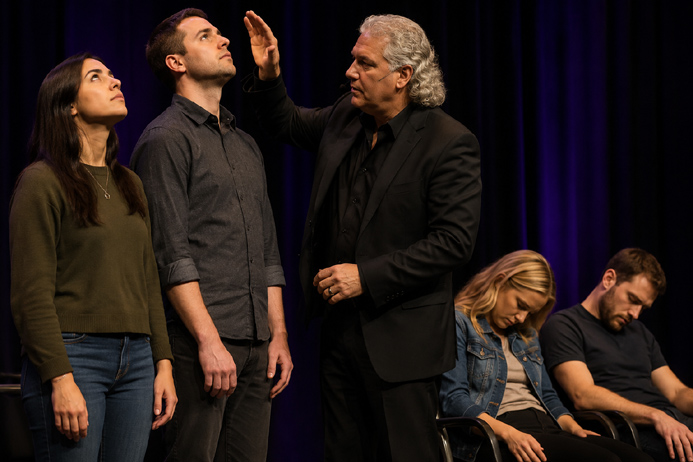
Successful hypnosis depends more on focus, participation, and following instructions than on belief alone.
This is where a great deal of the mythology around hypnosis falls apart. People assume you need to be gullible, highly suggestible in a naive sense, or mentally passive to be hypnotized. None of that is true. Can skeptics be hypnotized? Yes, because belief was never actually a requirement in the first place. That single fact changes everything for people who have been holding back.
Belief Is Not Required
What hypnosis requires is willingness. Not belief, not faith, not the suspension of your critical mind. Simply a willingness to follow instructions and allow the process to proceed without interference. A skeptic who is willing to sit quietly, listen carefully, and follow along is giving the hypnotist everything needed to do the work effectively. Your private opinion about whether hypnosis will work has very little bearing on whether it actually does. Willingness is the key, and skeptics can be just as willing as anyone else.
The Role of Focus and Imagination
Two things that genuinely matter in hypnosis are the ability to focus your attention and the ability to engage your imagination. Most skeptics have both in abundance. If you can picture a scene vividly in your mind, follow a complex line of reasoning, or lose yourself completely in a book or film, you have the raw material for a strong hypnotic response. Can skeptics be hypnotized using these entirely natural abilities? Absolutely, and often with results that surprise even the most doubtful participant.
Is Stage Hypnosis Real? The Surprising Truth Behind the Show
How a Skilled Hypnotist Works With Skeptical Subjects
A talented hypnotist does not need you to arrive as a true believer. Working with skeptics is a routine part of the job, and experienced professionals have well-developed approaches for guiding doubtful minds into genuine and productive hypnotic states. Can skeptics be hypnotized by a practitioner who knows what they are doing? Consistently yes.
Pacing and Leading the Skeptical Mind
One of the foundational techniques in professional hypnosis is called pacing and leading. The hypnotist begins by acknowledging and matching where you actually are, including your doubt, your questions, and your uncertainty, and builds from that starting point rather than working against it. Instead of telling a skeptic to just relax and trust, a skilled practitioner meets the analytical mind on its own ground and earns credibility step by step. The skeptic’s own need to evaluate what is happening becomes part of the process rather than a barrier to it.
Why the Right Hypnotist Makes All the Difference
Not every hypnosis experience is created equal. A hypnotist who dismisses skepticism, becomes defensive about it, or tries to overpower it with aggressive suggestion is likely to struggle. One who understands the skeptical mindset, respects it, and works skillfully with it will get consistent results. If a previous hypnosis experience did not produce much for you, the limiting factor may have been the technique or the practitioner rather than anything about your mind. Can skeptics be hypnotized by the right professional? The evidence strongly says yes, and choosing that professional wisely matters.
Real Stories of Skeptics Who Were Hypnotized

Many skeptics are surprised when they discover that hypnosis can produce genuine responses even when they began with doubts.
Across decades of stage hypnosis performances and clinical hypnotherapy sessions, the same story plays out again and again. A person arrives certain that hypnosis will not work on them. They agree to participate anyway, sometimes reluctantly. Something shifts. They come out of the experience genuinely surprised, not because nothing happened, but because something very much did.
Stage hypnotists see this pattern with striking regularity. The volunteer who folds their arms and declares you won’t get me often ends up being one of the most visibly responsive people on stage. Their certainty that they are immune turns out to be no protection at all. Therapists working in clinical settings report the same phenomenon. Clients who arrived skeptical and resistant frequently leave with real, lasting changes in behavior, habit, mood, or physical comfort.
What every one of these stories has in common is not a sudden conversion to belief. It is a simple decision to stay curious and cooperative long enough for something real to happen. The people in these stories stopped asking that question the moment the experience answered it for them.
Stage Hypnosis vs Therapy Hypnosis: The Surprising Truth About Both
How to Give Hypnosis a Fair Chance If You Are Skeptical
If you are approaching hypnosis with a healthy dose of doubt, a few simple adjustments can make your experience significantly more productive and meaningful.
Simple Things You Can Do Before Your Session
Go in with a clear intention. Know what you want to experience or accomplish. Skepticism combined with a genuine goal is a surprisingly powerful combination. The goal gives you a reason to participate fully even while doubt is present. Also consider doing some credible reading about how hypnosis actually works before your session. A great deal of skepticism about hypnosis comes from misinformation and outdated ideas, and accurate information can quietly dissolve that particular kind of doubt without requiring you to become a true believer.
What to Focus on During the Experience
During the session itself, give yourself permission to follow the hypnotist’s instructions without evaluating them in real time. You are completely free to analyze the experience afterward, as thoroughly as you like. During the session, your one job is to listen and respond. Allow the analytical part of your mind to take a temporary rest. It will still be there when the session ends, and it will have something genuinely interesting to examine. Can skeptics be hypnotized more effectively when they adopt this simple approach during the session? Without question, yes. The session becomes something you are participating in rather than something being done to you, and that shift in orientation makes a real difference in outcome.
Final Thoughts on Skepticism and Hypnosis
Can skeptics be hypnotized? The answer, supported by neuroscience, confirmed by decades of professional practice, and validated by countless firsthand accounts from people who arrived doubtful and left astonished, is a clear and confident yes.
Skepticism is not a wall that hypnosis cannot get through. It is simply a starting point, and often a remarkably good one. The qualities that feed your skepticism, your focus, your analytical precision, your need to understand before you accept, are the same qualities that support a rich, deep, and meaningful hypnotic experience.
You do not need to believe in hypnosis for it to work. You do not need to silence your doubts or pretend they are not there. You only need to be willing to find out what happens when you stop letting those doubts run the show. That willingness, even a small and tentative one, is enough to begin.

Known as The Man Who Notices, Mike Lamp is a theatrical hypnotist and psychic performer with more than twenty years of live stage experience. His work emphasizes observation, psychological influence, and measured presentation rather than spectacle or provocation. Performances are tailored for adult audiences, private events, and professional settings where control, clarity, and atmosphere matter.




Leave a Reply
You must be logged in to post a comment.