21
Apr
Space Race Prediction Reveals the Stunning Truth About Who Wins
Space Race Prediction Reveals the Stunning Truth
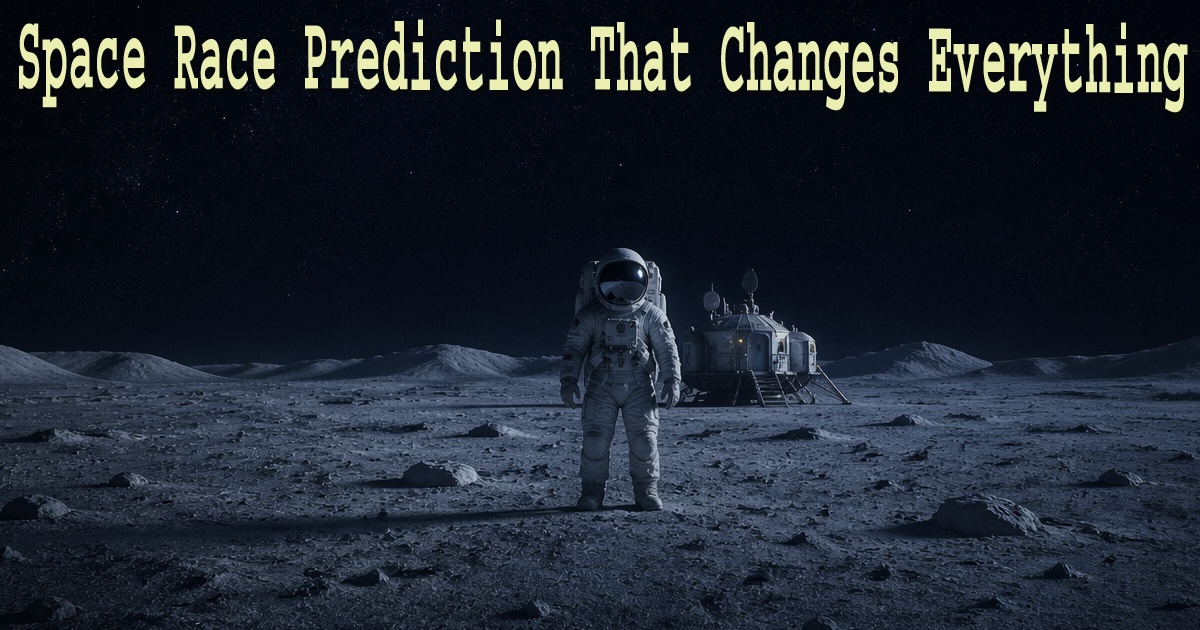
Mike Lamp’s Space race prediction
The Vision Appears
There are moments when the veil between what is and what will be grows thin, and the image that emerges is not gentle. It arrives with the weight of stone, with the clarity of cold morning light breaking over an empty horizon. This is one of those moments. The space race prediction I carry forward now did not come as a whisper. It came as a certainty, fully formed, sharp at every edge, the kind of vision that does not ask permission before it settles into the mind and refuses to leave.
The cosmos has always kept its own counsel. It does not favor flags by sentiment, nor does it reward ambition with loyalty. What it rewards is patience, preparation, and the willingness to endure long enough to arrive. The image I see is of arrival. Of footsteps where none have fallen before. Of a banner planted not in the soil of Earth, but in the ancient dust of another world entirely.
Read about Self-Fulfilling Predictions: Powerful Psychic Insight Explained in our Exclusive Article
The Race Beyond Earth
For decades, the skies above this planet have been a theater of competing wills. Nations have launched their ambitions skyward and watched them arc and burn and sometimes succeed in ways that redrew the map of human possibility. The current chapter of that story is louder than most. Private fortunes have been staked. Government programs have been revived with urgency. Rocket engines are tested in the dead of night while engineers argue over trajectories and timelines and the stubborn physics of escape velocity.
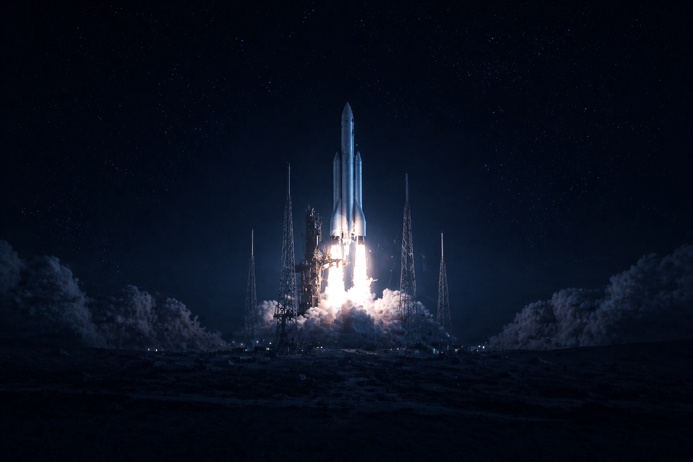
Space Race Prediction Every launch changes
The lunar surface has become the prize that every serious space-faring power has circled on its calendar. Governments speak of permanent outposts. Engineers draft habitats designed to withstand radiation and temperature swings that would shatter ordinary materials. The language of this era is not exploration for its own sake. It is establishment. Claim. Presence. The Moon is no longer a destination. It is a position, and every major player in this accelerating contest understands what it means to hold that position first.
This space race prediction takes shape against that backdrop, not in isolation from it. The tension is real. The stakes are enormous. And the outcome, as I see it, is already written in the momentum of events that most observers have not yet learned to read correctly.
The Outer Space Treaty of 1967, signed by over 100 nations, prohibits any country from claiming sovereignty over the Moon, though it does not explicitly ban the construction of permanent structures on the lunar surface.
The Turning Point
The turning point does not arrive with an announcement or a press conference. It arrives quietly, in the accumulated decisions of years, in the disciplined execution of a program that has been underestimated at nearly every stage of its development. The shift I perceive is not sudden. It is the result of sustained, methodical movement toward a singular objective, carried forward with a consistency that the fractured landscape of Western space ambition has struggled to match.
My space race prediction is this, stated plainly and without hesitation:
In the current race to establish a manned base on the lunar surface, the momentum has shifted toward the East. Despite the ambitions of American private space firms, the Chinese space agency will be the first to successfully land a crew and begin permanent construction, claiming that territory for their own.
This is not speculation dressed in dramatic language. This is the vision as it stands, clear and unambiguous, a space race prediction delivered not to provoke debate but to mark the moment before the moment arrives, so that when it does, there is a record of what was seen.
China’s Chang’e 6 mission, launched in 2024, successfully returned samples from the Moon’s far side, a feat no other space agency had accomplished in the history of lunar exploration.
The Moment of Arrival
See it now as I see it. The lunar surface in the long shadow of a crater rim, ancient and still, undisturbed for billions of years by anything more than the patient drift of cosmic dust. Then, breaking that stillness, the controlled descent of a craft bearing human lives and human intention. The thrusters fire in precise sequence. The legs make contact. The dust billows outward in a slow, silent cloud that no atmosphere disturbs or carries away.
The hatch opens. A suited figure descends a short ladder and steps onto ground that no living person has touched since the final Apollo mission left it behind more than half a century ago. But this arrival is not a visit. The equipment that follows is not designed for a brief excursion and a return. It is the beginning of something intended to remain.
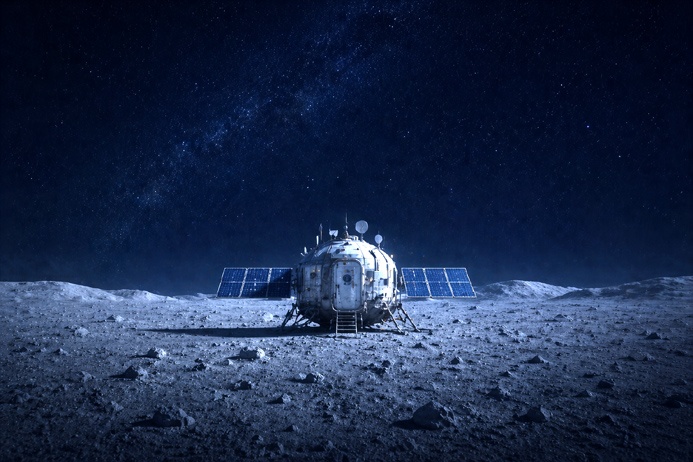
Space Race Prediction Permanent. Not a visit.
Structural components are unloaded with careful efficiency. Solar arrays are positioned to capture the long lunar day. A habitat core is anchored against the regolith with deliberate permanence. This is what the space race prediction described, and this is what now unfolds in the vision with the quiet inevitability of a tide completing its cycle. The crew works with practiced calm. They have rehearsed this sequence until it became instinct. And when the first interior light glows through a pressurized window against the black lunar sky, something has changed that cannot be unchanged.
The Aftermath on Earth
When confirmation reaches the ground stations, the silence that follows in certain capitals is more eloquent than any statement. The space race prediction now belongs to history, and history is already reorganizing itself around the fact of what has occurred. Power is not always transferred through conflict. Sometimes it shifts through achievement, through the undeniable demonstration that capability has moved in a direction that others did not fully anticipate or prepare for.
The geopolitical consequences radiate outward from that moment with the measured force of something enormous moving slowly. Treaties that seemed settled are examined again. Agreements about the use of space resources are revisited with new urgency. Nations that had positioned themselves as secondary actors in the broader space contest begin recalculating their alignments. The Moon was always more than a rock. It was always also a symbol, and symbols carry weight in the architecture of international relations.
On the ground, in laboratories and strategy rooms and legislative chambers, the implications of this space race prediction are absorbed and argued over and eventually accepted. The technological ambition required to accomplish what has been accomplished is itself a message. It speaks not only about what one nation can do in space, but about the organizational will and long-range planning that made it possible. These are qualities that impress even those who find the outcome inconvenient.
The narrative of space exploration, once so firmly centered in a particular geography and a particular set of corporate ambitions, has shifted its center of gravity. That shift is not temporary. It is structural, and it will be visible in the priorities and investments of the decade that follows.
The lunar south pole is considered the most strategically valuable region on the Moon due to confirmed water ice deposits in permanently shadowed craters, which could be converted into rocket fuel for deep space missions.
What Comes Next

Space Race Prediction The map rewrites itself now
The dust has settled on the lunar surface around that first permanent outpost, but nothing else has settled at all. This space race prediction was never only about the Moon. It was about the trajectory of human civilization’s expansion into the solar system, and that trajectory has now been altered by the fact of who arrived first and who built what endures.
The nations that were closest to this contest will accelerate. The ones that believed the outcome was already decided in their favor will rebuild their assumptions from the foundation. New coalitions will form around shared interests in what comes after the Moon, because the Moon itself, now partially claimed and actively occupied, will catalyze the next set of ambitions with remarkable speed.
A space race prediction delivered before the event carries a particular kind of weight when the event arrives and matches the vision. It does not merely confirm what one individual perceived. It confirms that the pattern was real, that the momentum was visible to those willing to look without the distortion of assumption or preference. The future does not hide itself as completely as most people believe. It announces itself in the direction of sustained effort, in the discipline of preparation, in the quiet accumulation of capability that precedes every significant arrival.
Something new is being built on that ancient surface, and the world that watches it will never again organize its understanding of space, power, or possibility in quite the same way it did before the first light came on inside that pressurized habitat and stayed on, steady and permanent, against the endless dark.

Known as The Man Who Notices, Mike Lamp is a theatrical hypnotist and psychic performer with more than twenty years of live stage experience. His work emphasizes observation, psychological influence, and measured presentation rather than spectacle or provocation. Performances are tailored for adult audiences, private events, and professional settings where control, clarity, and atmosphere matter.




Leave a Reply
You must be logged in to post a comment.