2
Apr
Libra Symbolism Meaning: Bold Air Sign Insights
Libra Symbolism Meaning: Bold Air Sign Insights

Libra symbolism starts with balance
Libra Symbolism and the Scales
Libra symbolism begins with the Scales, the only inanimate object in the zodiac wheel, and that distinction matters. Every other sign is represented by a living creature or a human figure. Libra stands apart, defined instead by an instrument. The Scales measure. They do not act, feel, or pursue. They assess. That quality of assessment, the weighing of one thing against another before reaching a conclusion, runs through every dimension of this sign. When astrologers trace Libra symbolism back through classical sources, the Scales appear consistently as an instrument of measurement, not decoration.
In Egyptian cosmology the scales appear in the Hall of Two Truths, where the heart of the deceased is weighed against the feather of Maat. The constellation we now call Libra was known in Babylonian astronomy as the Claws of the Scorpion, and it was the Greeks and Romans who formally separated it into a distinct sign associated with the scales of Astraea, goddess of justice. That transition, from celestial claws to civic instrument, is where the sign’s moral character took root in the Western tradition. The Scales carry moral and evaluative weight across cultures. Libra inherited that tradition.
Read about Zodiac Meaning Explained: Clear Guide to Symbolism in our Exclusive Article
The Air Sign Foundation
Libra symbolism operates through the element of air, which in astrological terms governs thought, communication, and the formation of ideas between people. Air signs, Gemini, Libra, and Aquarius, are oriented toward exchange. Where fire signs generate, earth signs consolidate, and water signs absorb, air signs circulate.
For Libra specifically, that circulation is relational. The emphasis falls on the space between two people, on dialogue, on the ideas that form when minds meet. Air is not an emotional element in the astrological framework, though it can engage deeply with emotional content. It processes through language, concept, and connection. Libra channels air in a way that is oriented toward the other person, toward what can be understood, negotiated, or appreciated in common.
The Latin word “libra” itself means pound or scales, and it was used in ancient Rome as a unit of weight measurement, which is why the British pound sterling uses the symbol “lb” to this day.
Venus and Its Role in Libra

Venus rules, but not softly
Venus as ruling planet deepens Libra symbolism considerably, drawing in themes of beauty, desire, and relational harmony. In astrology, Venus governs what a person values, what they find attractive, and how they seek pleasure and comfort in the world. When that planetary energy is combined with an air sign framework, the result is a sign oriented toward aesthetic and social harmony as genuine needs, not surface preferences. The Venusian layer of Libra symbolism is not purely aesthetic; it encompasses the drive to create conditions in which connection becomes possible.
Venus also rules Taurus, and in traditional astrology Venus is said to be in its day domicile in Libra and its night domicile in Taurus. The diurnal placement in Libra reflects Venus operating in a more outward, relational, and socially oriented register, which aligns naturally with the air sign context. In Libra, Venus becomes social and conceptual, concerned with fairness in exchange and with the quality of relational dynamics. A Venus-ruled air sign is naturally inclined toward tact, toward finding language that smooths friction without abandoning honesty.
The Seventh House and Partnership
The seventh house placement reinforces Libra symbolism by anchoring it specifically in the domain of partnership, legal agreements, and one-to-one encounters. In traditional astrology, the seventh house sits directly opposite the first, which rules self and identity. The opposition is meaningful. What the first house claims as mine, the seventh house names as other. Libra, as the natural ruler of that house, is therefore a sign built around awareness of the other person. The sign does not dissolve into partnership the way some might assume. Rather, it is acutely aware that another person exists, has a perspective, and brings something that must be accounted for.
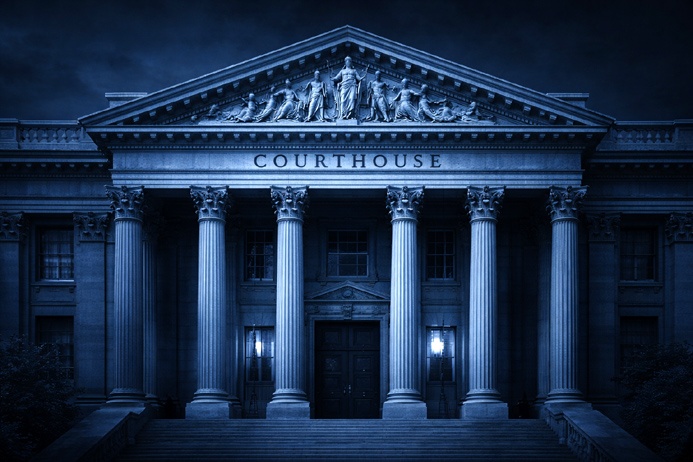
Justice lives in the seventh house
Legal agreements fall under the seventh house for the same reason: contracts formalize the terms of a relationship between two parties, each with standing and expectation. It is also worth noting that Saturn is exalted in Libra, which in traditional astrology carries significant weight. Saturn’s exaltation here points to the sign’s capacity for serious, structured judgment. Where Venus brings the desire for harmony, Saturn in exaltation supplies the discipline and impartiality that genuine justice requires, which is why Libra’s association runs deeper than politeness and into the formal weighing of competing claims.
The Sun enters Libra at the autumnal equinox in the Northern Hemisphere, which ancient Roman calendars once treated as the beginning of the second half of the year, a structural division that carried civic and legal significance.
Balance as a Living Concept
Libra symbolism around balance is frequently misread as a preference for peace at any cost. The popular image of Libra as someone who avoids conflict, sits on fences, or refuses to take sides is a flattening of something more complex. The sign does seek equilibrium, but equilibrium is not the same as avoidance. True Libra symbolism recognizes that balance is not a resting state but an active, ongoing negotiation between opposing forces.
A scale in use is never still. It shifts, adjusts, and re-levels constantly. That is the more accurate picture of what Libra energy does in practice. The sign is capable of holding tension between competing truths without prematurely resolving it. That capacity, sometimes mistaken for indecision, is closer to a genuine tolerance for complexity. Not every question has an answer that arrives quickly, and Libra knows that.

Balance moves. It never rests.
Cardinal Energy and Initiative
Libra is a cardinal sign, placing it alongside Aries, Cancer, and Capricorn in the modality associated with initiation and beginning. Cardinal signs open the seasons and correspond in traditional astrology to the four angles of the chart, the most active and initiating positions. Aries opens spring, Cancer opens summer, Capricorn opens winter, and Libra opens autumn, specifically at the autumnal equinox, the moment when day and night stand equal. That equinoctial quality is not incidental to the sign’s meaning. The very astronomical moment that defines Libra’s beginning is itself an image of balance.
What makes Libra symbolism particularly interesting within the cardinal modality is the way initiative expresses itself through diplomacy rather than force. Aries initiates through direct action, often through assertion or competition. Libra initiates through proposal, through the introduction of an idea into a relational space, through the opening of negotiation. The cardinal quality is still present, still active. But the mode is social rather than solitary. Libra moves things forward by bringing people into conversation, by establishing the terms under which something can be considered together.
Aesthetic Sensibility in the Chart
Libra symbolism shows up in aesthetic choices not as vanity but as a genuine attunement to proportion, form, and the qualities that make an environment feel coherent. Venus ruling an air sign produces a sensitivity to how things are arranged, to the relationships between elements in a visual or spatial field. This is not identical to artistic talent, which depends on many chart factors. It is more of a perceptual orientation, a noticing of when something is off-balance or when it resolves into harmony.
Astrologers working with Libra symbolism in a natal chart frequently observe a sensitivity to visual and spatial harmony that functions as a genuine perceptual intelligence rather than a surface-level preference. This can appear in fields as varied as architecture, law, design, music, or negotiation, wherever the arrangement of parts in relation to each other determines the quality of the whole. The sign brings that attentiveness wherever it is strongly placed.
Ptolemy, writing in the second century CE in the Tetrabiblos, assigned Libra to the western quadrant of the chart and associated it with mature adulthood, linking the sign structurally to the phase of life concerned with civic responsibility and partnership.
Justice, Harmony, and the Libra Archetype
The full range of Libra symbolism, from the Scales to Venus to the seventh house, points toward a sign that treats justice and harmony as genuine organizing principles, not decorative ones. Justice in the astrological sense is not primarily punitive. It is concerned with what is fair, with whether each party has been given appropriate consideration, with whether the terms of an agreement reflect the actual weight of what each side brings.
Harmony, similarly, is not the absence of conflict but the resolution of different elements into something that holds together. Libra holds both of those values, and holds them together. The sign has a reputation for refinement and social grace, which is accurate as far as it goes. But the deeper structure is ethical. The grace is in service of fairness. The polish is in service of a genuine effort to get things right between people.
Editor’s Reflection
What strikes most people, once they sit with it, is that Libra symbolism is less about personality traits than about a particular way of orienting toward the world. The sign asks what is fair, what is proportionate, what holds up when examined from more than one side. That is not a soft question. It is, in many ways, one of the harder ones.
How much of what draws someone to Libra symbolism reflects a genuine interest in fairness versus a wish for things to be easier than they are? And where does the line fall between holding complexity with patience and simply postponing a decision that needs to be made? These are questions the sign itself seems to live inside, and there is probably no harm in sitting with them a little longer.

Known as The Man Who Notices, Mike Lamp is a theatrical hypnotist and psychic performer with more than twenty years of live stage experience. His work emphasizes observation, psychological influence, and measured presentation rather than spectacle or provocation. Performances are tailored for adult audiences, private events, and professional settings where control, clarity, and atmosphere matter.



Leave a Reply
You must be logged in to post a comment.