15
Jan
Peter Hurkos: Legendary Psychic Detective Biography
Peter Hurkos: The Dutch Psychic Who Made America Believe
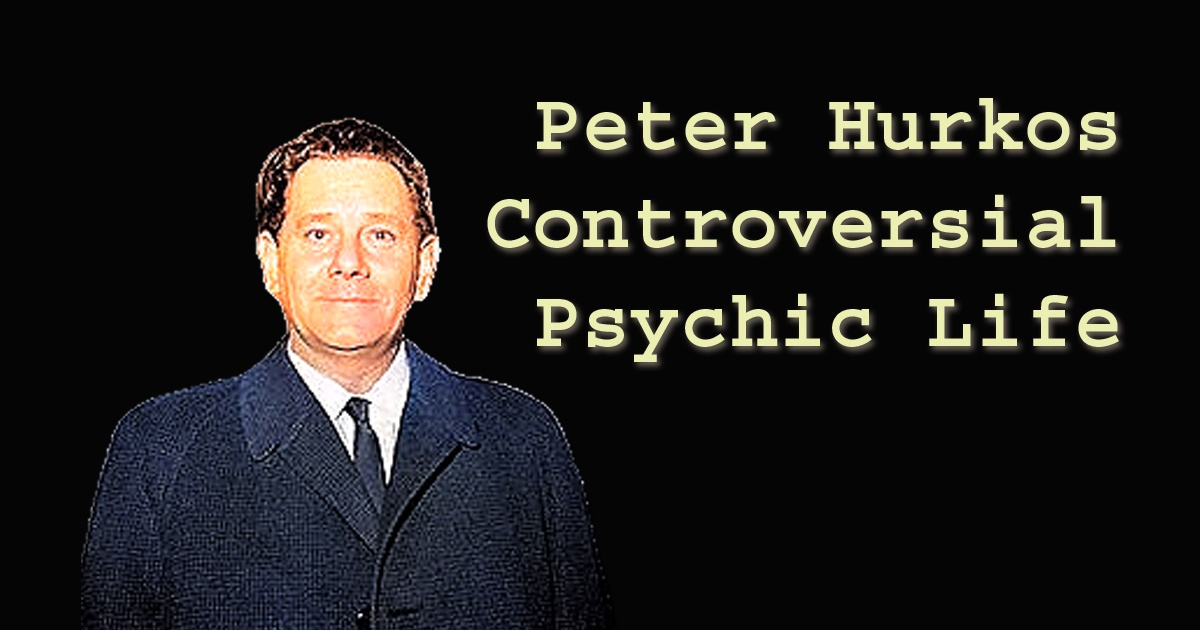
Peter Hurkos, the psychic detective who claimed to solve crimes through psychometry and visions
Peter Hurkos claimed he could see what others couldn’t. Not in the metaphorical sense, but literally visions of murders, missing persons, hidden objects. For more than three decades, he worked with police departments across the United States and Europe, offering his services on cases that had gone cold or never heated up in the first place. Some investigators swore by him. Others thought he was reading case files instead of minds. But Hurkos didn’t particularly care what the skeptics thought. He had a following, he had believers, and he had a story that began with a fall from a ladder in 1941.
Before that fall, Hurkos was Pieter van der Hurk, a house painter in the Netherlands. The accident left him with a fractured skull and, by his account, something else an ability to touch an object and know its history, to shake someone’s hand and see their secrets. Whether this was genuine clairvoyance or elaborate theater, it changed the trajectory of his life completely. He went from painting trim to performing in European music halls, from anonymity to headlines. By the time he reached the United States in the 1950s, he’d already built a reputation as a psychic detective. America made him a celebrity.
His most famous cases remain the most controversial. Hurkos was called in on the Boston Strangler investigation in 1964, generating enormous publicity but identifying the wrong man. He worked the Sharon Tate murders, the case of a missing heiress, dozens of others that brought him into police stations and onto television screens. The pattern was consistent: Hurkos would arrive, handle evidence, make pronouncements. Sometimes details seemed eerily accurate. Sometimes they led nowhere. The cases that worked became legend. The ones that didn’t were quietly forgotten or blamed on police incompetence.
What made Peter Hurkos different from other psychics of his era was his absolute conviction. He didn’t couch his statements in vague possibilities or mystical language. He spoke in specifics names, places, physical descriptions. This made him either remarkably gifted or remarkably reckless, depending on who you asked. Law enforcement remained split. Some detectives genuinely believed he’d provided breakthroughs. Others saw him as a distraction, a sideshow that consumed resources and muddied investigations. The press loved him either way. A man who claimed to solve crimes by touching a victim’s clothing made for irresistible copy, whether he delivered results or not.
Read about The Amazing Criswell in our exclusive article
Early Years
Pieter van der Hurk was born on May 21, 1911, in Dordrecht, a city in the western Netherlands built on rivers and trade. His father worked as a house painter, and young Pieter followed the same path. There wasn’t anything particularly mystical about his childhood, at least not according to the accounts he gave later. He was one of several children in a working-class Catholic family. The work was steady if unspectacular painting houses, commercial buildings, whatever needed a fresh coat. It was honest labor that required a steady hand and an tolerance for heights.
The Nazi occupation changed everything for Dutch families like the van der Hurks. Hurkos later claimed he worked with the Dutch resistance during World War II, though the specifics remained deliberately vague. What is documented is that he spent time in a forced labor camp after being caught helping the resistance. The experience left him with stories he’d tell for the rest of his life, some verifiable, others less so. Like many who lived through the occupation, he carried those years with him in ways both visible and hidden.
The ladder accident happened in July 1941 in Velsen, where he was working on a painting job. Hurkos fell roughly thirty feet, landing head-first. He spent three days in a coma and weeks recovering in a hospital in Zandvoort. The skull fracture was severe enough that doctors worried about permanent brain damage. When he finally regained consciousness, he claimed everything had changed. Objects spoke to him now. He could touch a watch and know its owner’s thoughts, hold a photograph and see events the camera hadn’t captured.
The hospital staff noticed something was off, though not in the way Hurkos described. He became agitated around certain people, insisted he knew things about other patients he couldn’t possibly know. A psychiatrist examined him. The medical explanation centered on brain trauma and possible psychological effects from the injury. Hurkos had a different interpretation entirely. He believed the fall had opened something in his mind, a door that had always been there but locked. Whether neural rewiring or spiritual awakening, the Peter Hurkos who left that hospital was not the house painter who’d climbed the ladder.
Peter Hurkos underwent testing at the Parapsychology Laboratory at Duke University in the late 1950s, though the results were never officially published in peer-reviewed journals.
Rise to Fame
Peter Hurkos started small, doing readings for friends and neighbors in the years immediately after the war. Word spread through Dordrecht and surrounding towns about the painter who could tell you things about yourself, about objects, about events he had no rational way of knowing. He didn’t advertise. He didn’t need to. People sought him out, curious or desperate or both. Some came with skepticism and left as believers. Others remained unconvinced but intrigued enough to tell someone else. The referrals built on themselves.
By the late 1940s, he’d caught the attention of Dutch authorities for reasons that had nothing to do with entertainment. A local police department asked him to assist on a case involving stolen goods. Hurkos handled items from the crime scene and provided descriptions that allegedly led to a suspect. Whether his contribution was decisive or simply coincidental became irrelevant once the newspapers got hold of it. A psychic working with police made for compelling headlines. More departments began calling. More cases followed. Not all of them worked out, but enough did that his reputation solidified.
The Stone of Scone theft in December 1950 represented Hurkos’s first attempt at international publicity, though not his first success. When Scottish students stole the ancient coronation stone from Westminster Abbey, Hurkos volunteered his services and examined the crime scene. He claimed he’d determined psychically that students had taken it as a prank and that it would be recovered soon. The stone was indeed returned in April 1951, but the perpetrators surrendered it voluntarily, and authorities had already suspected Scottish nationalists. The U.K. Home Secretary stated publicly that Hurkos “did not obtain any result whatsoever.” None of that stopped Hurkos from citing the case as evidence of his abilities for the rest of his career. It established something important his willingness to attach himself to major cases and his skill at shaping narratives afterward.
The transition to stage performances came naturally. Europe had a long tradition of music hall acts and variety shows, and psychic demonstrations fit right in. Hurkos developed a routine that combined cold reading techniques though he’d bristle at that description with his claimed abilities. Audience members would bring objects. He’d hold them, close his eyes, and deliver impressions. Sometimes he’d single out individuals in the crowd and tell them personal details. The performances were part séance, part detective work, part psychological drama. Theaters booked him across the Netherlands and into Belgium and France.
Dr. Andrija Puharich changed the trajectory completely. Puharich was an American physician and parapsychology researcher who’d become fascinated with psychic phenomena. He’d heard about Hurkos through European colleagues and arranged to meet him in the early 1950s. Puharich put Hurkos through a series of tests, some controlled, some less so. He came away convinced he’d found a genuine psychic talent. More importantly, he brought Hurkos to the United States in 1956. Puharich had connections to universities, to research institutes, to media outlets. He knew how to generate attention for his subjects.
America in the 1950s had an appetite for the paranormal that European audiences couldn’t match. Television was hungry for content. Magazines wanted stories that sold copies. Hurkos arrived at exactly the right moment, backed by a researcher with medical credentials and promoted by people who understood publicity. He appeared on television programs demonstrating his abilities. He gave interviews describing his gift. The accent helped Americans found his Dutch-inflected English exotic and somehow more credible. Within two years of arriving in the country, Peter Hurkos was a household name among people who followed such things. The police cases came next, and with them, real controversy.
The Police Cases
The Stone of Scone case brought Peter Hurkos his first major international attention as a psychic detective. In 1950, Scottish nationalists stole the ancient coronation stone from Westminster Abbey, and British authorities were desperate to recover it. Hurkos claimed he could locate it through psychometry. He provided details about the thieves and the stone’s location that were specific enough to interest investigators, though the stone was ultimately recovered through conventional police work. The incident established a pattern that would repeat itself throughout his career Hurkos involved in high-profile cases, providing information that was either remarkably accurate or conveniently vague depending on interpretation.
The Miami murder case in 1958 gave him credibility with American law enforcement. A taxi driver named Charles Smith had been killed, and the investigation had stalled completely. Hurkos was brought in by a private investigator working the case. He handled items belonging to the victim and described the killer in specific detail his appearance, mannerisms, even a partial name. When police arrested a suspect matching that description, and the man subsequently confessed, Hurkos became something police departments couldn’t entirely dismiss. Detectives who’d been skeptical started reconsidering. The success brought more requests.
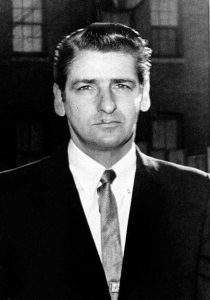
Albert DeSalvo, the man later identified as the Boston Strangler, taken during a mid-1960s arrest.
But the Boston Strangler case in 1964 became his most famous and most damaging involvement. Thirteen women had been murdered in the Boston area, and the city was paralyzed with fear. Hurkos was brought in by a private investigator, not the police directly, though authorities cooperated. He identified Thomas O’Brien, a suspect he claimed matched his visions perfectly. O’Brien was arrested based partly on Hurkos’s certainty. The problem was O’Brien wasn’t the Strangler. Albert DeSalvo later confessed to the murders. Hurkos insisted DeSalvo was lying, that O’Brien was guilty of at least some of the killings, but the damage was done. Critics had their definitive proof that Hurkos was either deluded or fraudulent.
Police departments that had been considering bringing him in on cases quietly backed away. The requests didn’t stop entirely, but they slowed. Hurkos spent years afterward insisting he’d been right, that there were details the public didn’t know, that DeSalvo’s confession contained inconsistencies. The defense only deepened the perception that he couldn’t admit failure.”
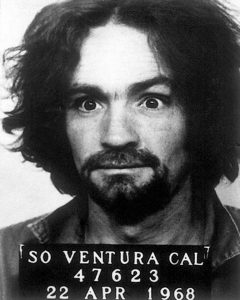
Police mugshot of Charles Manson taken following his arrest in connection with the Tate–LaBianca murders.
The Sharon Tate murders in 1969 brought him back into the spotlight under tragic circumstances. Peter Hurkos claimed he’d had visions about the killings before they happened and knew details about the perpetrators. He held a press conference describing three men involved in the crime. When the Manson Family was arrested, the details didn’t match his descriptions. Once again, Hurkos defended himself by suggesting multiple parties were involved or that his visions had been misinterpreted. The pattern had become clear dramatic pronouncements followed by explanations when the facts didn’t align.
Dozens of other cases filled the years between the famous ones. Missing persons, unsolved homicides, stolen property. Some police departments swore he’d provided genuine leads. Others felt he’d wasted their time and resources. The Ann Arbor coed murders, the case of heiress Patty Hearst, various kidnappings Hurkos inserted himself or was invited into investigations that generated headlines. His accuracy rate remained impossible to calculate objectively. Supporters pointed to hits. Detractors catalogued misses. What nobody disputed was that Peter Hurkos had become the most famous psychic detective in America, for better or worse.
The Dutch government officially recognized Hurkos’s resistance work during World War II, awarding him a certificate of appreciation in 1981, seven years before his death.
Personal Life
Peter Hurkos married three times, though he rarely discussed his first two marriages in interviews. His third wife, Stephany, became his constant companion and manager during the height of his fame. She handled bookings, managed his schedule, and served as a buffer between Hurkos and a public that often wanted more from him than he could deliver. The relationship appeared genuinely affectionate in the rare moments when cameras captured them together. She believed in his abilities without reservation, which mattered to him more than critical acceptance ever could.
He settled in Studio City, California, in a modest home that didn’t reflect the celebrity status his name carried. Hurkos liked to work in his garden and claimed the physical connection to earth helped ground him after intense psychic sessions. Neighbors described him as friendly but private, someone who’d wave hello but rarely engaged in lengthy conversations. The accent remained thick despite decades in America. He never pursued citizenship, maintaining his Dutch identity even as he became an American fixture. His relationship with Andrija Puharich had dissolved years earlier, the researcher moving on to other subjects and other psychics. They rarely spoke in later years, though Puharich never publicly recanted his early endorsement of Hurkos’s abilities.
Money was perpetually complicated. Hurkos earned well during peak years police departments sometimes paid consulting fees, private clients compensated him for readings, and television appearances brought income. But he spent freely and saved poorly. There were legal troubles involving unpaid taxes and disputes with former business partners. He claimed people exploited him, that he’d been cheated by managers and promoters who understood American business better than he did. Some of those claims held merit. Others sounded like excuses from someone who hadn’t paid attention to contracts he’d signed.
His health declined gradually through the 1980s. The head injury from 1941 had left lasting effects that worsened with age. He suffered from seizures that he attributed to psychic overload rather than neurological damage. To Hurkos, the episodes were evidence his gift was real and physically taxing. To neurologists, they were predictable consequences of severe head trauma decades earlier. He refused to see the distinction as meaningful. Heart problems developed. He slowed down considerably, taking fewer cases and making fewer public appearances. The people who’d once lined up for readings or begged him to find their missing relatives moved on to other psychics, other hopes. Hurkos seemed relieved more than bitter about the reduced attention.
Peter Hurkos died on June 1, 1988, in Los Angeles. He was seventy-seven years old. The obituaries in major newspapers gave him respectful treatment, recounting the famous cases without definitively declaring him fraud or genuine article. Stephany was with him at the end. He was buried quietly, without the media circus that had surrounded so much of his later life. The psychic who’d claimed to see everything left behind a legacy that nobody could see clearly a career built on moments of apparent insight mixed with obvious failures, belief systems colliding with evidence, and a man who either possessed an extraordinary gift or performed an extraordinary con for nearly fifty years.
Editor’s Reflection
Peter Hurkos exists in that uncomfortable space where simple verdicts fail. He wasn’t a carnival huckster working three-card monte the man genuinely seemed to believe in his abilities, even when the evidence suggested he’d gotten things catastrophically wrong. But he also wasn’t above embellishing his successes or reframing his failures in ways that protected his reputation. The head injury was real. The changed behavior afterward was documented. What happened inside his brain remains unknowable, and perhaps that’s the point. Hurkos spent half a century walking a tightrope between charlatan and clairvoyant, and he never fell entirely to either side. He helped some people find closure. He misled others down false paths. Both things can be true simultaneously, and probably are.
So what do we make of the police departments that kept calling him back? Were they desperate, gullible, or recognizing something that laboratory tests couldn’t measure? And what about the specific details he got right the ones that can’t be easily explained away by cold reading or lucky guesses? Do we dismiss them entirely because of Boston, because of Sharon Tate, because the misses outnumbered the hits? Or do we consider the possibility that psychic ability, if it exists at all, might work sporadically, unreliably, maddeningly inconsistent? Peter Hurkos forced these questions on everyone who encountered him, and he never provided satisfying answers. The questions remain: Where did the truth actually land with this complicated, controversial figure who touched evidence and claimed to see murders?”

Known as The Man Who Notices, Mike Lamp is a theatrical hypnotist and psychic performer with more than twenty years of live stage experience. His work emphasizes observation, psychological influence, and measured presentation rather than spectacle or provocation. Performances are tailored for adult audiences, private events, and professional settings where control, clarity, and atmosphere matter.



Leave a Reply
You must be logged in to post a comment.