30
Aug
Cargo Ship Prediction: A Shocking Voyage Feels Different
Cargo Ship Prediction and the Vision That Would Not Let Go
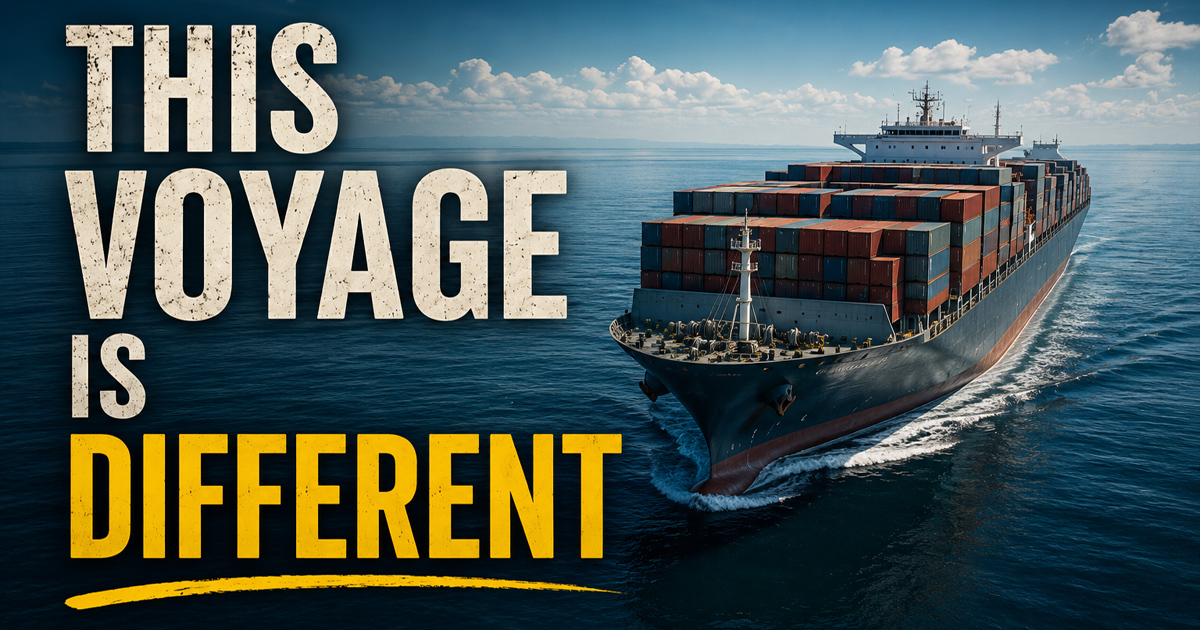
A calm voyage can hide an unexpected future. This Cargo Ship Prediction explores why one ordinary crossing of the North Pacific may become an extraordinary headline.
There is a particular kind of quiet that lives over open water. Not the silence of a room, or a field, or a forest. Something older than that. Something that has very little interest in human schedules or human concerns.
Most people never think about the ships. They cross the Pacific every day, enormous vessels carrying the contents of warehouses and factories and assembly lines, moving steadily through water that stretches for thousands of miles in every direction. The cargo arrives. The shelves are stocked. Nobody thinks much about the voyage between those two moments.
I have been thinking about one of those voyages for several months now. Not because I went looking for it. Because it came to me the way these things usually do, slowly at first, then with a clarity I could not set aside.
This is a cargo ship prediction. I want to be honest about how it arrived, because the honesty matters more to me than the drama.
A Feeling That Would Not Let Go
It came in fragments. That is almost always how it begins.
The first fragment was simply color. Blue. An enormous, uninterrupted blue with no shore visible in any direction. Not a threatening blue. Not storm light or dark water. Just the particular shade of the North Pacific on a clear day, so vast it stops feeling like water and starts feeling like something else entirely.
Then the ship appeared. A container ship, one of the modern kind, stacked high with containers in the distinctive red and orange and gray that these vessels carry. It sat low in the water. The seas were calm. There was nothing obviously wrong with what I was seeing.
But there was something wrong. I could feel it the way you sometimes feel a change in pressure before a storm arrives. Nothing dramatic. Nothing visible. Just the unmistakable sense that what I was watching was ordinary in appearance only, and that something was about to change.
That feeling did not let go. It came back over several nights, each time a little sharper, a little more specific, until I understood what I was being asked to put into words.
The Pull of the Open Ocean
The North Pacific is one of the busiest shipping routes on Earth. Thousands of cargo ships travel it every year, carrying everything imaginable from the manufacturing centers of China to the ports of the United States and Canada.
Most arrive without incident. Most voyages are unremarkable. That is the nature of a route that has been run successfully so many times that the dangers have come to feel theoretical rather than real.
But occasionally, one voyage does not arrive as planned. And when that happens on a route this busy, carrying cargo of this value, the world notices.
The Prediction Itself

A prediction has been made. Whether it proves accurate is a question only time can answer.
A prediction has been made. Whether it proves accurate is a question only time can answer.
I do not like to soften these once they are clear. So I will say it the same way I have said the others.
Before July 2028, a container ship departing Shenzhen, China, carrying more than five billion dollars in consumer electronics and computer equipment bound for the United States will suffer a catastrophic accident in the North Pacific Ocean.
I want to sit with that for a moment before moving on. Not to dramatize it. To let it be what it is, a specific claim, attached to a specific place and a specific window of time, that either will or will not prove accurate.
Why This Shipping Route, and Why Now
Shenzhen is not a random choice. It is one of the world’s largest technology manufacturing centers, a city that produces a significant portion of the consumer electronics that reach American homes every year. The port handled more than thirty-three million TEUs in 2024 alone. The trans-Pacific route from Shenzhen to the ports of Los Angeles and Long Beach is one of the most traveled commercial shipping lanes in the world.
The value of a single electronics-laden container ship on this route is not theoretical. Modern mega-vessels carry thousands of containers. A single shipment of smartphones, laptops, tablets, and computer components can represent billions of dollars in cargo. The five-billion-dollar figure in this prediction is not an exaggeration. It is a realistic accounting of what a fully loaded electronics carrier on this route can hold.
Modern cargo ships move enormous amounts of consumer electronics across the Pacific every day. One unexpected event could affect supply chains around the world.
Most voyages arrive safely. That is exactly what makes this prediction worth stating plainly. This route succeeds almost all of the time. Almost is not always.
What Tends to Happen Before These Things Surface
I have watched the pattern before. Not always in shipping. In different industries, different corners of the world. But the pattern has a recognizable shape, and I have learned to recognize it.
Major maritime disasters rarely begin with a single dramatic moment. They tend to begin somewhere quieter. A small thing that seems unremarkable at the time. A decision that appears reasonable in the moment. A detail that nobody flags because it does not seem worth flagging yet.
It is only afterward, when people are looking back rather than forward, that the small things reveal themselves as the beginning of something larger.
The Early Signs
I am not going to tell you which warning sign applies to this particular voyage. I do not know. That is not the nature of what I can see from here.
What I can tell you is what these things tend to look like before they become the story. An unexpected delay that does not seem significant at the time. A mechanical concern that gets addressed but does not quite resolve the way it should. A communication that arrives late, or does not arrive at all. A weather system that shifts in a direction that requires a decision. A navigation choice made with the best available information, in conditions where the best available information turns out not to be enough.
None of these things, on their own, announce themselves as the beginning of a catastrophe. That is precisely why they tend to be underestimated. And that is precisely why, when the larger event occurs, the people involved sometimes find themselves saying that they saw something, they just did not understand what they were seeing.
Why This One Feels Different
Ships are damaged every year. Containers go overboard. Cargo is lost. The maritime industry absorbs these events and continues operating. Most do not become the kind of story that stays in the public memory for more than a news cycle.
This one feels different to me. Not because of the danger itself. Because of what is aboard.
Consumer electronics are not bulk cargo. They are not lumber or grain or raw materials. They are products that people are waiting for. Products connected to supply chains that extend back through assembly lines, component manufacturers, and shipping schedules that have been planned months in advance. When electronics do not arrive, the absence is felt almost immediately, by retailers, by consumers, by the companies whose products are aboard.
And five billion dollars in missing cargo is not a footnote. It is a headline. It is the kind of number that moves markets and generates congressional inquiries and stays in the news long after the initial event has passed.
That is what makes this cargo ship prediction feel specific rather than general. Not just the location. Not just the timing. The cargo itself.
What This Would Mean If It Happens
The immediate consequences would be significant. Insurance losses at this scale would be among the largest in maritime history. Shipping delays would ripple outward through supply chains that are already operating under pressure. Specific electronics products, devices that were loaded onto that ship and expected to reach store shelves, would simply not arrive on the schedule that retailers and consumers were counting on.
The story would be everywhere. A cargo ship accident of this magnitude, on one of the world’s busiest commercial routes, carrying this value of technology goods, would generate the kind of coverage that does not fade quickly. Congressional hearings about shipping safety and supply chain vulnerability. Investigations into the circumstances of the accident. Questions about the regulations governing how electronics are shipped across the Pacific, and whether those regulations are adequate for the size and value of modern cargo.
It would also raise questions that the industry prefers not to have raised publicly. About how much risk is built into a system that depends on vessels of this size crossing thousands of miles of open ocean in weather that cannot always be predicted accurately. About what happens when something goes wrong at the scale that modern shipping makes possible.
The Cost Beyond the Cargo
I want to shift away from the numbers for a moment. Because the numbers are not the part of this that has stayed with me.
Every cargo ship that crosses the Pacific carries a crew. Men and women who spend weeks away from their families, working on a vessel that most of the people whose goods they carry will never see and never think about. They have people at home who are counting the days. Parents. Spouses. Children who mark the calendar and wait for the phone to ring with news that the ship has arrived.
When something goes wrong at sea, the cargo numbers appear in the first paragraph of every news story. The crew appears later, if at all. Their names are harder to pronounce. Their home countries are far from the ports where the cargo was headed. The story tends to be told in the language of economics and logistics rather than in the language of the people who were aboard.
That is the part of this vision that sits heaviest with me. Not the five billion dollars. The people who will be on that ship when something changes. The families who will be waiting for a call that does not come when it was supposed to.
I hope I am wrong about all of it. I have said that about other predictions too. I said it about the ones that proved accurate, and I meant it every time.
Final Reflection
I have been doing this long enough to know that a prediction stated plainly, with a specific claim and a specific timeframe, is the only kind worth making. Vagueness is not honesty. It is just insurance.
So this is stated plainly. Before July 2028, a container ship departing Shenzhen carrying more than five billion dollars in electronics will suffer a catastrophic accident in the North Pacific. That is the claim. Time will determine whether it is accurate.
What I keep returning to, in the quiet after the vision settles, is the image of the ship itself. Moving steadily across all that blue. Seas calm. Everything appearing as it should appear. The kind of ordinary that most voyages are, right up until the moment they are not.
Somewhere beyond the horizon, a ship is being loaded. Containers are being sealed and stacked and locked into place. A crew is preparing for a crossing they have likely made before. And the North Pacific, which has absorbed everything humanity has ever asked it to absorb and continues to ask very little in return, is simply waiting.
I hope the ship arrives safely. I hope every ship does.
I have learned not to ignore the ones that do not feel like they will.

Known as The Man Who Notices, Mike Lamp is a theatrical hypnotist and psychic performer with more than twenty years of live stage experience. His work emphasizes observation, psychological influence, and measured presentation rather than spectacle or provocation. Performances are tailored for adult audiences, private events, and professional settings where control, clarity, and atmosphere matter.




Leave a Reply
You must be logged in to post a comment.