26
Jan
Powerful Palmistry Methods for Reading Hand Features
Palmistry Methods: How Hand Features Are Read and Interpreted

The human hand contains multiple features examined in palmistry methods, including lines, mounts, and overall structure.
Palmistry, also called chiromancy, is a practice built on the idea that the human hand contains readable information about personality, tendencies, and possible life patterns. Those who study palmistry methods examine a range of features on the hand its shape, the proportions of the fingers, the texture of the skin, and especially the network of lines that crease the palm. These elements are categorized into systems that have been passed down and refined over centuries, blending observation with interpretive tradition.
Unlike fortune-telling in the sense of predicting specific events, traditional palmistry focuses more on character analysis and general themes. Practitioners describe it as a form of symbolic language, one that requires familiarity with both the anatomy of the hand and the meanings historically assigned to each feature. While the practice has no basis in empirical science, it continues to attract interest as a cultural and interpretive art.
Read Ethics and Boundaries in Your Psychic Practice Explained Clearly
The Framework of Hand Reading
Palmistry methods typically begin with an assessment of the hand’s overall structure. Practitioners look at whether the hand appears broad or narrow, whether the fingers are long or short in relation to the palm, and how the hand holds itself at rest. These initial observations form the foundation for more detailed interpretation.
The practice is methodical. Most palmistry methods follow a consistent sequence: first examining the hand’s general form, then moving to the fingers, then to the raised areas of the palm known as mounts, and finally to the lines themselves. Each step adds a layer of information that is meant to work together as a whole portrait rather than as isolated data points.
Readers also consider both hands, though traditions differ on which hand is thought to hold more weight. Some schools of thought treat the non-dominant hand as representing inherited traits or potential, while the dominant hand reflects lived experience and choices. Others reverse this or blend the two. The distinction reflects varying cultural approaches to palmistry rather than a universal rule.
In ancient Greece, Aristotle wrote about chiromancy in his work “Historia Animalium,” treating hand analysis as a subject worthy of philosophical investigation alongside natural studies.
Hand Shape Classifications
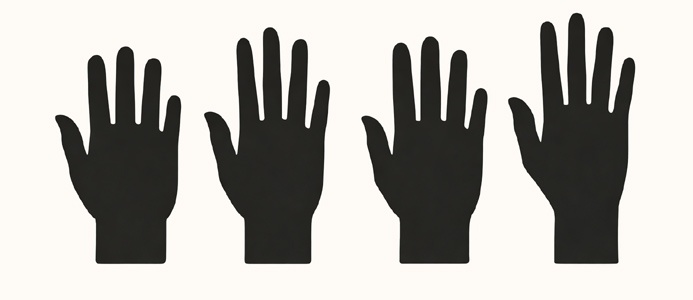
Hand shape classifications form the foundation of palmistry methods, with each type associated with different characteristics.
One of the earliest steps in palmistry methods involves identifying the shape of the hand. These hand shape classifications have been organized in different ways depending on the tradition, but the most common modern system divides hands into four types, often linked to the classical elements: earth, air, fire, and water.
An earth hand is described as square-palmed with short fingers. It is traditionally associated with practical thinking and physical reliability. An air hand features a square palm with longer fingers, and is linked to intellectual activity and communication. A fire hand has a rectangular palm with short fingers, connected to energy and ambition. A water hand is rectangular with long fingers, often interpreted as reflecting emotional depth and sensitivity.
These categories are not meant to be rigid. Many hands show blended characteristics. The framework offers a starting point for interpretation, helping the reader form an initial impression before examining finer details.
The Role of Fingers
Finger length meanings play a supporting but significant role in palmistry. Readers look at the overall proportion of the fingers to the palm, but also examine individual fingers. Each finger is traditionally associated with a different quality or influence.
The index finger, sometimes called the Jupiter finger, is linked to leadership and ambition. The middle finger, or Saturn finger, relates to responsibility and structure. The ring finger, associated with Apollo, represents creativity and self-expression. The little finger, or Mercury finger, connects to communication and perception.
The relative lengths of these fingers to one another, their flexibility, their spacing, and even the way they curve or lean are all considered during a reading. Finger shape and posture are thought to refine the broader picture offered by the hand’s general structure.
During the 15th century, palmistry was taught at several European universities, including Leipzig and Halle, where it was studied alongside medicine and psychology as part of the standard curriculum.
Understanding the Mounts
The mounts of the hand are raised, fleshy areas on the palm, each named after a classical planet or celestial reference. These elevations beneath and around the fingers are central to many palmistry methods. They are examined for prominence, firmness, and position.
The mount of Venus, located at the base of the thumb, is traditionally linked to affection, vitality, and sensory appreciation. The mount of Jupiter sits beneath the index finger and is associated with confidence and ambition. The mount of Saturn lies under the middle finger, tied to discipline and introspection. The mount of Apollo, beneath the ring finger, relates to creativity and public presence. The mount of Mercury, under the little finger, connects to communication and adaptability.
There are also mounts on the outer edge of the palm and at the base. The mount of Luna, on the lower outer palm, is connected to intuition and imagination. The mount of Mars appears in multiple areas one near the thumb, another on the opposite side of the palm and is associated with different forms of assertiveness or resilience.
Readers assess whether a mount is well-developed, flat, or overly pronounced. These variations are interpreted as indicators of how strongly the related qualities are expressed in a person’s life or temperament.
Major Lines in Palmistry
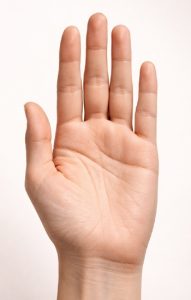
Lines are central to palmistry methods they are heart line, head line, and life line.
The lines on the palm are perhaps the most recognizable feature in palmistry. Major lines in palmistry include the heart line, the head line, and the life line. These three appear on nearly every hand and form the backbone of palm reading interpretations.
The heart line runs horizontally across the upper part of the palm. It is traditionally associated with emotional patterns, affection, and relational style. Readers observe its length, curvature, depth, and any breaks or branches.
The head line, positioned below the heart line, is linked to thinking style, focus, and intellectual approach. A straight head line might be interpreted as indicating practical thought, while a curved one is often read as reflecting imagination or flexibility.
The life line arcs around the base of the thumb. Despite popular misconception, it is not considered a measure of lifespan. Instead, it is thought to reflect vitality, physical resilience, and major shifts in direction or energy over time.
Some hands also show a fate line, which runs vertically up the center of the palm. This line is less universal and, when present, is often interpreted as relating to career direction or life structure.
Minor Lines in Palmistry
Beyond the major lines, there are numerous minor lines in palmistry that appear with varying frequency and clarity. These include the sun line, the Mercury line, marriage lines, travel lines, and others. Not everyone has all of these, and their presence or absence is itself considered meaningful.
The sun line, also called the Apollo line, is a vertical line that may run parallel to the fate line. Palmistry methods interpret this line as associated with recognition, success, or creative fulfillment. The Mercury line, sometimes referred to as the health line, can indicate sensitivity to stress or physical constitution, though interpretations vary.
Marriage lines are short horizontal marks on the outer edge of the palm beneath the little finger. They are traditionally thought to reflect significant emotional partnerships, though not necessarily legal marriages. Their number, depth, and clarity are all examined.
These smaller lines are considered secondary but add nuance. Their palmistry line meanings are often more symbolic than literal, used to layer additional texture onto the broader reading.
How Palmistry Methods Are Applied
In practice, palmistry methods involve synthesizing all these elements into a cohesive interpretation. A skilled reader does not isolate one feature but considers how hand shape, finger proportion, mounts, and lines interact.
For example, a person with a well-developed mount of Venus and a deep, curved heart line might be described as emotionally expressive and relationship-oriented. If that same person has a long head line with a downward curve, the reading might also emphasize introspection or imaginative thinking. The hand shape would add another dimension whether the person is more action-oriented, intellectual, or intuitive.
Readers also observe subtleties like skin texture, flexibility of the hand, color, and temperature. A firm hand is often interpreted differently than a soft one. Deep lines may be read as reflecting intensity, while faint lines might suggest a lighter or more adaptable nature.
Cultural and Historical Context
Palmistry methods have roots in multiple cultures, including Indian, Chinese, Greek, and Roman traditions. The practice was formalized in Europe during the medieval and Renaissance periods, when it was sometimes studied alongside astrology and medicine.
Different palmistry methods emphasize different aspects of the hand. Indian palmistry, or Samudrika Shastra, includes detailed attention to skin markings and whorls. Chinese palmistry often integrates concepts from traditional medicine and the five elements. Western palmistry, especially as practiced in the 19th and 20th centuries, tends to emphasize psychological interpretation.
Today, palmistry is approached in varied ways. Some practitioners treat it as a spiritual tool. Others view it as a form of counseling or reflective conversation. Still others study it purely as a historical or symbolic practice. The methods remain largely consistent across these approaches, even as the underlying beliefs may differ.
The Romani people are often credited with popularizing palmistry throughout Europe during the medieval period, though the practice predates their migration by centuries in Asian and Middle Eastern cultures.
Final Considerations
Palmistry methods offer a structured way of looking at the hand, one shaped by centuries of observation and tradition. Whether approached with belief, curiosity, or skepticism, the practice reflects a human interest in pattern, meaning, and self-reflection. The hand becomes a map not of fate, but of tendencies, themes, and interpretive possibilities.
Editor’s Reflection
The range of palmistry methods described here reflects a practice that has remained remarkably consistent across time and geography, even as its purpose and interpretation have shifted. Whether viewed as symbolic language, psychological tool, or cultural artifact, the act of reading a hand follows recognizable patterns shape, line, mount, proportion all assessed in relation to one another. What changes is not so much the method, but what people bring to it and what they hope to take away.
Does the structure of palmistry offer genuine insight, or does it simply provide a framework through which we project meaning onto ourselves? Can a system this old retain relevance, or does its value lie more in the conversation it starts than in the conclusions it draws? And if the hand is treated as a map, what are we really navigating fate, character, or simply the need to be seen and understood?

Known as The Man Who Notices, Mike Lamp is a theatrical hypnotist and psychic performer with more than twenty years of live stage experience. His work emphasizes observation, psychological influence, and measured presentation rather than spectacle or provocation. Performances are tailored for adult audiences, private events, and professional settings where control, clarity, and atmosphere matter.




Leave a Reply
You must be logged in to post a comment.