4
Jan
Fox Sisters Psychic Commercialization Revealed
The Fox Sisters and the Commercialization of Psychic Phenomena
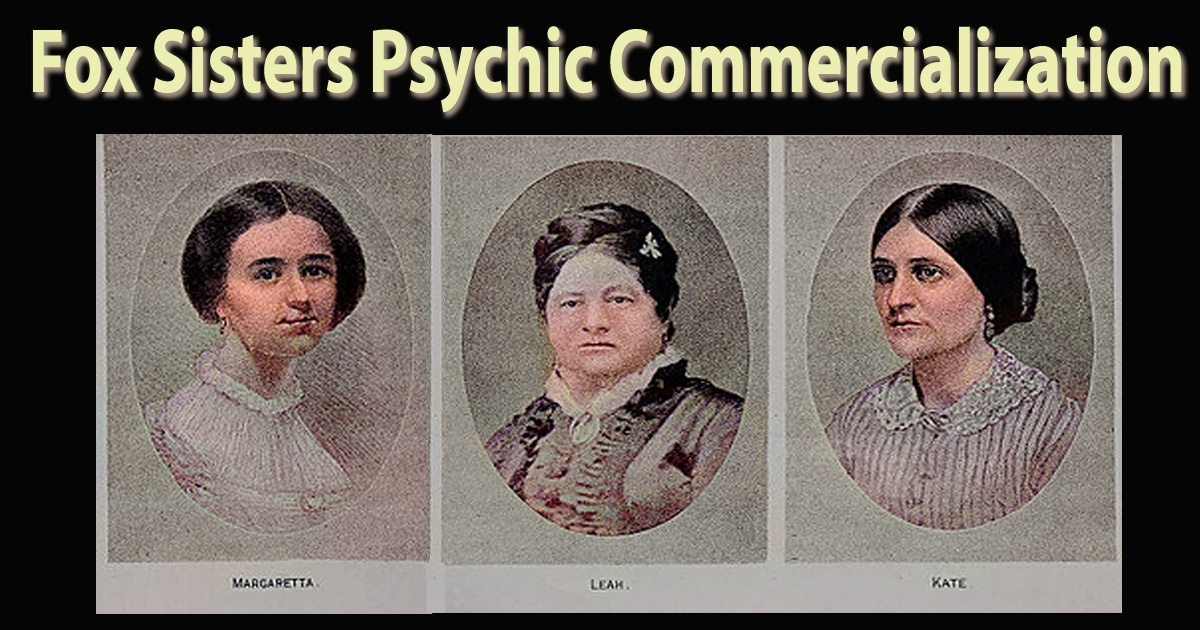
Fox Sisters and the rise of psychic commercialization
In the mid-nineteenth century, psychic belief did not spread quietly through private faith or personal conviction. It moved through rented halls, ticketed demonstrations, and newspaper columns that treated unexplained events as public entertainment. The Fox Sisters did not invent belief in spirits, but they were among the first to place it squarely in the marketplace.
Their significance lies less in what they claimed than in how those claims were presented. What began as a local curiosity quickly shifted into organized appearances, controlled audiences, and paid admission. This transformation marked a turning point where psychic phenomena became something people consumed, not merely discussed or feared.
By examining the Fox Sisters through a historical lens, the focus moves away from questions of truth or deception and toward structure, promotion, and audience demand. Their story reveals how belief systems can be packaged, circulated, and sustained through performance, long before modern media or celebrity culture existed.
Before the Performances: Cultural Conditions That Made Psychic Belief Marketable
Before the Fox Sisters appeared in public halls, the ground was already prepared for their reception. Early nineteenth-century America was marked by revival movements, reform lectures, and a strong appetite for ideas that promised hidden knowledge. Audiences were accustomed to paying for sermons, demonstrations, and public talks that blurred the line between education and spectacle.
At the same time, science was changing daily life but had not yet displaced older explanations of unseen forces. Electricity, magnetism, and new medical theories were widely discussed but poorly understood by the public. This uncertainty created space where unusual claims could sound plausible without needing proof. Curiosity often carried more weight than verification.
Public life also mattered. Parlors, lecture halls, and rented meeting rooms had become normal venues for shared experiences. People gathered not only to learn but to witness. In that environment, psychic belief did not need to begin as performance, but it was well positioned to become one once attention and audiences followed.
• Corinthian Hall in Rochester seated several hundred people and was commonly used for paid lectures and demonstrations of the Fox Sisters in the 1840s.
The Rochester Rappings: A Local Curiosity Becomes Public News
In 1848, reports began to circulate from Hydesville, New York, describing unexplained knocking sounds associated with the Fox household. These events were initially treated as a domestic oddity, discussed among neighbors rather than presented as a formal demonstration. What mattered at this stage was not interpretation, but repetition. The sounds were said to occur on demand, which made them easy to describe and retell.
As word spread, the setting shifted from private rooms to larger gatherings. Witnesses were invited, questions were asked, and the phenomena were observed by people outside the immediate family. This transition changed the nature of the events. Once strangers became part of the experience, the rappings were no longer personal occurrences but shared spectacles.
Newspapers played a decisive role. Reports framed the events as curiosities worthy of public attention rather than isolated rumors. By the time the Fox family relocated to Rochester, the rappings had moved beyond local gossip. They had become a topic of public discussion, setting the stage for organized appearances and the first steps toward paid demonstrations.
For a related look at how altered-state ideas followed a similar path into public performance, see the History of Hypnosis section.
From Private Curiosity to Public Demonstration
The shift from private observation to public display did not happen all at once. It followed a practical logic. Once outsiders began asking to witness the phenomena, gatherings became larger, more structured, and increasingly formal. What had taken place in homes moved into rented spaces where attendance could be managed and repeated.
These early demonstrations introduced consistency. Sessions were scheduled. Rules were explained. Audiences were positioned as observers rather than participants. This structure mattered because it made the events reproducible. A phenomenon that could be shown on demand, in front of strangers, gained a different kind of authority than one confined to family testimony.
With this shift came money, even if it was not always described that way. Admission fees, donations, and hosted appearances placed value on access. Belief was no longer only a personal conclusion. It became something offered, witnessed, and exchanged in public settings. At that point, the Fox Sisters were no longer managing curiosity. They were managing audiences.
Leah Fox and the Business of Spiritualism
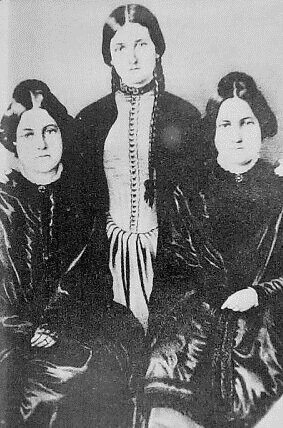
The Fox Sisters photographed in a formal studio portrait during their public career
While Margaret and Kate drew attention through demonstration, it was Leah Fox who shaped that attention into a workable enterprise. Older and more socially connected, Leah understood presentation, credibility, and control. She arranged locations, determined who gained access, and helped define how the phenomena were explained to the public.
Leah’s role marked a shift from informal gatherings to managed events. Audiences were selected. Sessions were framed to limit disruption. Skeptics were handled through structure rather than argument. This approach reduced unpredictability and protected the appeal of the demonstrations. It also allowed the sisters to move beyond one-off appearances into sustained public work.
Most important, Leah treated spiritualism as something that required organization to survive. She negotiated fees, coordinated schedules, and cultivated relationships with sympathetic observers and press outlets. In doing so, she helped establish a model that later psychics would follow: not simply claiming unusual ability, but supporting it with logistics, promotion, and careful audience handling.
Touring, Press, and Paid Belief
Once the Fox Sisters began traveling, spiritualism entered a new phase. Appearances were no longer limited to familiar communities. Touring introduced repetition across cities, which strengthened recognition and demand. Each stop followed a similar pattern, allowing audiences to know what to expect and promoters to plan accordingly.
The press amplified this process. Newspaper coverage rarely resolved questions of authenticity, but it did not need to. Reports focused on attendance, reactions, and controversy, all of which drew interest. Even skeptical articles extended the reach of the demonstrations by treating them as newsworthy events. Public debate kept the subject visible and sustained curiosity.
Payment became normalized through this cycle. Tickets, hosted sessions, and private demonstrations established belief as a service rather than a personal conviction. Access had value, and audiences accepted that value as part of the experience. By the time touring became routine, psychic phenomena were no longer local wonders. They were part of a growing economy of public belief.
Attendance and pricing offer a rare glimpse into how the Fox Sisters’ work translated into real money for them and their promoters. When Leah arranged the first widely reported public demonstration at Corinthian Hall in Rochester in November 1849, the price of admission was about 25 cents per person. Contemporary accounts report that as many as 400 people packed the hall on that opening night. Over a multi-night run, and with similar pricing in other towns, the receipts would have added up to a substantial sum for the era.
A quarter then had much greater purchasing power than today; 25 cents in 1850 is roughly equivalent to about $9 to $10 in 2025 dollars when adjusted for long-term inflation. If one performance drew similar crowds over several nights, gross receipts could easily reach the equivalent of several thousand current dollars for a single engagement, and sustained touring amplified that total across months of appearances. Such figures show how quickly psychic demonstrations moved from curiosity toward a viable, if informal, business.
• Admission prices for public lectures in the 1850s often matched skilled labor hourly wages.
Cracks in the Model: Skepticism, Strain, and Public Reversal
The Fox Sisters as spiritualist demonstrations multiplied, so did scrutiny. Scientists, clergy, and amateur investigators attended sessions with the specific aim of testing conditions rather than observing outcomes. Controlled settings, restricted movement, and closer observation reduced the impact of performances that relied on atmosphere and expectation. Public debates began to focus less on wonder and more on method.
Internal strain followed external pressure. Touring schedules were demanding, income was uneven, and disagreements over control and credibility became harder to manage. The same structure that made demonstrations repeatable also made them vulnerable to challenge when conditions changed. Audiences grew more divided, and press coverage increasingly emphasized controversy rather than novelty.
By the late nineteenth century, formal investigations such as those associated with the Seybert Commission reflected a broader shift in public attitude. Psychic demonstrations did not disappear, but the original model pioneered by the Fox Sisters had reached its limits. What remained was a template that others would adapt, refine, or disguise, even as belief itself became more cautious and contested.
Legacy: A Template for Modern Psychic Work
The lasting influence of the Fox Sisters lies in structure rather than belief. They demonstrated that psychic claims could be organized, scheduled, and presented in ways that resembled other forms of public entertainment. This approach separated personal conviction from public delivery, allowing audiences to participate without committing to belief.
Key elements of their model endured. Paid access, managed settings, controlled narratives, and media attention became standard features of later psychic work. Even as individual methods changed, the framework remained recognizable. Psychic practice shifted from spontaneous occurrence to repeatable service.
Over time, this template blended into related fields such as mentalism, stage performance, and private consultation. The Fox Sisters did not create modern psychic culture, but they provided its early blueprint. By turning belief into something that could be witnessed, scheduled, and paid for, they shaped a professional path that still echoes in contemporary practice.
• Spiritualist newspapers emerged by the early 1850s to support touring mediums and lecturers.
Editor’s Reflection
From a historical standpoint, the Fox Sisters are more useful than they are admirable or condemnable. What interests me is not whether they believed their own claims, but how quickly belief adapted to audience demand. Once money, press, and scheduling entered the picture, psychic phenomena followed the same pressures as any other public offering. That shift explains far more about the endurance of psychic culture than any single event or confession ever could.
For readers, this raises questions worth discussing. At what point does belief change when it is shaped for an audience. Does payment alter sincerity, or simply formalize something that already exists. And if a practice survives primarily because people want the experience, does its factual basis matter as much as its social function. Those questions, more than answers, are where the real Fox Sisters history still lives.
Further Reading & Resources
📖 Read: The Fox Sisters Britannica
🔍 Explore: The Fox Sisters: Pioneers of Modern Spiritualism

Known as The Man Who Notices, Mike Lamp is a theatrical hypnotist and psychic performer with more than twenty years of live stage experience. His work emphasizes observation, psychological influence, and measured presentation rather than spectacle or provocation. Performances are tailored for adult audiences, private events, and professional settings where control, clarity, and atmosphere matter.


This was a refreshing read. I liked that you focused on how the Fox Sisters operated. It makes their impact easier to understand without taking sides.
That was exactly the goal. Once you step away from proving or debunking belief, the history becomes clearer. What they built as a public model is far more important than settling a question that never really closes.