1
May
Midwest Economic Prediction Signals Steady Industrial Growth
Midwest Economic Prediction Signals Steady Industrial Growth
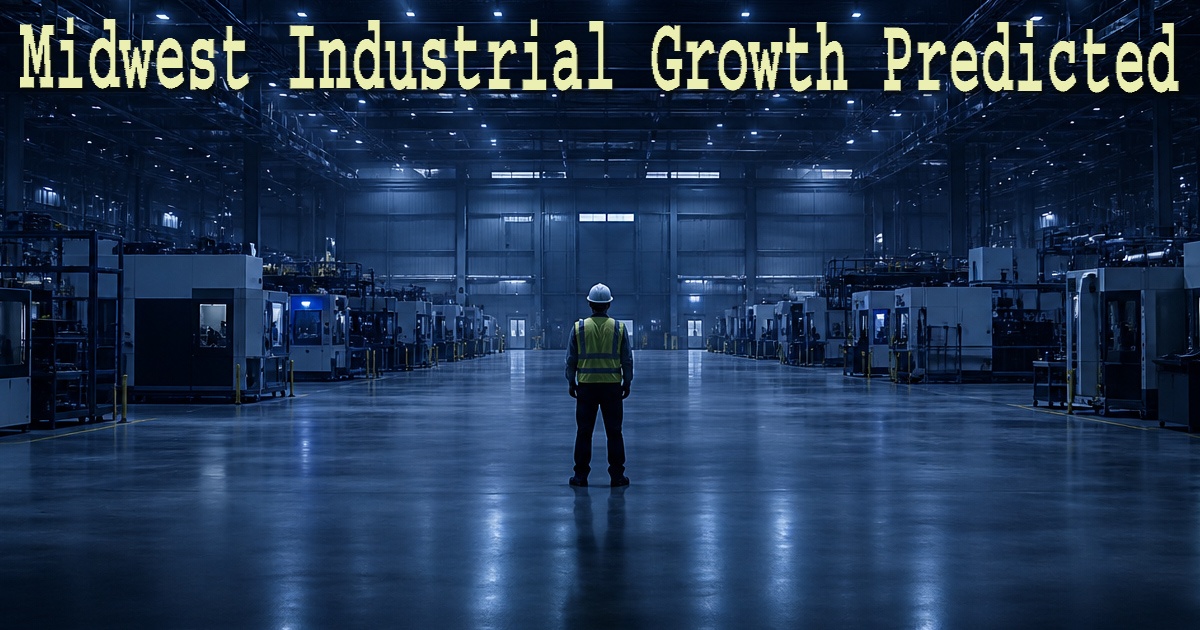
Midwest industrial growth begins quietly here. My Midwest economic prediction.
Opening Insight
There are moments when a city’s air shifts. Not violently, not with thunder, but with the quiet pressure of something gathering beneath the surface. I have stood in that stillness before, many times over a long career, and I know it when it returns. It found me recently as a low, steady hum. A Midwest economic prediction had begun to form in my vision, slowly, the way a photograph develops in a darkroom, shapes resolving out of nothing, growing sharper with every passing moment.
This is not a vision of spectacle. It carries no lightning bolt, no sudden rupture, no collapse and rebuilding from rubble. What I have seen belongs to a different and, in many ways, more lasting category of change. It is the kind of change that arrives quietly, that does not announce itself with fanfare, that asks nothing of anyone except the patience to recognize it when it comes. I have learned over the decades that these slower visions are often the most accurate ones. They do not burn hot and fade. They settle in, the way good iron settles into a mold, and they hold.
Read about Self-Fulfilling Predictions: Powerful Psychic Insight Explained in our Exclusive Article
What This Midwest Economic Prediction Reveals
Every Midwest economic prediction I have delivered has required me to sit with the vision long enough to understand its full shape before writing. This one was no different. I sat with it through many quiet evenings, turning it over, testing its edges, feeling for the places where the imagery softened or grew uncertain. In this vision there was no such softness. The picture held firm across every angle I brought to bear on it.
What I saw was movement, measured and deliberate, a turning of gears that had been still for too long, beginning once again to find their rhythm. The factories are returning. Not in their old form, not as the smoking, clanging temples of brute production that built the heartland’s first century of identity, but as something newer, cleaner, more intelligent in its methods and more resilient in its foundations.
That is the core of what this Midwest economic prediction carries inside it. A return, yes, but a return that brings something forward rather than dragging the past behind it.
The Great Lakes region accounted for roughly one-third of all U.S. manufacturing output during the peak of American industrial production in the mid-twentieth century.
The Type of City Involved
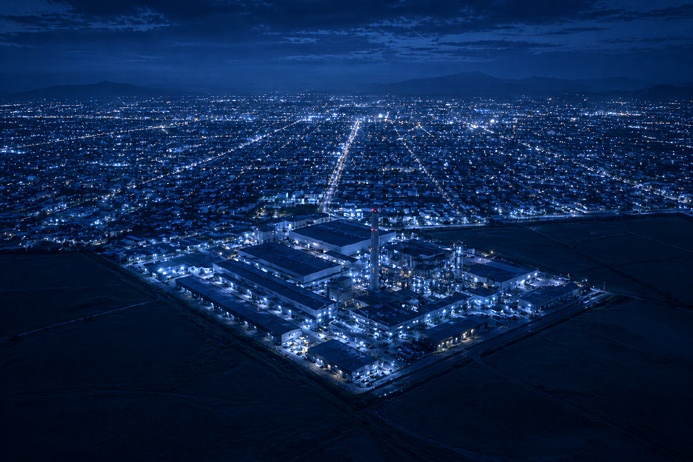
My Midwest economic prediction. The city already knows what’s coming.
I see a city in my vision. I cannot name it with the certainty of a street address, and I have never claimed that kind of precision. What I can say is that I see it with great clarity in every other dimension. It is a mid-sized place, neither vast nor tiny, the kind of American city that once built its identity around what it made, around the sound of production and the smell of metal and the pride of men and women who knew their hands were responsible for real things in the world.
The Great Lakes region and the broader Midwest hold many such cities. They share a particular quality of light, a particular texture of streets and neighborhoods, a particular relationship between the old and the new that gives them their character. The city in my vision carries all of this. It has known harder years. It holds the memory of facilities that went dark, of workforce reductions that left gaps in families and tax rolls alike.
But that memory is precisely what makes the coming change so significant. This is a city that remembers what industry felt like. It has not forgotten, and so it is ready.
A Return to Modern Industry
My Midwest economic prediction is this, stated plainly and without hesitation:
In a mid-sized American industrial city in the Midwest or Great Lakes region, good things are in store over the next two to three years, taking the form of a noticeable upgrade in industry. New manufacturing facilities and modern production lines will open or expand, bringing hundreds of stable jobs in advanced assembly, components, or materials processing, along with fresh investment that strengthens the local economy without turning the city into a boomtown overnight.
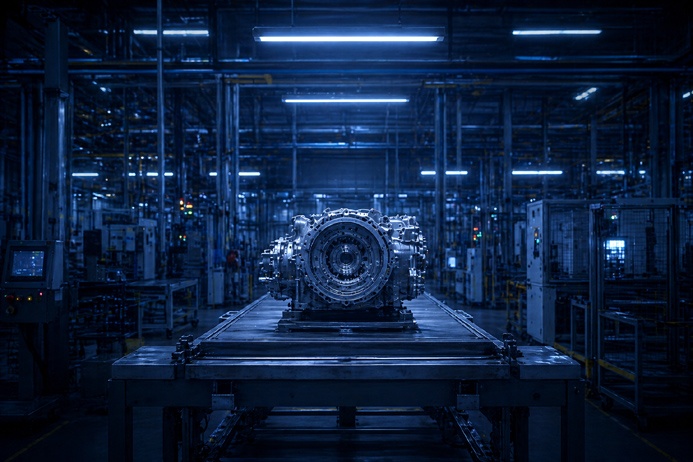
Precision is the new language of work. My Midwest economic prediction.
The manufacturing I see is not the manufacturing of the past century. It is precise, it is technical, it requires trained hands and trained minds working together in facilities built for the demands of modern production. I see floors that are clean and carefully arranged, equipment that hums rather than thunders, processes that are organized around quality and efficiency rather than raw volume alone.
There is something almost architectural about the facilities in my vision. They have been designed with purpose, laid out with the full understanding that the people working inside them will spend their years there, and that those years ought to be spent with dignity. The investment that built these places did not come cheaply or carelessly.
It came after study, after deliberation, after the long process of choosing this city over others and deciding that what this place offered was worth the commitment.
Steady Jobs on the Horizon
The jobs I see arriving are not seasonal, not temporary, not the kind that appear for a project and vanish once the project ends. They are permanent positions, the kind that become part of a family’s story, that fund mortgages and school fees and retirements. In a single Midwest economic prediction, this quality of work rarely appears so clearly. Usually the vision of employment is murkier, less defined.
But in this case the permanence is unmistakable. Hundreds of workers will fill these roles, arriving not all at once but steadily, as facilities are built and fitted and brought to full capacity. Some will come with existing skills that translate directly. Others will be trained on site, learning the specific requirements of the new production lines, gaining expertise that will serve them for the length of their careers.
The skills involved, advanced assembly, work in components manufacture, labor in materials processing, are precisely the kinds of skills that have traditionally formed the backbone of Midwest working life, updated now for the methods and materials of a newer era.
The term “rust belt” was first used widely in the 1980s to describe the decline of heavy industry across states including Ohio, Michigan, Indiana, and Pennsylvania, though the region had begun deindustrializing as early as the 1960s.
Investment Without Overload
What struck me with particular force as I held this Midwest economic prediction was the controlled nature of the financial change it described. Investment is arriving, real and substantial, but it is arriving in measured quantities, at a pace the city can absorb and make use of without being overwhelmed by its speed.
I have seen in other visions what happens to cities that receive too much too fast. The disruption of rapid influx can be as damaging in its own way as the disruption of loss. Rents climb before wages do. Infrastructure strains under demands it was never built to meet. The existing community finds itself suddenly a stranger in its own neighborhood. None of that is present in this vision.
The investment flowing into this city is being received steadily and directed purposefully. It enters the local economy through wages paid to workers who spend them locally, through contracts awarded to nearby suppliers, through the kinds of transactions that stay inside a community rather than flowing immediately back out of it.
Why This Growth Feels Different
Anyone who has spent years studying the economic rhythms of the American heartland knows the shape of the boom-and-bust cycle. It has repeated itself with cruel predictability across the decades, sweeping through cities with the force of a tide, lifting everything on its rise and devastating much of it on the way back down.
The growth unfolding in this vision does not have the instability of boom energy behind it. It has the slower, more reliable energy of considered commitment, the kind that comes from investors and operators who have looked closely at a place, understood its strengths and its gaps, and made a decision intended to last.
The diversity of what is coming, multiple facilities, multiple kinds of production, multiple points of economic entry into the community, provides a resilience that a single large employer could never offer.
Early Signs Residents Will Notice
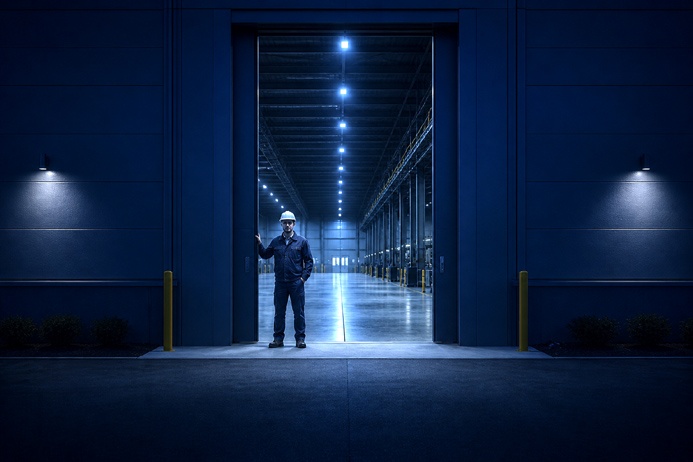
The door is already open. My Midwest economic prediction.
Before the official announcements arrive, before the ribbon cuttings and the press releases, the people who live in this city will begin to see things that do not yet have explanations. Certain parcels of land that have sat idle for years will show signs of activity. Survey equipment will appear, followed by construction machinery, followed by the first steel frames rising against the sky.
In this Midwest economic prediction, the sequence is visible down to these earliest details. Local suppliers will receive calls they were not expecting. Contractors who have been working at reduced capacity will find their schedules filling. For those who know how to read these early signals, the picture will be clear well before it becomes public knowledge. Hiring advertisements will appear, first quietly, then in larger numbers, in the local paper and online.
The listings will describe skills in assembly and materials work, certifications in specific manufacturing processes, experience levels that suggest permanent rather than temporary placement. These are the signs to watch for, subtle at first, then unmistakable.
Advanced manufacturing facilities built after 2010 in the United States typically require workers with post-secondary technical certifications, a shift from earlier generations of factory work that relied more heavily on on-the-job apprenticeship training.
What This Means Going Forward
The next two to three years in this city will not deliver a transformation overnight, and that is precisely what makes the vision sustainable. A Midwest economic prediction of this nature does not ask anyone to believe in miracles. It is reporting what I have seen in the gradual, cumulative way that real economic health is rebuilt. Each new facility adds to the base. Each new job adds a household with stability and spending capacity to the local economy. Each contract awarded within the community strengthens the network of businesses that serves the larger workforce.
By the time two full years have passed, the city’s fiscal position will have improved measurably. Tax revenues will have grown. Vacancy rates in commercial properties near the new operations will have declined. Schools and municipal services will feel the difference in what they are able to offer. None of it will arrive with fanfare. All of it will arrive with consequence.
Final Reflection
I have delivered a great many predictions over the years that described disaster averted, opportunity seized, or change endured. This Midwest economic prediction belongs to a quieter and rarer category. It describes ordinary people in an ordinary city discovering that the work is coming back to them.
Not in its old form, not with its old limitations, but in a form that carries real possibility forward. That is the nature of what I have seen. I do not soften it and I do not exaggerate it. I report it as it appeared to me, fully formed and clearly felt, as steady and as certain as the ground the city is built on.

Known as The Man Who Notices, Mike Lamp is a theatrical hypnotist and psychic performer with more than twenty years of live stage experience. His work emphasizes observation, psychological influence, and measured presentation rather than spectacle or provocation. Performances are tailored for adult audiences, private events, and professional settings where control, clarity, and atmosphere matter.




Leave a Reply
You must be logged in to post a comment.