24
Feb
Automatic Writing Traditions: Powerful Psychic Methods
Automatic Writing Traditions and Psychic Practice

A practitioner’s written pages from a session reflect the careful, patient work at the heart of Automatic Writing Traditions.
What Automatic Writing Is
Automatic Writing Traditions occupy a specific and well-documented place within psychic practice. The basic premise is straightforward: a person holds a pen or sits at a keyboard, enters a relaxed or receptive state, and allows written material to emerge without deliberate conscious direction. The hand moves, words appear, and the writer often reports little awareness of what is being produced until the session ends. This is not a vague or marginal practice. It has been observed, recorded, and discussed seriously for well over a century, drawing interest from investigators, practitioners, and ordinary people curious about what the mind, or something beyond it, might produce when ordinary editorial control is suspended.
The experience of Automatic Writing Traditions varies considerably from person to person. Some practitioners describe a mild drifting of attention, similar to daydreaming, while the hand continues to write. Others report a more pronounced sense of absence, as though something else is directing the process. Neither experience is considered more valid than the other among practitioners. What matters is the quality and content of what emerges, and whether it carries information or coherence that the writer does not recognize as coming from ordinary memory or reasoning.
Read Aura Reading Practices: Essential Methods Revealed Exclusive Article
Historical Development
The history of automatic writing as a documented psychic phenomenon is rooted primarily in the nineteenth century, when interest in spirit communication reached a broad popular audience. Automatic Writing Traditions developed alongside other practices associated with mediumship, but writing held a particular appeal because it produced a tangible record. Unlike spoken words in a darkened room, written pages could be examined, compared, and preserved.
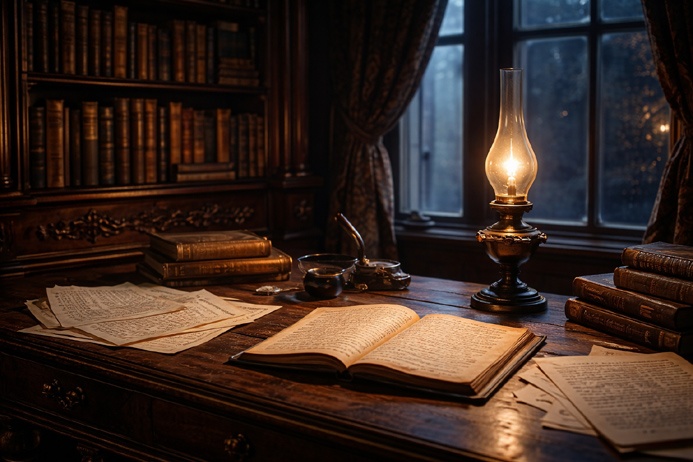
The Victorian era produced the first systematic records of Automatic Writing Traditions, documented by investigators working under formal research conditions.
Several well-known figures contributed to the early documentation of these practices. Investigators associated with the Society for Psychical Research in Britain, including Edmund Gurney, Frank Podmore, and Richard Hodgson, devoted considerable attention to automatic scripts produced by mediums and private individuals alike. Cases were collected, analyzed for internal consistency, and assessed for information the writer could not plausibly have known through ordinary means. This systematic approach distinguished serious investigation from casual curiosity, and the resulting records remain among the most detailed accounts of Automatic Writing Traditions from that era.
By the early twentieth century, automatic writing had become familiar enough that it appeared in literary as well as psychic contexts. Writers and artists experimented with the practice for creative purposes, a tendency most associated with Surrealist circles in the 1920s, though within psychic traditions the emphasis remained on communication rather than expression. The two streams developed largely in parallel, and practitioners in the psychic field were generally careful to distinguish their work from artistic experimentation.
The cross-correspondence cases, a series of automatic scripts produced independently by several mediums in different countries between roughly 1901 and 1932, were specifically designed to test whether coherent messages could be assembled only by combining fragments no single writer possessed in full.
How Sessions Are Conducted
Conducting a trance writing session within psychic practice typically begins with a period of deliberate settling. The practitioner sits quietly, slows breathing, and withdraws attention from immediate surroundings. The goal is to reduce the ordinary noise of conscious thought without falling asleep. Some practitioners work alone; others prefer a witness or partner present to observe and note the session conditions. Automatic Writing Traditions generally do not require special equipment beyond paper and a comfortable writing instrument, though some contemporary practitioners work at keyboards.
Once a receptive state is established, the hand is placed on the page and writing is allowed to begin without forcing it. Early sessions often produce little of apparent significance, and experienced practitioners consistently advise patience. The tendency to judge or analyze what is appearing tends to interrupt the process. Allowing the hand to move without interference, even when what appears seems random or fragmentary, is the consistent practical advice across most documented accounts of automatic writing practice.
Sessions vary in length. Some produce only a few lines; others continue for many pages. The practitioner typically returns to full waking attention at the end of a session before reviewing what has been written. Reading the material immediately while still in a receptive state is generally not recommended, as the interpretive process benefits from a degree of ordinary critical awareness.
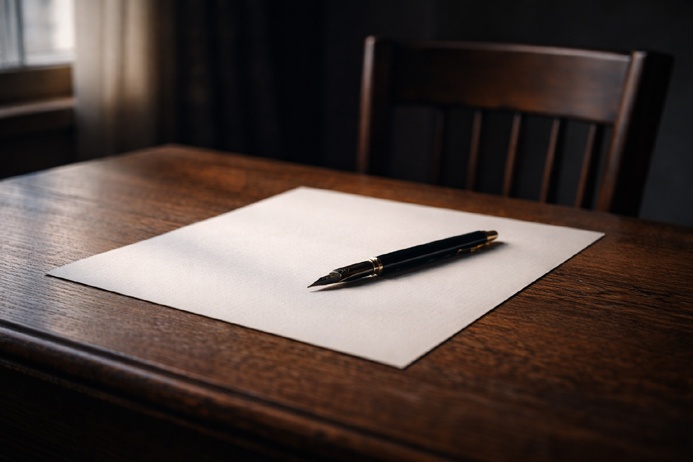
The physical setup for a session within Automatic Writing Traditions is deliberately simple, requiring little beyond paper, a pen, and patient attention.
What the Written Material Tends to Contain
The content produced in clairvoyant writing sessions covers a wide range. Some scripts are highly personal, addressing matters specific to the practitioner or to individuals connected with them. Others are more general in character, presenting observations, instructions, or narratives that appear to originate from a source outside the writer’s ordinary knowledge. In documented cases from the investigative literature, some automatic scripts contained accurate information about deceased individuals that the writer demonstrably had no prior access to. These cases form the evidentiary core of serious psychic interest in Automatic Writing Traditions.
Other scripts are less evidential in a strict sense but carry a quality of coherence and internal consistency that practitioners find significant. Extended automatic scripts that develop recurring characters, consistent terminology, or detailed accounts of unfamiliar places or periods are treated within psychic practice as worthy of careful review, even when direct verification is not possible. Automatic Writing Traditions do not require every session to produce dramatic or verifiable content. The practice is understood as cumulative, with meaning and pattern often emerging across many sessions rather than in a single sitting.
Hélène Smith, a Geneva medium studied extensively by psychologist Théodore Flournoy in the 1890s, produced automatic writing in what she described as a Martian language, a case that drew significant attention to the question of invented versus received material in automatic scripts.
Interpreting the Results
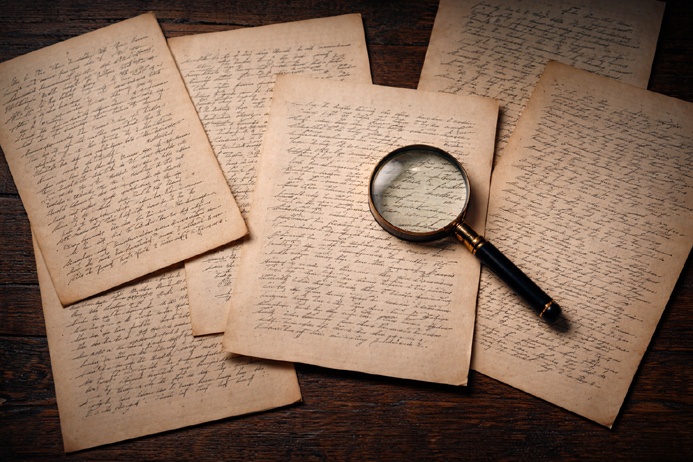
Reviewing and interpreting written material is a distinct phase of work within Automatic Writing Traditions, requiring patience and accumulated familiarity with recurring patterns.
Interpreting automatic writing is a distinct skill from conducting a session. The material produced in spirit communication writing is often fragmentary, symbolic, or expressed in unfamiliar patterns of speech. Practitioners develop interpretive approaches over time, drawing on familiarity with the particular style and recurring themes that emerge from their own sessions. Direct literal reading of automatic scripts is not always appropriate, and experienced practitioners treat the written material as a starting point for reflection rather than a finished communication.
Within Automatic Writing Traditions, the question of source is taken seriously but approached with appropriate caution. Material may be attributed to a discarnate individual, to a surviving personality in the technical sense the Society employed, to a non-personal intelligence, or to a deeper layer of the practitioner’s own awareness. These attributions are not made lightly, and serious practitioners avoid premature certainty about the origin of what has been received. The interpretive process involves sitting with the material, noting what resonates as meaningful, and returning to it over time to assess whether patterns or verifiable details emerge.
Interpreting automatic writing also involves recognizing interference. Not all material produced in these sessions is considered equally significant. Experienced practitioners learn to distinguish passages that carry a particular quality of coherence or unfamiliarity from passages that appear to reflect ordinary mental chatter. This discernment is considered one of the practical skills associated with mature work in Automatic Writing Traditions.
The Question of Verification
Psychic automatic writing has always attracted both genuine interest and reasonable skepticism, and practitioners working seriously in this field have generally acknowledged the challenge of verification. When a script contains information that can be checked against historical records or confirmed by living individuals, the case for a source outside ordinary knowledge becomes considerably stronger. The investigative literature includes a number of such cases, and they remain part of the ongoing discussion about what Automatic Writing Traditions can and cannot establish.
Where verification is not possible, practitioners rely on qualitative assessment. Internal consistency, the appearance of knowledge outside the writer’s background, and the sustained coherence of extended scripts are all considered relevant factors. No single criterion is treated as conclusive, and serious practitioners in intuitive writing methods generally maintain a position of considered uncertainty rather than absolute claims about what the material represents.
Pearl Curran, an American housewife with no formal literary education, produced several volumes of automatic writing between 1913 and the 1930s attributed to a seventeenth-century English personality called Patience Worth, including poetry, novels, and a life of Christ, all generated through sessions at a Ouija board before transitioning to direct automatic writing.
The Place of Automatic Writing in Psychic Practice
Within the broader field of psychic practice, automatic writing holds a distinctive position. It is accessible in the sense that it requires no elaborate preparation or special equipment. It is demanding in the sense that productive sessions require genuine patience, a willingness to set aside ordinary critical habits, and consistent practice over time. Automatic Writing Traditions are not typically recommended as a casual experiment, not because the practice is considered harmful, but because the results of careless or impatient practice are usually unremarkable, and practitioners who approach the work without adequate preparation tend to draw unwarranted conclusions from fragmentary material.
Serious engagement with psychic automatic writing involves developing a relationship with the practice itself. Practitioners who work with it regularly over months or years generally report a gradual refinement in the quality and coherence of what is produced. The early sessions, often disappointing, give way to material that carries greater specificity and internal consistency. This developmental arc is consistent across many independent accounts and is treated within Automatic Writing Traditions as part of the natural progression of the practice rather than evidence of anything sudden or dramatic.
Editor’s Reflection
What comes through most clearly in any honest look at Automatic Writing Traditions is that the practice resists easy dismissal and equally resists easy celebration. It sits in that middle ground where the evidence is substantial enough to take seriously but not tidy enough to settle anything definitively. The people who have worked with it carefully over time tend to speak about it in measured terms, which is perhaps the most telling thing of all.
Automatic Writing Traditions raise questions worth sitting with. What does it mean to produce written material that feels genuinely unfamiliar to the person who wrote it? How much does patience and accumulated practice actually change the character of what emerges, and what does that change suggest? And for those who have tried it and set it aside, what was it that finally felt unresolved?

Known as The Man Who Notices, Mike Lamp is a theatrical hypnotist and psychic performer with more than twenty years of live stage experience. His work emphasizes observation, psychological influence, and measured presentation rather than spectacle or provocation. Performances are tailored for adult audiences, private events, and professional settings where control, clarity, and atmosphere matter.


Leave a Reply
You must be logged in to post a comment.