28
Jun
Celebrities Who Became Hypnotists: 10 Famous Names That Will Genuinely Shock You
Celebrities Who Became Hypnotists Share One Thing Nobody Expected
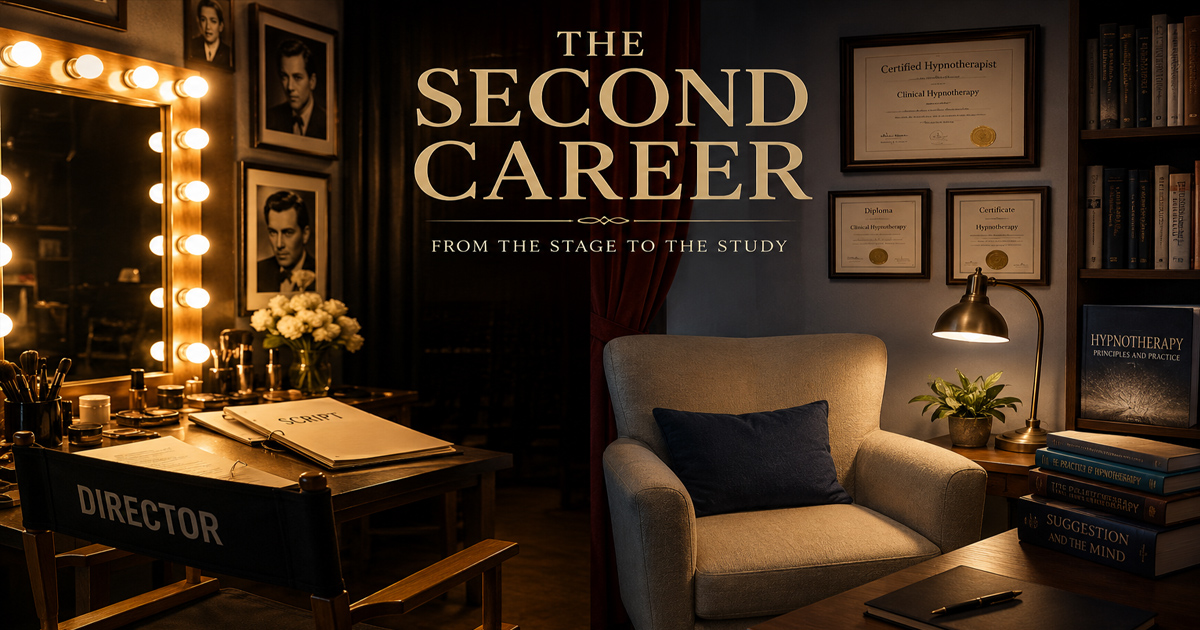
Celebrities who became hypnotists often discovered a surprising second career, moving from the spotlight to professional hypnosis and hypnotherapy after achieving fame in entertainment.
Most people assume that celebrities who get involved with hypnosis are using it for personal reasons. A fear of flying here, a smoking habit there. What they do not expect is the shorter list of celebrities who went considerably further than that, completing formal training, earning certifications, and in several cases building entirely new professional careers around what they learned.
The names on this list are not here because they sat in a hypnotherapist’s chair once. They are here because they crossed to the other side of that chair and did the work required to get there.
What Qualified These Celebrities for This List
The selection criteria for this list are specific and they matter. A celebrity qualified only if they were already known for accomplishments outside hypnosis and later became a trained hypnotist, certified hypnotherapist, or professional hypnosis performer. Celebrities who merely used hypnosis for personal reasons were not included, regardless of how well known they are or how enthusiastically they have spoken about the experience.
That distinction separates this list from the many celebrity hypnosis lists that circulate online, most of which mix people who used hypnosis personally with people who actually trained in and practiced it professionally. The names below cleared a higher bar than that.
Why More Celebrities Than You Think Have Gone Down This Road
There is a logic to it once you see the pattern. People who spend careers in performance already understand something fundamental about suggestion, attention, and the psychology of an audience. They know what it feels like to guide a room, to hold focus, to create an experience in another person’s mind through nothing more than presence and word choice. That background turns out to be excellent preparation for hypnosis work, and several of the people on this list said exactly that when they described why the subject drew them in.
The range of names that follows, a Brady Bunch mother, a feminist anthem singer, a ventriloquist who voiced Tigger, a horror film icon, a soap opera actress, a Saw franchise star, the man who created Dilbert, Orson Welles, a Real Housewives guest, and a Las Vegas comedian, is not a coincidence. It is a pattern.
Arthur Ellen Hypnotist: The Fascinating Man Who Worked With Sports Legends and Movie Stars
Florence Henderson
From Carol Brady to Certified Hypnotherapist
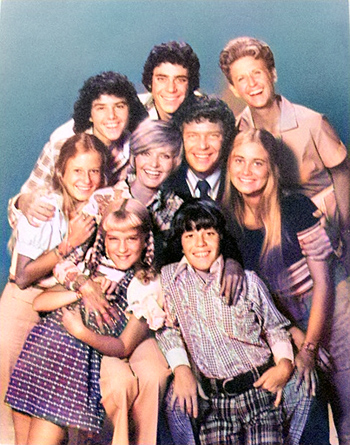
Celebrities who became hypnotists include Florence Henderson, who found a second calling as a certified hypnotherapist after becoming famous as Carol Brady on The Brady Bunch.
Florence Henderson is remembered by most Americans as Carol Brady, the warm and capable mother at the center of The Brady Bunch, one of the most watched television programs of the 1970s. What fewer people know is that Henderson developed a serious fear of flying and debilitating stage fright after the show ended, two conditions that threatened her ability to continue working in the entertainment industry she had built her career in.
A friend suggested hypnotherapy. Henderson was skeptical but made the call, and by her own account the results arrived quickly enough to change her view of what hypnosis could actually do. That experience sent her to the Hypnosis Motivation Institute in Tarzana, California, where she enrolled in formal training. She completed the program and became a certified hypnotherapist.
At HMI she also met Dr. John Kappas, the institute’s founder and one of the most significant figures in the history of American hypnotherapy. Kappas had literally written the definition of hypnotherapist for the Federal Dictionary of Occupational Titles in 1973, a definition that remains in force today. Henderson and Kappas eventually married, in 1987, and remained together until his death in 2002. She used her training not to build a formal practice but to help family members, close friends, and patients she visited in hospitals. For Carol Brady, it turned out, the most useful thing hypnosis could do was the quiet kind of work that never made headlines.
Helen Reddy
The Singer Who Traded the Stage for the Therapy Room in Sydney
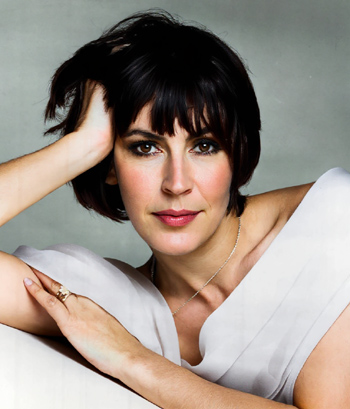
Celebrities who became hypnotists include Grammy winner Helen Reddy, who later trained and practiced as a clinical hypnotherapist in Australia.
Helen Reddy won a Grammy in 1973 for I Am Woman, a song that became one of the defining anthems of the feminist movement and placed her among the most recognized voices in popular music during the 1970s. She placed fifteen singles on the Billboard Top 40, hosted her own prime time network variety show, and became the first Australian to achieve that level of sustained commercial success in the American market.
She retired from performing in 2002 and did not simply step back. She enrolled in university in Australia, earned a degree in clinical hypnotherapy and neuro-linguistic programming, and became a practicing clinical hypnotherapist in Sydney. She was also named a patron of the Australian Society of Clinical Hypnotherapists, a recognition of professional standing rather than celebrity attachment.
Her interest in hypnosis did not begin with retirement. It began decades earlier when she read Morey Bernstein’s The Search for Bridey Murphy as a teenager, a book describing an amateur hypnotist’s past life regression sessions that sparked enormous public debate in the 1950s. That book, she later said, introduced her to hypnosis in a context that felt genuine rather than theatrical, and the curiosity it planted stayed with her through a career spent largely on the other side of the entertainment world. When she finally had the time and the space to pursue it seriously, she did not do it halfway.
Paul Winchell
The Voice Behind Tigger Was Also a Working Medical Hypnotist
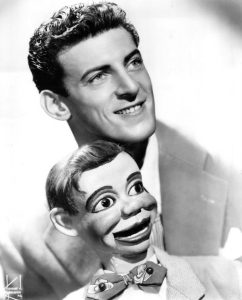
Celebrities who became hypnotists include Paul Winchell, whose interests extended beyond television into medical hypnosis and hypnotherapy.
Paul Winchell is remembered as the voice of Tigger in Disney’s Winnie the Pooh franchise, a role he originated and held for decades, and as one of the defining ventriloquists of American television in the 1950s and 1960s. His dummies Jerry Mahoney and Knucklehead Smiff are now in the Smithsonian Institution. What is far less known is that Winchell’s interests extended well beyond entertainment into medicine, invention, and hypnosis in ways that had nothing to do with performance.
He enrolled at Columbia University as a pre-med student and later graduated from the Acupuncture Research College of Los Angeles, becoming a licensed acupuncturist. He studied hypnosis with equal seriousness and worked for a period as a medical hypnotist at the Gibbs Institute in Hollywood. His hypnosis work was not a stage act or a celebrity hobby. He practiced it in a medical context, on real patients, with genuine therapeutic intent.
He also used it on his own son Stacy when the boy underwent a tonsillectomy, employing hypnotic anesthesia in place of conventional sedation. On top of all of this, Winchell held more than thirty patents for inventions ranging from a disposable razor to a retractable fountain pen to an early design for an implantable artificial heart. The man who made children laugh with a wooden dummy was simultaneously one of the most quietly extraordinary polymaths American entertainment ever produced.
Sid Haig
The Horror Icon Who Spent Five Years Becoming a Certified Hypnotherapist
Sid Haig built a long career as a character actor, appearing in more than fifty films and over three hundred and fifty television episodes across four decades. He was a fixture in Jack Hill’s exploitation films of the 1970s, appeared in George Lucas’s THX 1138, and showed up in the James Bond film Diamonds Are Forever. By the early 1990s, however, he had grown frustrated with being typecast as heavies carrying guns and made a decision that almost nobody in Hollywood saw coming.
He stopped acting for five years. During that time he enrolled at the Hypnosis Motivation Institute in Tarzana, the same institution where Florence Henderson had trained, and completed the program to become a certified hypnotherapist. He described the training as home schoolwork to create better characters, which is a more interesting explanation than most actors would offer for a five year detour into clinical hypnotherapy certification.
During that same five year period, Quentin Tarantino was casting Pulp Fiction and offered Haig the role of Marsellus Wallace. Haig passed. The role went to Ving Rhames and became one of the most memorable performances in American cinema of the 1990s. Haig later said he regretted the decision. Tarantino, who had grown up watching Haig’s work, eventually wrote a role specifically for him in Jackie Brown, and in 2003 Rob Zombie cast him as Captain Spaulding in House of 1000 Corpses, a role that revived his career entirely and made him a horror icon for a new generation.
Pat Collins Hypnotist: Iconic Hip Legacy
Catherine Hickland
From Daytime Drama and Broadway to the Hypnosis Stage
Catherine Hickland spent nearly forty years in the entertainment industry before she walked away from it. She held lead roles on multiple soap operas including Texas, Loving, The City, and One Life to Live, where she played Lindsay Rappaport for more than a decade. She appeared on Knight Rider as the love interest of David Hasselhoff’s character, a role she played while engaged to Hasselhoff himself. She performed as Fantine in a Broadway production of Les Misérables. By any measure it was a career of genuine substance and considerable range.
Her fascination with hypnosis started in childhood when she watched Pat Collins, known as the Hip Hypnotist, perform on television. The image stayed with her for decades. In 2007, as her final years on One Life to Live were winding down, she relocated to Las Vegas and began studying stage hypnosis seriously under Anthony Galie and James Mapes, two of the most respected names in the field. She earned certification as a clinical hypnotherapist through multiple credentialing bodies and made her professional debut as a stage hypnotist in 2008 at New World Stages in New York City.
What followed was not a retirement project. She now performs over one hundred and fifty hypnosis shows a year, has opened a hypnosis training facility in Las Vegas, volunteers with women in the federal prison system, and has built a second professional identity that operates at full professional scale. She has said that stage hypnosis is considerably harder than stage acting, which is a perspective that only someone who has done both at a serious level is qualified to offer.
Betsy Russell
From 1980s Hollywood to Certified Hypnotist
Betsy Russell arrived in Hollywood straight out of high school and built a steady career through the 1980s with films including Private School and Tomboy and television appearances on The A-Team and Murder She Wrote. She stepped away from the industry in the early 1990s to raise her two sons, a retirement that lasted more than a decade before the Saw franchise brought her back to screens as Jill Tuck, the ex-wife of the Jigsaw killer, a role she played across five films in the series.
During her years away from acting she did not simply wait. She completed a three year masters program in Spiritual Psychology at the University of Santa Monica, an institution focused on consciousness, health, and healing. As part of that work she also became a certified hypnotist and life coach, credentials she has carried into a practice focused on helping people address behavioral patterns and personal obstacles through spiritual psychology and hypnotic technique.
She has described her work with maximum security prison inmates through a volunteer program called Freedom to Choose as among the most meaningful applications of her training, teaching incarcerated men and women life skills including compassionate forgiveness in a setting where the gap between what hypnosis can offer and what conventional intervention provides is genuinely significant.
Scott Adams
The Man Behind Dilbert Has Been a Certified Hypnotist Since 1981
Scott Adams created Dilbert in 1989 and spent the decades that followed building it into one of the most widely syndicated comic strips in publishing history. The strip’s particular genius for capturing workplace absurdity, the gap between what organizations say they value and what they actually reward, the way authority figures use language to avoid accountability, the specific texture of being managed by someone less capable than yourself, turned out to be deeply connected to something Adams had been studying since long before the first Dilbert strip appeared.
He completed his hypnosis certification at the Clement School of Hypnosis in 1981, eight years before Dilbert existed. His mother had described using hypnosis during the birth of his younger sister, and that account sent him toward formal training rather than casual curiosity. He has described himself consistently across interviews, books, and public appearances as a trained hypnotist, and his interest in the mechanics of persuasion, suggestion, and the gap between conscious reasoning and actual decision making has been a consistent thread through everything he has written and said publicly for more than four decades.
What Dilbert was doing, in his own framing, was applying the principles of hypnotic suggestion to workplace observation. The strip worked not because it invented the absurdity it depicted but because it named something readers already knew and felt but had never seen reflected back at them so precisely. That is a description of what good hypnotic communication does. It turns out the cartoonist knew exactly what he was doing and had the certification to prove it.
Orson Welles
The Greatest Filmmaker in Hollywood Had a Lifelong Fascination With Hypnosis and the Mind
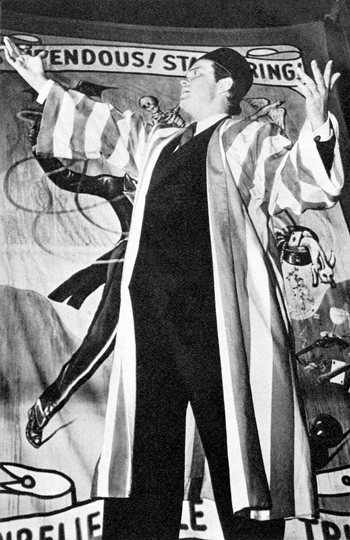
Celebrities who became hypnotists often had a fascination with illusion and psychology, and Orson Welles remains one of the most intriguing historical examples linked to hypnosis.
Orson Welles directed Citizen Kane at twenty five years old, produced a radio broadcast of The War of the Worlds that convinced a significant portion of the American listening public that Martians were invading New Jersey, and spent the rest of his life making films of extraordinary ambition while fighting studios, running out of money, and narrating frozen pea commercials to fund the next project. He was the most naturally gifted manipulator of audience perception that American entertainment ever produced, and he knew it.
He was also a dedicated magician from childhood. During World War II he ran the Mercury Wonder Show, a full touring magic revue performed for members of the armed forces with Rita Hayworth and Marlene Dietrich among his assistants. In 1934, at Todd School, he played Svengali in an adaptation of George du Maurier’s Trilby, the novel that gave the English language its most enduring image of a hypnotic villain. In 1949 he starred as Count Cagliostro, a hypnotist and magician, in the film Black Magic.
Unlike most people on this list, Welles’s connection to hypnosis comes from historical accounts and circumstantial evidence rather than surviving certification records. No formal training documentation has been located. What the record does show is a man whose entire professional life was built on the psychology of suggestion, the manipulation of attention, and the creation of experiences in other people’s minds through nothing more than voice, image, and timing.
Whether he held a credential in hypnosis or not, Orson Welles understood its principles at a level that most certified practitioners never reach. That makes him one of the most intriguing entries on this list regardless of what the paperwork does or does not confirm.
Kimberly Friedmutter
From Hollywood Actress to One of the Most Credentialed Hypnotherapists in the Industry
Kimberly Friedmutter began her career as a model at fourteen, moved into acting, and eventually added a long running radio talk program on KLSX in Los Angeles, the station known as the home of Howard Stern, to a resume that already included film and television credits. She was building a recognizable media career when stage fright caught up with her during her radio years and sent her toward hypnotherapy the same way it had sent Florence Henderson decades earlier.
The difference is what she did with it afterward. Friedmutter pursued hypnotherapy credentials with the kind of thoroughness that goes well beyond personal interest. She is a certified master hypnotherapist, a certified NLP trainer, a member at large of the UCLA Health System Board, and holds affiliations with the American Board of Hypnotherapy, the Association for Integrative Psychology, and the International Hypnosis Federation. Her 2019 book Subconscious Power, published by Simon and Schuster under the Atria imprint, became a bestseller and introduced her work to an audience far beyond her existing client base.
She now works in private practice serving what she describes as high performing clientele, athletes, executives, and entertainment industry figures who come to her not because hypnotherapy is fashionable but because they have specific performance goals and have determined that the subconscious is where the work needs to happen. She appeared on the TLC reality series Sin City Rules and has been a guest on The Doctors, CNN, FOX, and BBC among others. The actress and radio host who sought help for stage fright became one of the most credentialed hypnotherapists working in the entertainment world today.
Don Barnhart
The Comedian Who Built a Second Career Under the Las Vegas Spotlight
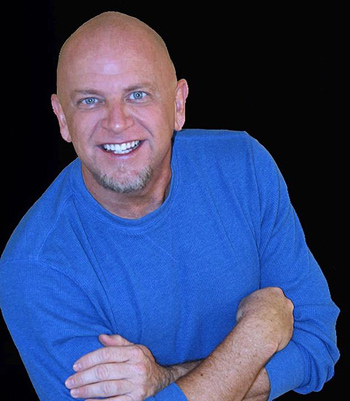
Celebrities who became hypnotists include comedian Don Barnhart, who combined his background in comedy with professional hypnosis to build a successful second career in Las Vegas. Photo provided by Don Barnhart.
Don Barnhart has been performing stand up comedy for more than twenty five years. He is a Second City Conservatory graduate, an award winning headliner at the top comedy clubs in Las Vegas and across the country, a Bob Hope Award recipient for his work entertaining troops overseas, and a regular presence on cruise ships, college campuses, and corporate events worldwide. He is also a certified hypnotist who has spent more than two decades combining those two disciplines into something that neither produces on its own.
His Comedy Hypnosis Show runs as a Las Vegas residency and has been nominated multiple times as the best comedy hypnosis show in the city. The combination works because Barnhart is not a hypnotist who tells jokes to warm up the room. He is an established headlining comedian who trained seriously in hypnosis and built a second act around the intersection of the two crafts. The Second City improv background matters as much as the hypnosis certification in what happens on that stage, because the ability to follow wherever an improvised moment leads and make it funny is not a skill that hypnosis training provides on its own.
He also works with veterans suffering from post-traumatic stress disorder, offering free access to his self hypnosis recordings as part of that commitment. Las Vegas, which has been the center of American entertainment performance for the better part of a century, turns out to be exactly the right home for a comedian who decided that hypnosis was worth doing seriously enough to certify in it and build a residency around it.
The List Keeps Growing
The ten names above represent the research available at the time this article was written. Unlike many entertainment lists, this one is based on documented hypnosis training and professional involvement rather than celebrity association with the subject. As additional verified names are uncovered, they will be added, and the number in the title will change accordingly.
If you know of a celebrity who qualifies under the criteria established at the top of this article, trained or certified in hypnosis rather than simply having used it personally, the comments are the right place to make the case. The list is designed to grow, and it will only get more interesting as it does.

Known as The Man Who Notices, Mike Lamp is a theatrical hypnotist and psychic performer with more than twenty years of live stage experience. His work emphasizes observation, psychological influence, and measured presentation rather than spectacle or provocation. Performances are tailored for adult audiences, private events, and professional settings where control, clarity, and atmosphere matter.


Leave a Reply
You must be logged in to post a comment.